
Whew, what a year! Over 1200 bats, 14 conference presentations, eight published papers, four countries, one coup, one visiting scholar, and a baby. Here’s to keeping it up in 2025!
___
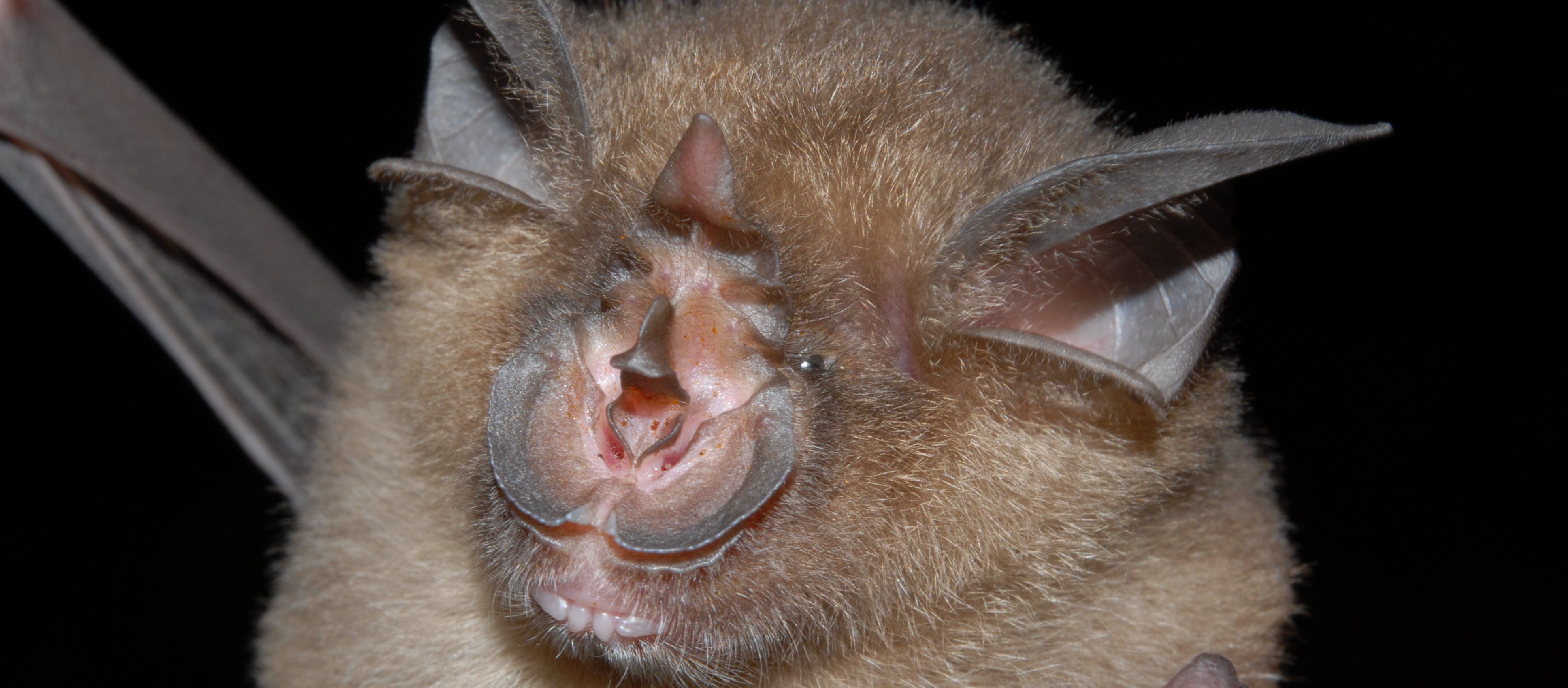
Whew, what a year! Over 1200 bats, 14 conference presentations, eight published papers, four countries, one coup, one visiting scholar, and a baby. Here’s to keeping it up in 2025!
___
We had a diverse range of publications come out this year, many of which illustrate the power of integrative and large team efforts. In March, a great team of disease ecologists, bat biologists, and policy experts, led by the inimitable Professor Raina Plowright, detailed a context-dependent tiered approach to minimize spillover of pathogens from bat to human populations through protection and restoration of places where bats feed, rest and aggregate. These ecological countermeasures are laid out as a model approach for diverse taxa. Tigga and former lab member Dr Iroro Tanshi contributed.
Plowright, R.K., Ahmed, A.N., Coulson, T. et al. Ecological countermeasures to prevent pathogen spillover and subsequent pandemics. Nat Commun 15, 2577 (2024). https://doi.org/10.1038/s41467-024-46151-9
Bat field research frequently involves direct or close contact with bats, an interface that could potentially lead to spillover either from bats to humans or humans to bats. To empower the global bat research community to better protect themselves and bats, the IUCN Species Survival Commission (SSC) Bat Specialist Group (BSG) One Health Working Group (OHWG) issued comprehensive guidelines for Field Hygiene in June of this year:
Shapiro, J.T., Phelps, K., Racey, P., Vincent a., Viquez-R, L., Walsh, A., Weiberg, M and Kingston, T. (2204) IUCN SSC BSG Guidelines for Field Hygiene. https://zenodo.org/records/12169643
The OHWG has been promoting the Guidelines through webinars, talks and demonstrations around the world, including the European Bat Research Symposium, National Bat Conference UK, 5th International Southeast Asian Bat Conference. Related, several members of the IUCN SSC BSG’s OHWG (Tigga, Wanda Markotter, Paul Racey, Lisa Worledge) contributed to a review, and something of a Public Service Announcement, of the need for bat handlers to be vaccinated against rabies.
M. Brock Fenton, Paul A. Faure, Enrico Bernard, Daniel J. Becker, Alan C. Jackson, Tigga Kingston, Peter H.C. Lina, Wanda Markotter, Susan M. Moore, Samira Mubareka, Paul A. Racey, Charles E. Rupprecht, and Lisa Worledge. 2024. Bat handlers, bat bites, and rabies: vaccination and serological testing of humans at risk. FACETS. 9(): 1-11. https://doi.org/10.1139/facets-2024-0056
The IUCN SSC BSG Bat Trade Working Group (BTWG) also produced a significant publication this year, with contributions from Tigga, Abby, and former lab member Dr Joe Chun-Chia Huang. The paper quantified the online trade in the US in the distinctive Kerivoula picta and received a lot of national and international attention, including coverage in the New York Times. Ultimately, it led to eBay removing all bat listings from their sites around the world (big THANK YOU eBay!).
Coleman, J.L., Randhawa, N., Huang, J.CC. et al. Dying for décor: quantifying the online, ornamental trade in a distinctive bat species, Kerivoula picta. Eur J Wildl Res 70, 75 (2024). https://doi.org/10.1007/s10344-024-01829-9
Lab members also contributed to other IUCN BSG efforts, with Abby developing code to calculate EOO (extent of occurrence) and AOO (area of occurrence) used in Red List Assessments:
Monadjem, A., Montauban, C., Webala, P.W. et al. African bat database: curated data of occurrences, distributions and conservation metrics for sub-Saharan bats. Sci Data 11, 1309 (2024). https://doi.org/10.1038/s41597-024-04170-7
and Touseef leading the Red List Assessment for Pteropus medius:
Ahmed, T., Murugavel, B., Sharma, B., Ul-Husan, A. & Salim, M. 2024. Pteropus medius. The IUCN Red List of Threatened Species 2024: e.T18725A230958344. https://www.iucnredlist.org/ja/species/18725/230958344
Related, Ben and Iroro contributed to a huge dataset of intactness estimates across Africa:
Clements, H.S., Do Linh San, E., Hempson, G. et al. The bii4africa dataset of faunal and floral population intactness estimates across Africa’s major land uses. Sci Data 11, 191 (2024). https://doi.org/10.1038/s41597-023-02832-6
Finally, two papers focused on human sentiments towards bats. The first was led by Amir Batrice, a former undergraduate researcher in the lab who worked with Abby to explore how people in Asia respond to posts of bat exploitation on social media:
Batrice, A. A., Kingston, T., & Rutrough, A. L. (2024). Measuring Asian Social Media Sentiments Toward Bat Exploitation. Anthrozoös, 37(4), 619–635. https://doi.org/10.1080/08927936.2024.2345474
The second took a deeper dive into the role of emotions towards bats, focusing on how emotions towards bats changed through COVID-19 and influence intent to perform bat-conservation actions. Four of the contributors (Tanja Straka, Joanna Coleman, Ewan MacDonald and Tigga) are members of the IUCN BSG Human Dimensions Working Group.
Straka, T.M., Coleman, J.L., Macdonald, E.A. et al. Beyond biophobia: positive appraisal of bats among German residents during the COVID-19 pandemic - with consequences for conservation intentions. Biodivers Conserv 33, 2549–2565 (2024). https://doi.org/10.1007/s10531-024-02872-3

Touseef and co-authors conducted a comparative analysis of abstracts presented at the 1st (2011) and 6th (2020) World One Health Congresses (WOHC) to examine the evolution and current state of One Health research, focusing on demographic, disciplinary scope, and geographical representation.
Key findings include:
The plight of large fruit bats on paleotropical islands was flagged over half a century ago. Despite this, species of Pteropus, Acerodon, and related genera of Large Old World Fruit Bats (herein, LOWFB) remain among the most endangered bat groups globally. Naturally, Tigga stepped up collaborating with esteemed bat scientists F.B. Vincent Florens and Christian E. Vincenot to explore this pressing issue. They utilized the IUCN Red List assessments and information from the literature to uncover why these bats are in trouble. No surprise here – habitat loss, hunting, climate change, and persecution (Let’s dub them the BIG FOUR) pose significant threats to the LOWFB. These poor bats are built differently, with biological and ecological attributes that make them even more vulnerable to these threats, accelerating their population decline.

So why should we care? Well, because they’re keystone species! Losing these skypuppies could set off a domino effect throughout native ecosystems. Check out the publication to discover more about the proposed conservation strategies aimed at halting the decline of these critical bats, especially in island habitats.
Bat research is limited in Bangladesh, so to date estimates of bat diversity in the country have been based on a few ad hoc studies and expert opinion. To gain a more complete understanding, Ashraf compiled species occurrence data from the literature, museum records and the Global Biodiversity Information Framework (GBIF). He set out to confirm species presence and identify species that might be expected to occur in Bangladesh based on occurrence records in neighboring countries and habitat preferences. To visualize the distribution of bats, Ashraf made maps for each species recorded from Bangladesh and species that might occur in the country.
He found a total of 31 species are recorded for Bangladesh – but only 22 are associated with voucher records. Evidence for nine species came from photographs and/or human observation. An additional 81 species were recorded from surrounding countries. Of these, 38 species are highly likely to occur in Bangladesh.
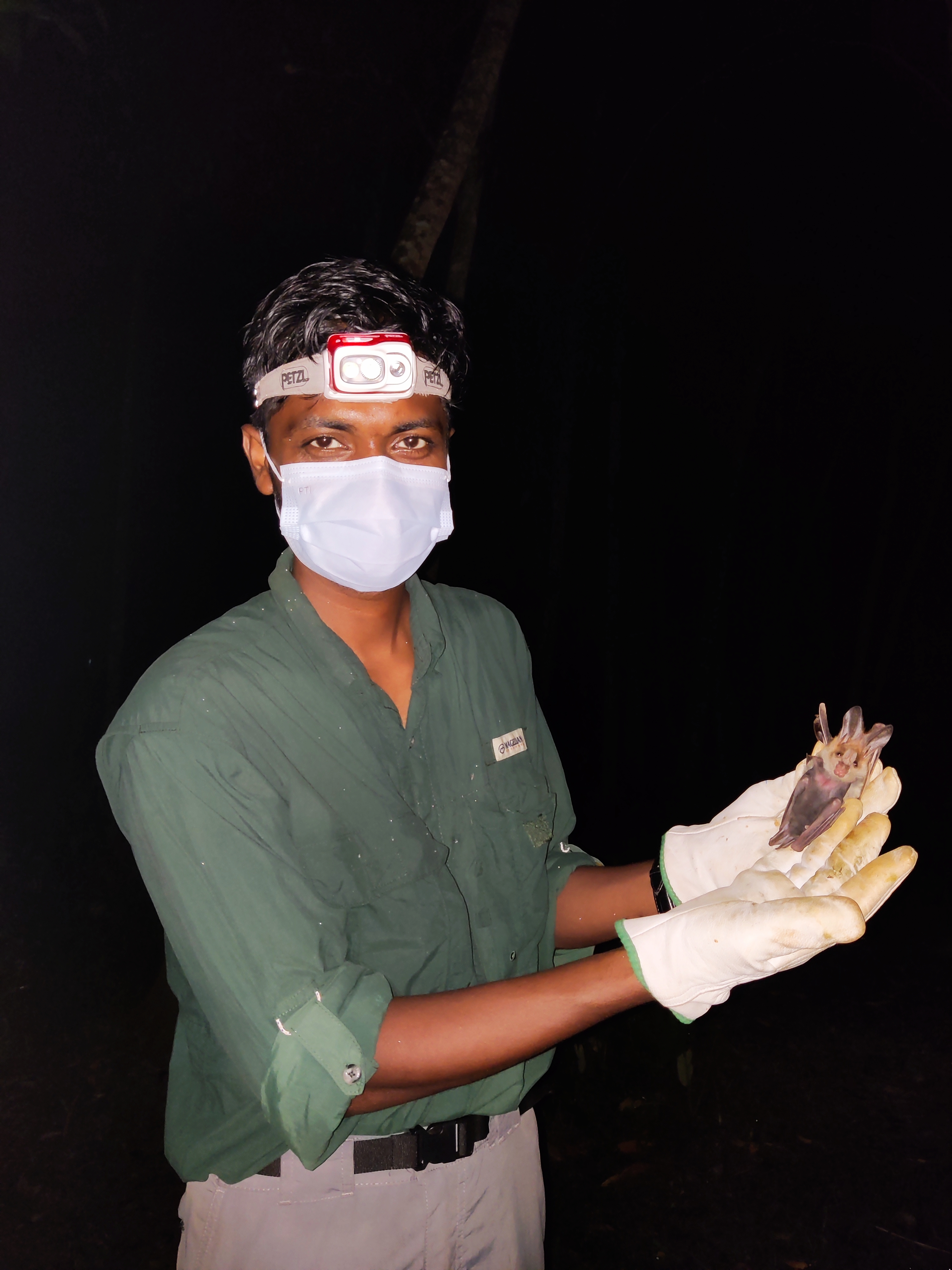
So what is next? To expand the country list, Ashraf recommended that surveys of bats in Protected Areas, caves and wetlands be prioritized. Surveys should use multiple methods, including contemporary techniques (harp traps and acoustics) that have not been used in Bangladesh before, as well as traditional ones (mist nets). He emphasized that voucher specimen collections are needed to confirm the presence of and distribution of bats in Bangladesh and identify areas central to bat conservation.

Citation: Ul Hasan, M. A., & Kingston, T. (2022). Bats of Bangladesh—A Systematic Review of the Diversity and Distribution with Recommendations for Future Research. Diversity, 14(12), 1042. https://doi.org/10.3390/d14121042
Publication link: https://www.mdpi.com/1424-2818/14/12/1042
Supplementary Materials (Listing S1, and Scheme S1): https://www.mdpi.com/article/10.3390/d14121042/s1
Supplementary Materials (Figure S1, Figure S2, Table S1, Table S2): https://datadryad.org/stash/dataset/doi:10.5061/dryad.5tb2rbp7j
Baobab (Adansonia digitata) trees are iconic symbols of the arid lands of continental Africa, and aside from some populations in Southern Africa are largely dependent on fruit bats for pollination. However, the bats visit a diversity of plant species to meet their energetic and nutritional needs, so the pollination service they provide the baobabs may be influenced by the landscape context of individual trees. In collaboration with Dr Paul Webala, Macy Krishnamoorthy set out to determine the relative contribution of individual plant traits, namely tree height and girth, and landscape features and context (e.g., the distance of baobab trees to conspecifics, distances to resources that might attract or distract bats, land use) to baobab reproductive success. Very ably assisted by Mr Michael Bartonjo, she mapped more than 700 baobab trees in ~10 km2 area in Kenya, measured them, and derived a number of landscape variables for each tree. She counted the number of fruit per baobab as a measure of reproductive success.

So what did she find? Perhaps not surprisingly, larger trees were more likely to produce fruit and produce more fruit, but landscape variables also played a role, but in a complex and scale-dependent way. The importance of distance to and density of alternate food resources changed with scale, but generally, pawpaws tended to act as attractants whereas figs distracted bats from their role as pollinators.

You can read the full story here:
Krishnamoorthy, M.A., Webala, P.W. & Kingston, T. Baobab fruiting is driven by scale-dependent mediation of plant size and landscape features. Landsc Ecol (2022).
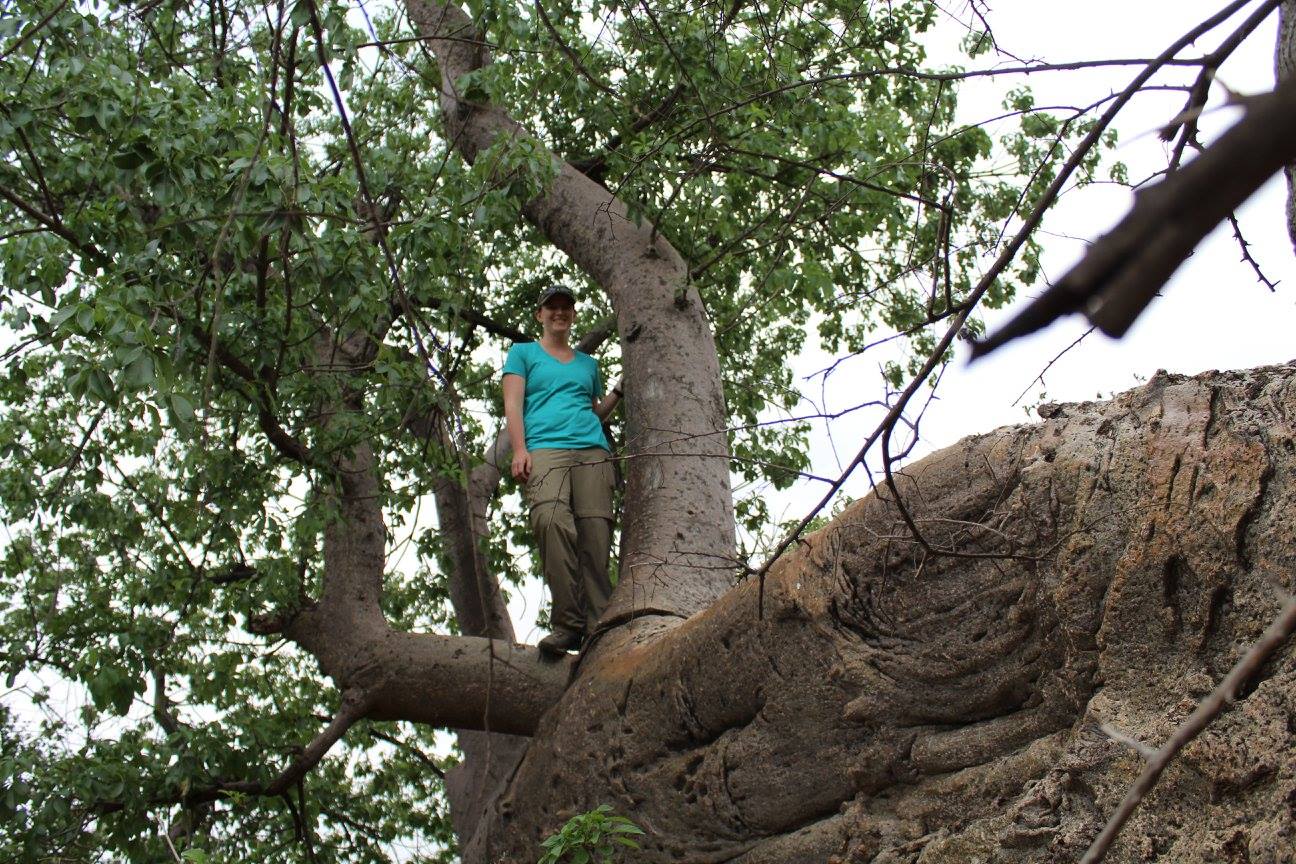
Fieldwork was fun but arduous and there are many people in Kenya to thank! A special thank you to Macy’s local host Daniel Ngei and his family, the local chief Joseph Kavui and all the landowners in the villages of Kaai, Kalesi, Kaluku South, Kandundu, Katithini, Kavui, Kawula, Kiwaani, Mutoleka, Ngieni East, Ngieni West and Yungamaduu who generously allowed us to sample baobabs or others fruiting trees on their lands. Funding for the project came from Bat Conservation Internationa, the Association of Biologists at Texas Tech University, and the Department of Biological Sciences at TTU.

The publications keep coming! Tigga and Joe are co-authors on “A machine learning framework to classify Southeast Asian echolocating bats” that just came out in Ecological Indicators. This paper has all you can ask for, if what you’re asking for is using machine learning to classify bat calls in Southeast Asia. Field rats take note: “Our framework allows users to rapidly filter acoustic files for common species and isolate files of interest, cutting the total volume of data to be processed by 86%.” Not only a time saver, but this increases the capacity of researchers to use non-invasive sampling in regions without species-specific call records and can detect species that are often missed when employing other sampling methods.

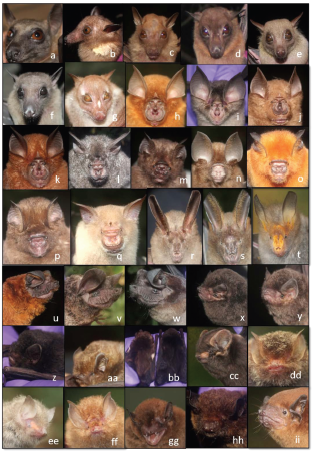
Iroro, Ben, and Tigga recently published ten new species-level bat records from Afi Mountain Wildlife Sanctuary and Cross River National Park in southeastern Nigeria. These new records are especially exciting because Nigeria is both under-sampled and a biodiversity hotspot! Check out the full publication “Hidden Afrotropical Bat Diversity in Nigeria: Ten New Country Records from a Biodiversity Hotspot“
Left: Portraits of 34 bats captured during the field survey at Afi Mountain Wildlife Sanctuary and Cross River National Park. M. torquata (e), R. hillorum (j), H. curtus (n), M. inflatus (x), G. cf. humeralis (aa), G. egeria (cc), K. cuprosa (dd), K. phalaena (ff), and N. eisentrauti (hh) are all new country records.

Tigga, along with Former lab members Joe Chun-Chia Huang and Juliana Senawi, recently co-authored “ChiroVox: a public library of bat calls” in PeerJ. The paper was timed to coincide with the launch of www.chirovox.org online bat call library. The library contains calls from across three cotenants and welcomes quality call contributions to help grow this valuable community resource.
Over the last couple of months, Tigga has published a couple of new papers:
The first paper is “Human dimensions of bat conservation – 10 recommendations to improve and diversify studies of human-bat interactions”. The authors assess bat-related HD research papers and provide recommendations for how to better ground our research and directions for expansion.
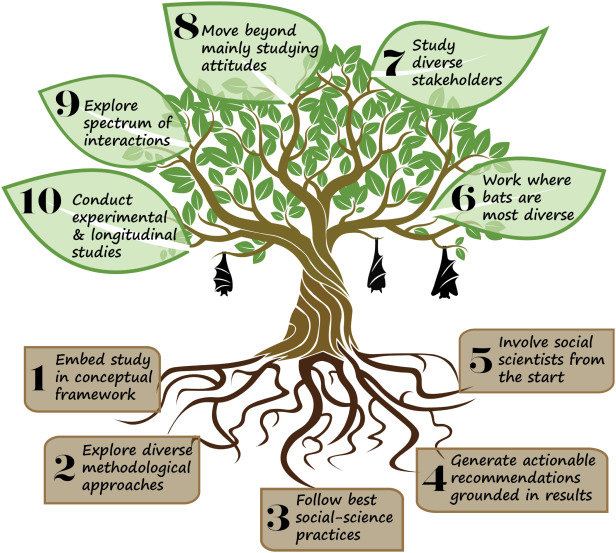
Straka, T. M., Coleman, J., Macdonald, E. A., & Kingston, T. (2021). Human dimensions of bat conservation – 10 recommendations to improve and diversify studies of human-bat interactions. Biological Conservation, 262, 109304. https://doi.org/10.1016/j.biocon.2021.109304
The second paper is “Setting the Terms for Zoonotic Diseases: Effective Communication for Research, Conservation, and Public Policy”. The authors categorized the misuse of zoonotic terms and clarified the definitions of these terms. The paper also provided frameworks to how to correct these miscommunications.
Shapiro, J. T., Víquez-R, L., Leopardi, S., Vicente-Santos, A., Mendenhall, I. H., Frick, W. F., Kading, R. C., et al. (2021). Setting the Terms for Zoonotic Diseases: Effective Communication for Research, Conservation, and Public Policy. Viruses, 13(7), 1356. MDPI AG. Retrieved from http://dx.doi.org/10.3390/v13071356
 Kingston Lab