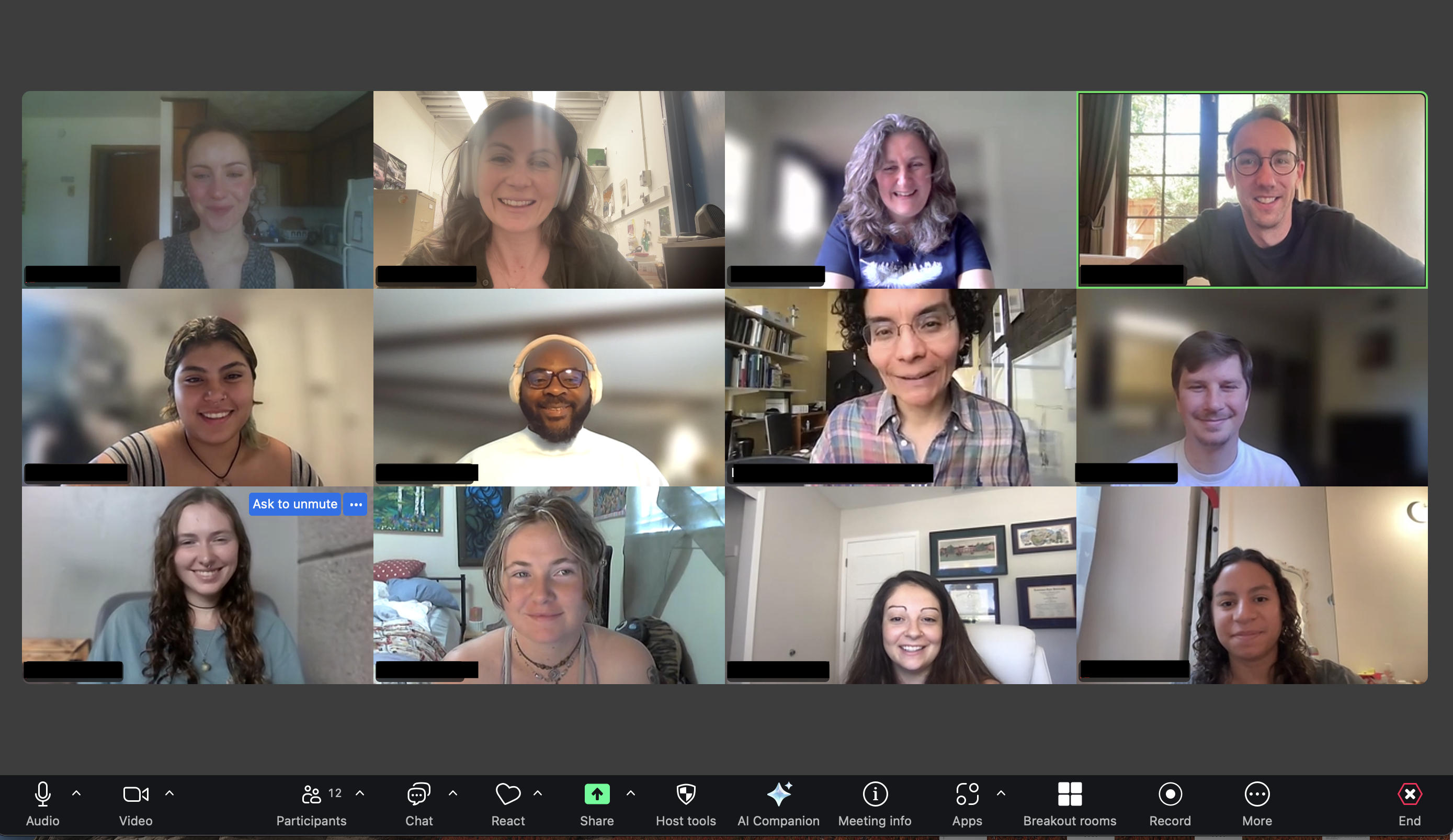
Y’all heard that right! We’ve got two brand new doctors coming out of the Kingston Lab this Fall! Big congratulations to Dr. Ahmed and Dr. Rutrough! 🥳
Both have done a fantastic job defending their dissertations, and we couldn’t be prouder! It’s been a joy watching their hard work pay off, and we can’t wait to see what kind of wild and wonderful science they’ll cook up next.
So go on and give them a holler in the comments. They’ve earned every bit of it!
Representing five countries across four continents, five GBatNet students, Ashraf, Cecilia, Parfait, Pedro, and Robin came together with a shared mission to advance research on Data Deficient bat species around the world. If Abby, another GBatNet student, had been able to join in person, we could have been six strong. But alas, one continent is short and a little bit sad about it.
After months of virtual meetings packed with brainstorming and lively debates, the in-person gathering gave the team a chance to roll up their sleeves, refine ideas, and give real shape to their plans. Together, they finalized research designs, pulled together valuable data, and split up tasks to keep the project moving forward. Now they are looking forward to sharing their findings with the wider scientific community and seeing the impact of all their work.
Team required to forage caffeine at dawn and protein at dusk to fly high in the batty world
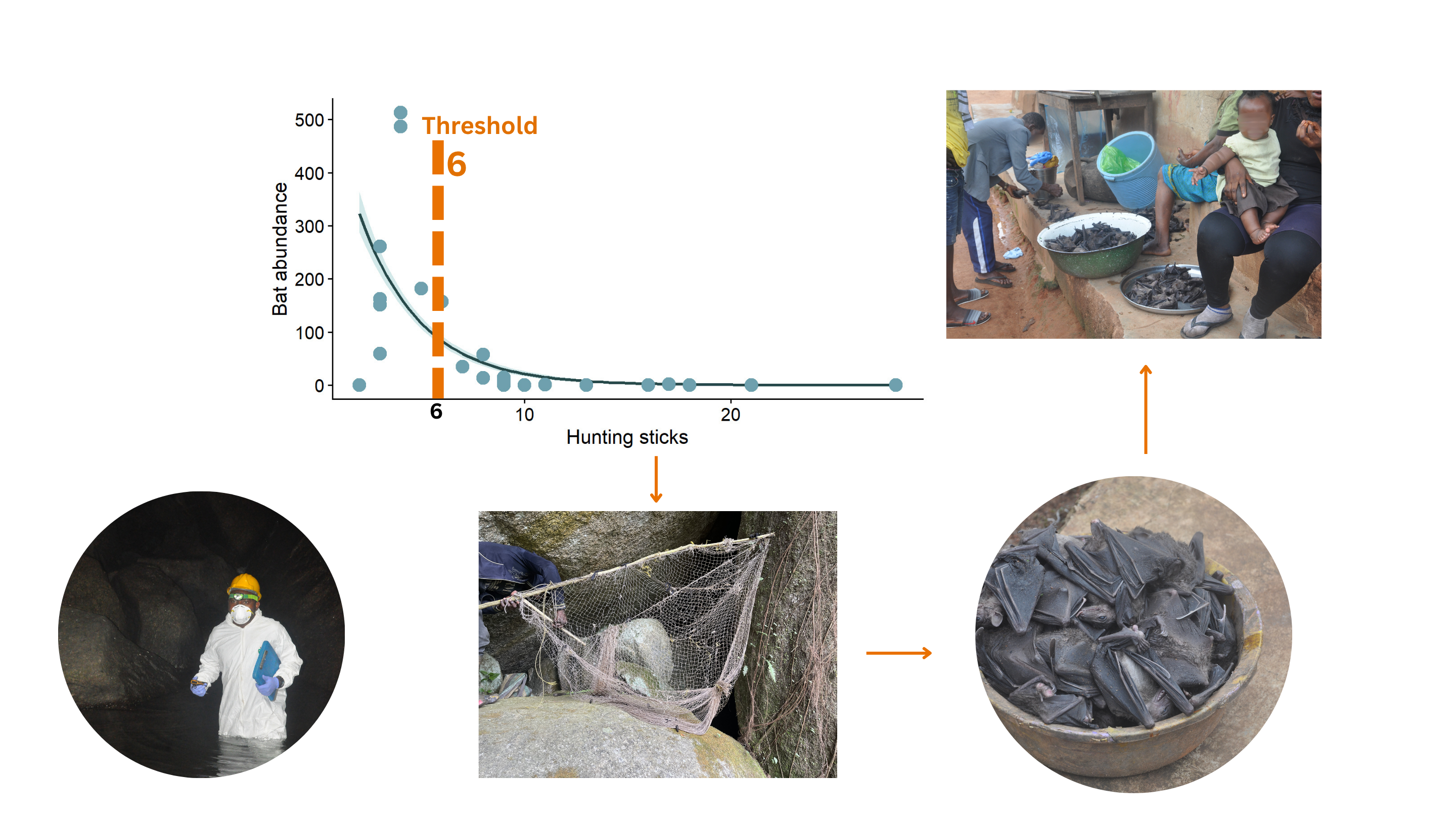
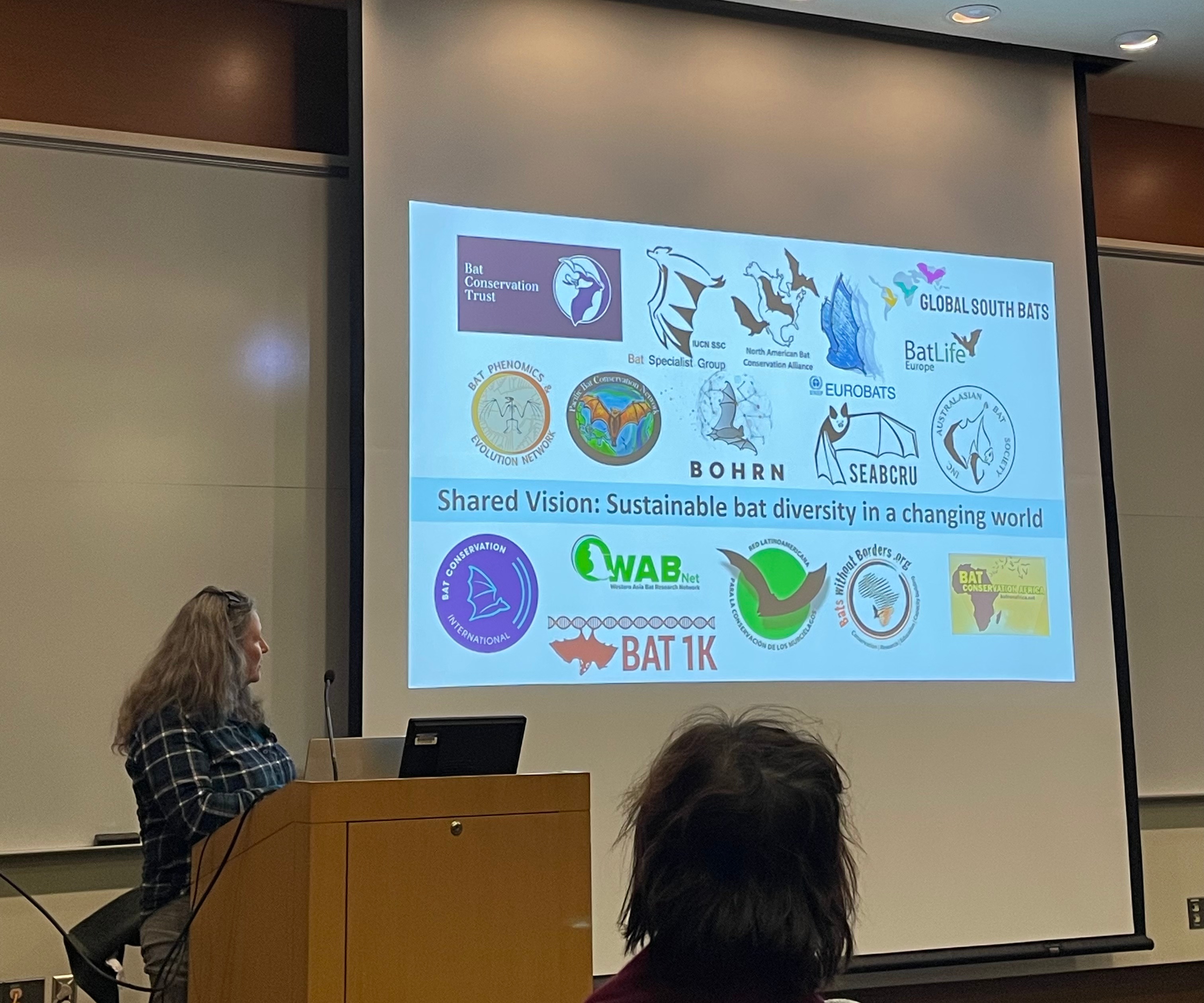
This year’s International Bat Research Conference (IBRC) in Cairns was among the most well-attended in the meeting’s history, and the Kingston Lab was well represented. Ben presented his work on the social networks and motivations driving bat hunting among communities in southern Nigeria, while Tigga talked about One Health Action Plans for species at the human-bat interface. Tigga also gave a distinguished plenary lecture on the need for networks, captivating the audience with an inspiring overview of GBatNet’s achievements and global impact.
This summer, Ben co-instructed the 7-week BatCave course, alongside Drs. Kristen Rayfield and Cassie Bonavita from the Dávalos and Anthony labs, respectively. This program, supported by the National Science Foundation, recruited six undergraduates from six different U.S. universities for an intensive, hands-on training in integrative disease ecology. Throughout this course, students received daily instruction and mentorship across ecology, virology, genomics, data analysis, coding, and science communication, while working with real datasets from Egyptian fruit bats in Nigeria.
Student feedback was overwhelmingly positive. One participant described the BatCave course as ‘an amazing undergraduate opportunity’. All students shared that the experience gave them the confidence and preparation needed to pursue graduate school and do integrative science with ease.
We are so thrilled to welcome Heather to the Kingston Lab family! She’s doing things a little differently. Instead of following in the West Texas footsteps at Tech, she’s settled in our new base camp at the University of Illinois, Urbana-Champaign. Heather’s fixing to dive into research on endangered bat species in the Marianas, and we can’t wait to see what kind of batty brilliance she brings to the mix.
After 19 wonderful years in the Department of Biological Sciences at Texas Tech University, I have moved to the Department of Evolution, Ecology, and Behavior at the University of Illinois at Urbana-Champaign as the inaugural Shelford-Pitelka-Batzli Professor in Mammalian Ecology.
Leaving behind great friends and colleagues, and the sunsets and Red Raider spirit of West Texas has been hard, but I am comforted by the warm welcome I’ve received at the University of Illinois, and excited by this new chapter and possibilities.
Tigga, Ben, and Abby all traveled to Chicago to present talks at BatID 2025. BatID (AKA The 4th Triennial International Symposium on the Infectious Diseases of Bats) focuses on interdisciplinary research on bats and diseases. Tigga gave a plenary on reconciling disease and conservation research in OneHealth action plans, Ben presented his talk “Targeting taste and leveraging leadership influence: a behavioral approach to reducing bat meat consumption and zoonotic disease risk”, and Abby presented on the reasons bat researchers choose to follow (or not!) IUCN guidelines on the best practices for bat fieldwork. We even had a colaborator meeting where the Nigerian project PIs and postdocs all found themselves squashed into a roost (booth) with Tracey Goldstein.
Whew, what a year! Over 1200 bats, 14 conference presentations, eight published papers, four countries, one coup, one visiting scholar, and a baby. Here’s to keeping it up in 2025!
Kingston Lab members Isham and Ashraf attended in the 5th International Southeast Asian Bat Conference in Vietnam (November 25–28, 2024). Both presented their PhD research, with Ashraf’s presentation earning him the second-best presenter award of the conference – congratulations, Ashraf!
Isham’s post-breakfast dive – unpacking how echolocation shapes the menu for insectivorous bats!
Ashraf’s talk on “Land-use change shapes bat assemblage structure in a highly degraded landscape” hit it out of the park—earning him the second-best presenter award!
Tigga led two impactful workshops during the conference:
Field Hygiene in Practice: Demonstrating the use of Personal Protective Equipment (PPE) to prevent the risk of potential microbe transmission between humans and wildlife.
Cave Bat Conservation: Reviewing conservation strategies, identifying critical cave systems, developing monitoring systems, and fostering cross-country collaboration for unexplored cave surveys.
Tigga in action – suiting up for science and safety (because every bat mission needs the right gear!) with a PPE demo!
The post-conference trip to Cat Tien National Park featured hands-on demonstrations by Tigga and lab alumna Dr. Kendra Phelps, where they guided participants through field hygiene protocols from the IUCN SSC Bat Specialist Group. These demonstrations emphasized the use of appropriate PPE for studying cave bats, the application of disinfectants, and safe fieldwork practices to minimize microbe transmission risks between bats and humans.