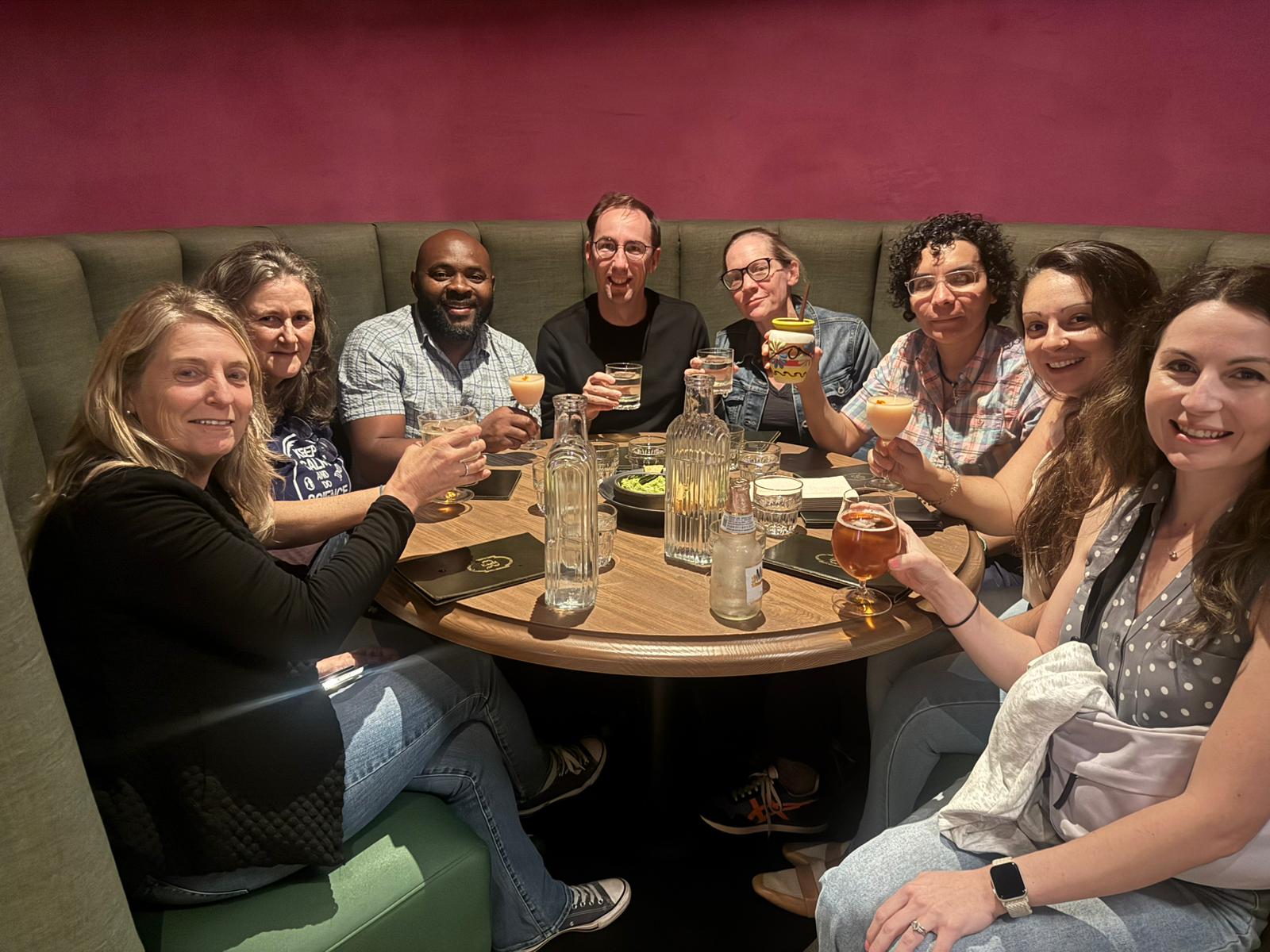
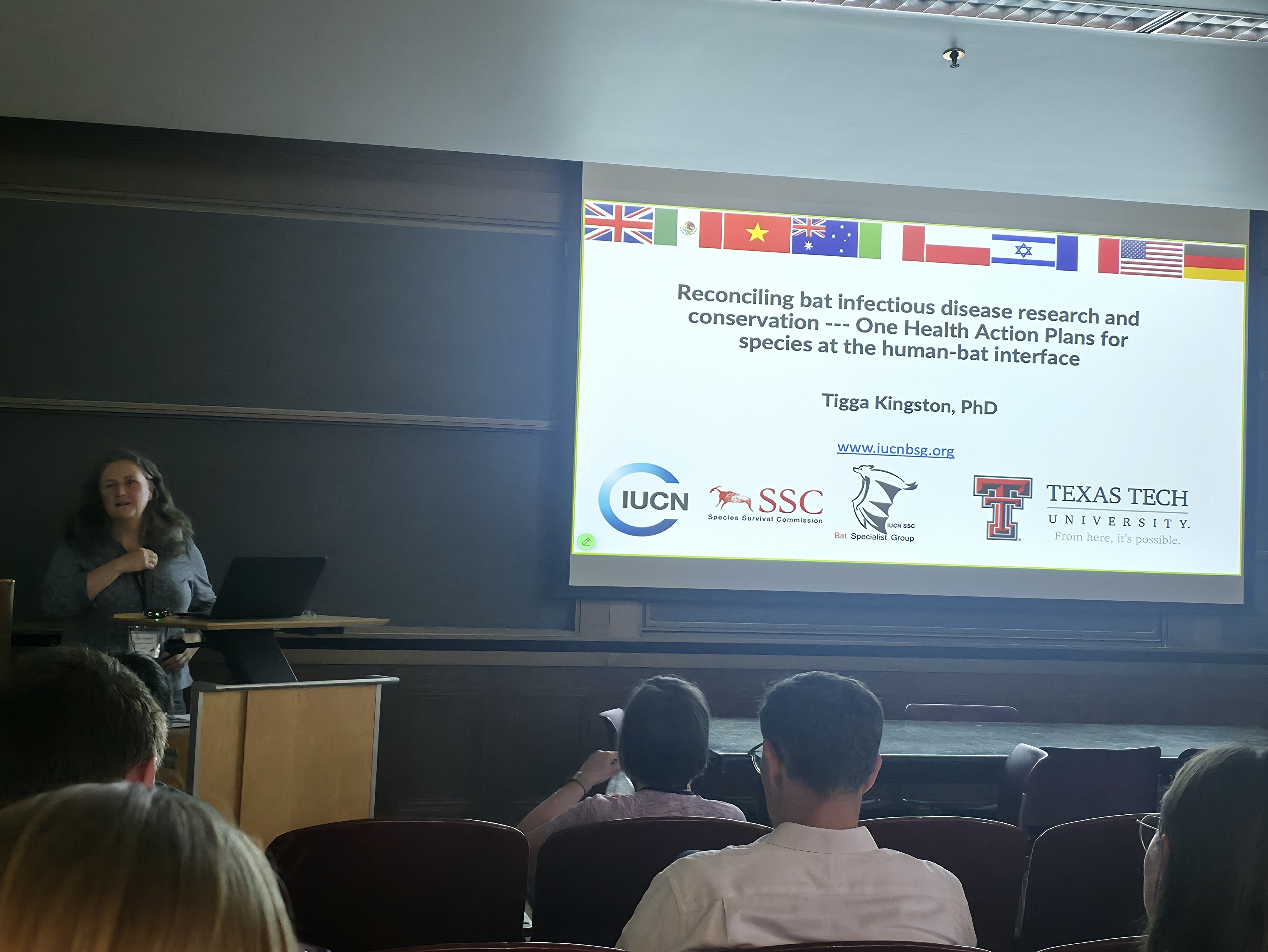
Tigga, Ben, and Abby all traveled to Chicago to present talks at BatID 2025. BatID (AKA The 4th Triennial International Symposium on the Infectious Diseases of Bats) focuses on interdisciplinary research on bats and diseases. Tigga gave a plenary on reconciling disease and conservation research in OneHealth action plans, Ben presented his talk “Targeting taste and leveraging leadership influence: a behavioral approach to reducing bat meat consumption and zoonotic disease risk”, and Abby presented on the reasons bat researchers choose to follow (or not!) IUCN guidelines on the best practices for bat fieldwork. We even had a colaborator meeting where the Nigerian project PIs and postdocs all found themselves squashed into a roost (booth) with Tracey Goldstein.
Whew, what a year! Over 1200 bats, 14 conference presentations, eight published papers, four countries, one coup, one visiting scholar, and a baby. Here’s to keeping it up in 2025!
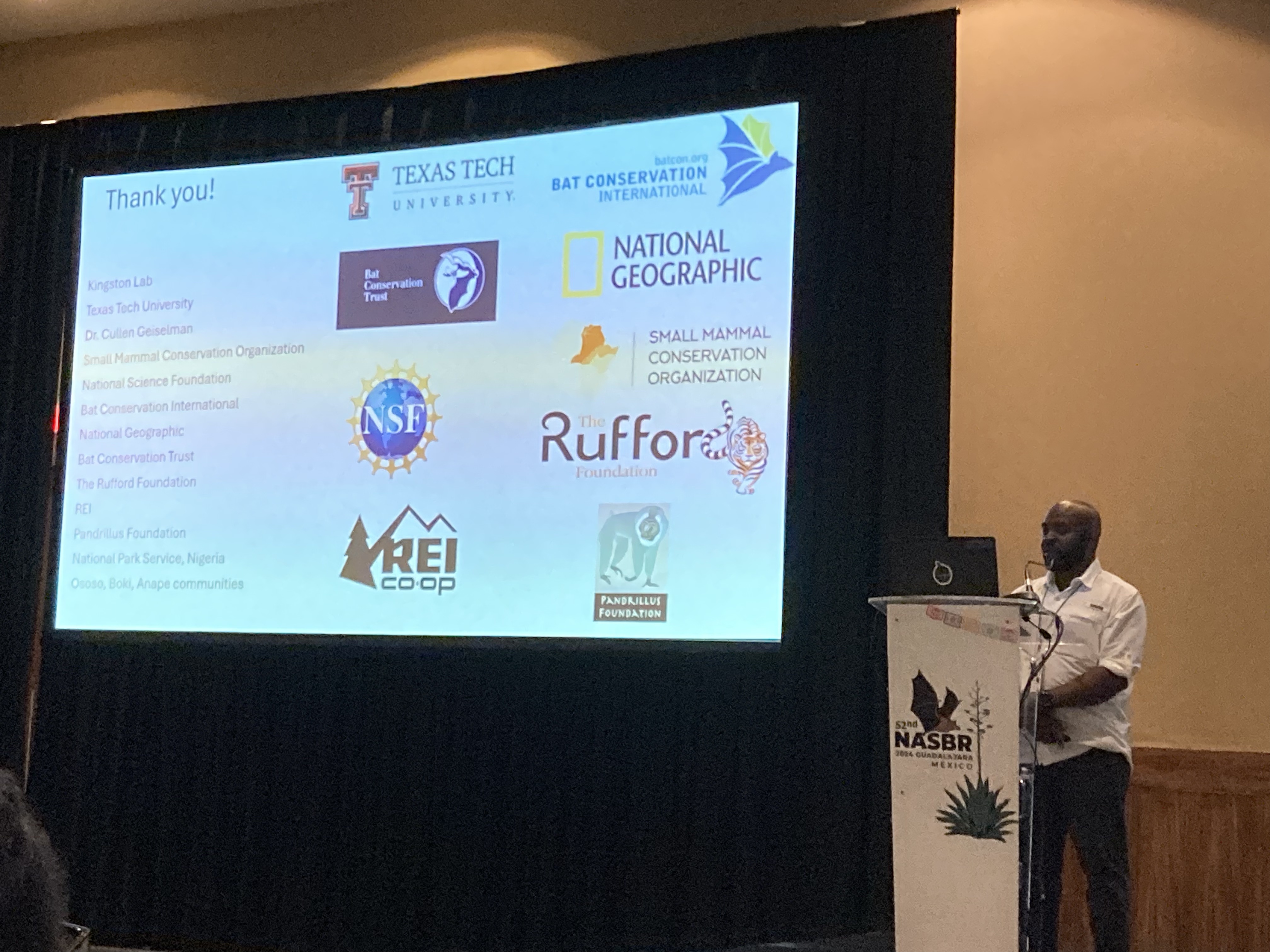
Lots of familiar faces of past and present lab members at NASBR 2024! Despite some technical difficulties, Ben presented his talk “Taste, Influence, and Availability: the Key Factors driving Bat Meat Consumption”. Ben’s talk showed that bat meat consumption is driven by an interplay of multiple socio-cultural factors rather than just economics. These findings underscore the importance of structuring conservation and public health interventions to more integratively target all drivers of behavior concern. Abby won the Luis F. Bacardi Bat Conservation Award for her talk “Bat Hunting in Sub-Saharan Africa: Mapping the Distribution of a Conservation-Relevant Human Behavior Using Hypothesis-Driven Models”, which was full of stats, bats, and maps (three of her favorite things!). Former lab post doc Maria Sagot encouraged her fellow bat scientists to join EchoMap, a collaborative global effort to increase capacity-building for bat acoustic monitoring resources. Learn more about EchoMap here. And of course, everyone had a great time at the banquet!
Want to know more about modeling human behavior for conservation research? Look no further! Abby’s got you covered in her GBatNet “My Field for Dummies” webinar, available now on YouTube (jargon optional).
Abby presenting her talkTigga explaining “What is GBatNet”
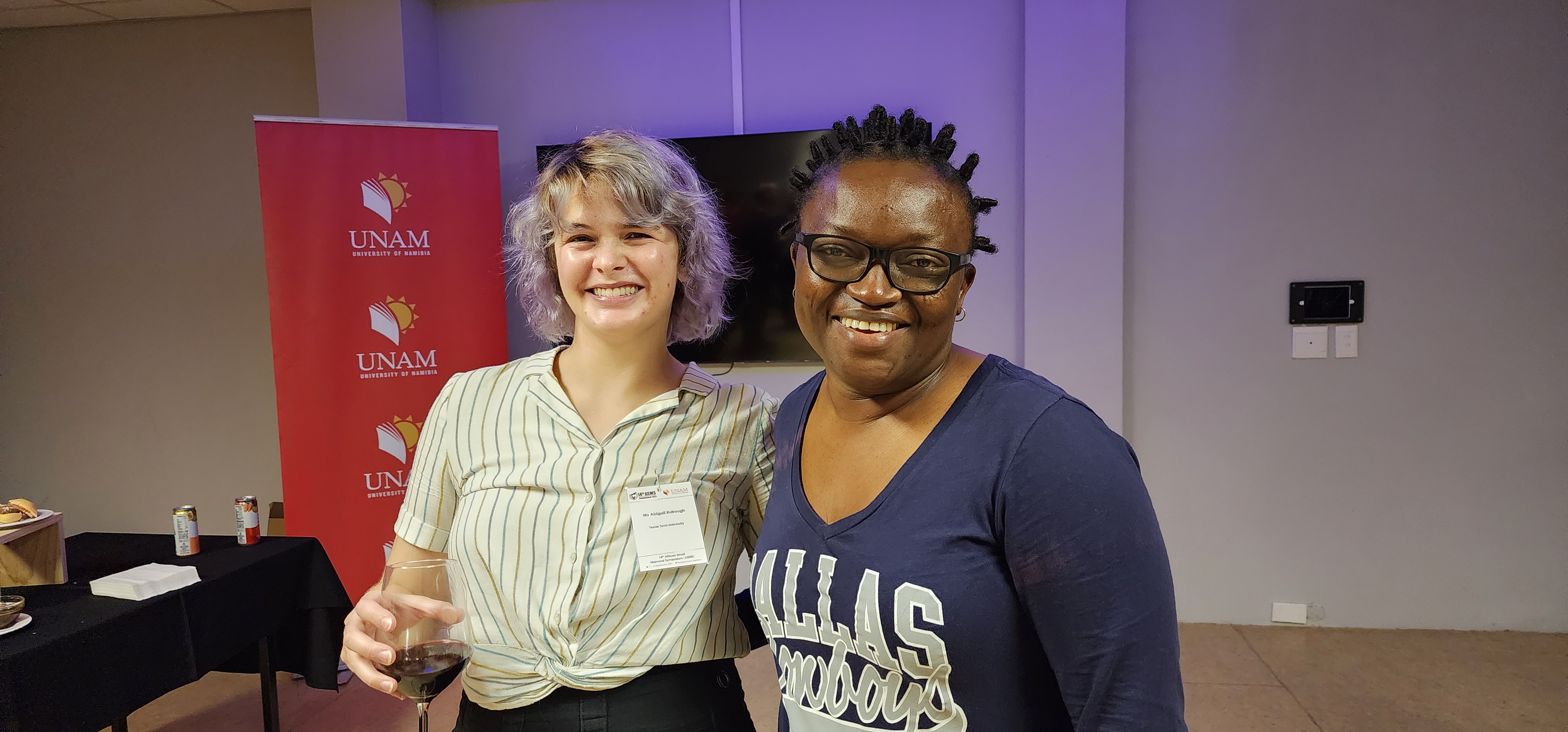
This September Tigga and Abby joined bat researchers from across Africa and around the world at the IUCN African bats Red List workshop and 14th African Small Mammal Symposium in Swakopmund Namibia. While there, Tigga led an evening workshop on grant writing, and Abby, along with fellow GBatNet student representative Cecilia Montauban, led one for students on writing applications.
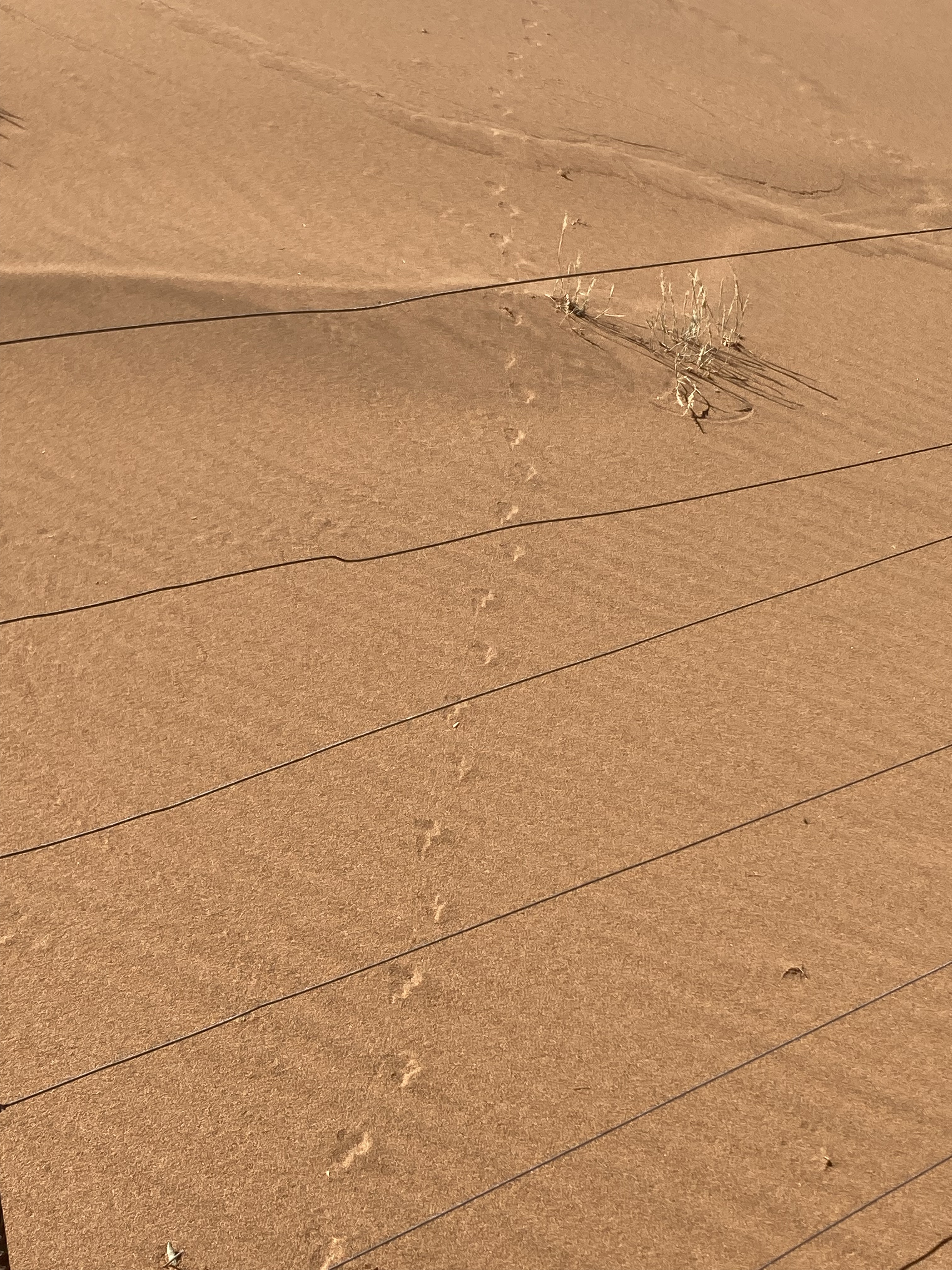
Kingston Lab past and presentWelwitschia!A good signSmall mammal tracksDunes as far as the eye can see
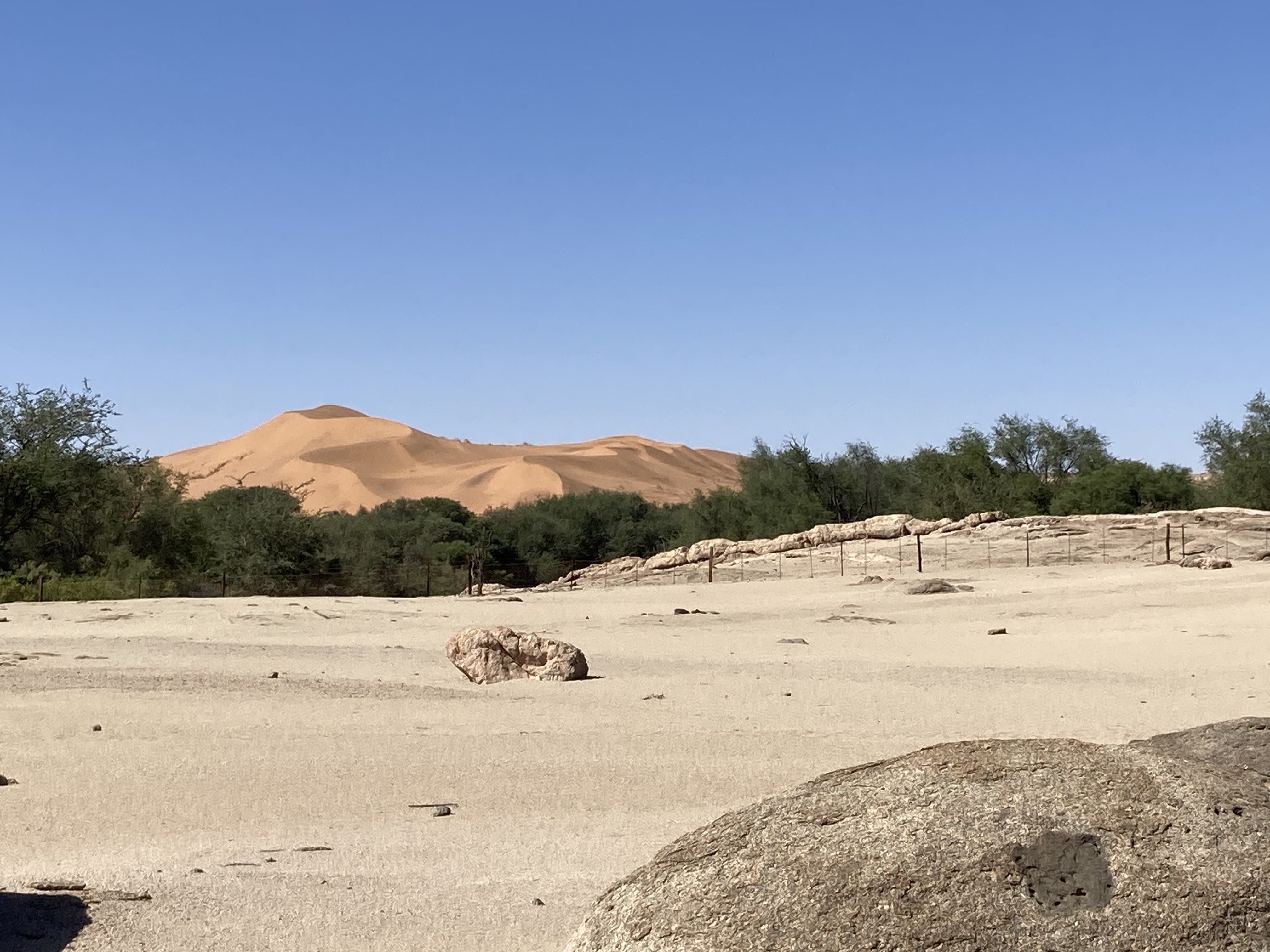
After the Red List workshop, they joined the African Small Mammal Symposium and presented work on modeling bat hunting in Sub-Saharan Africa and GBatNet. A mid-week field trip to the Gobabeb Training and Research Centre yielded some spectacular dunes and desert small mammal sightings!
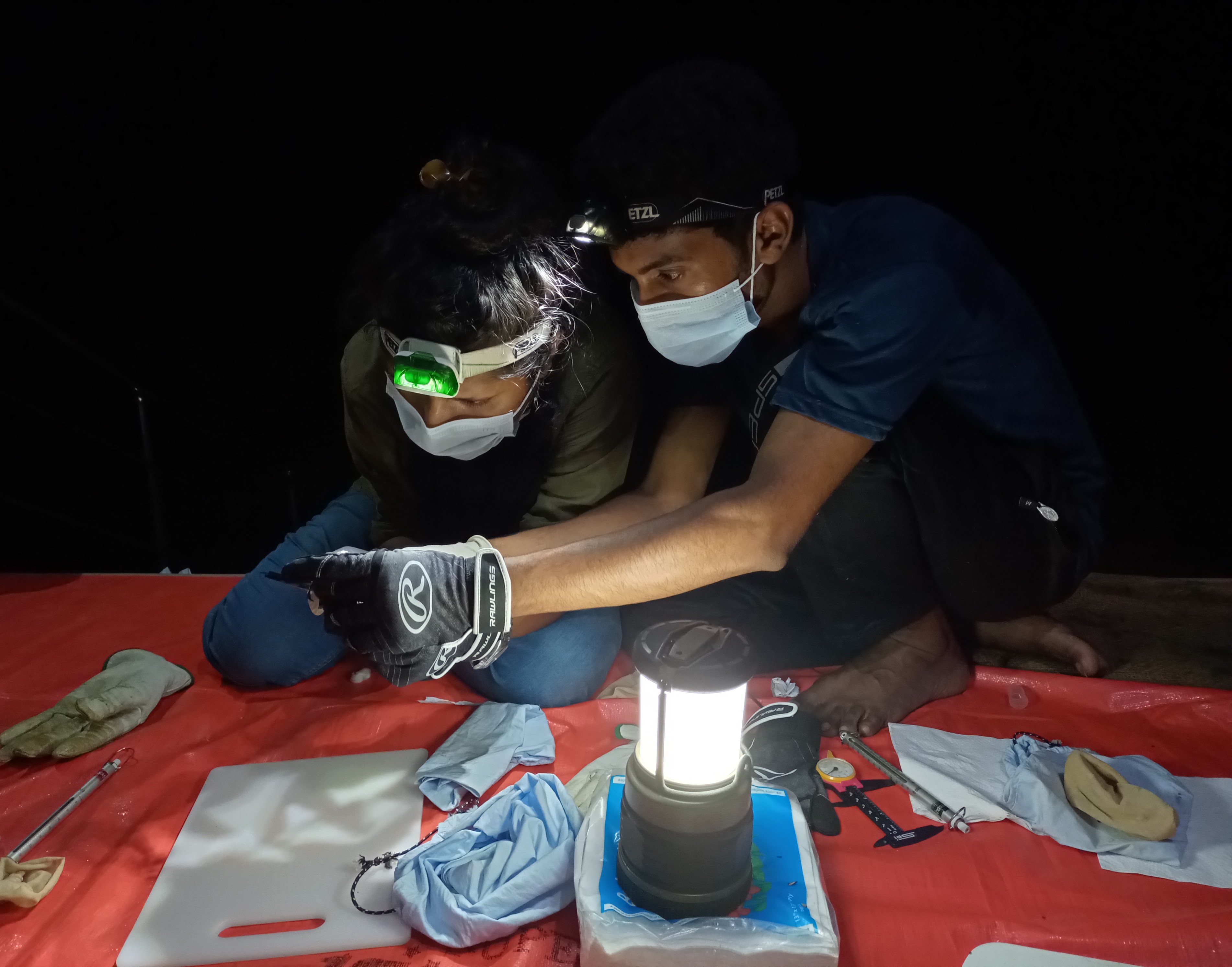
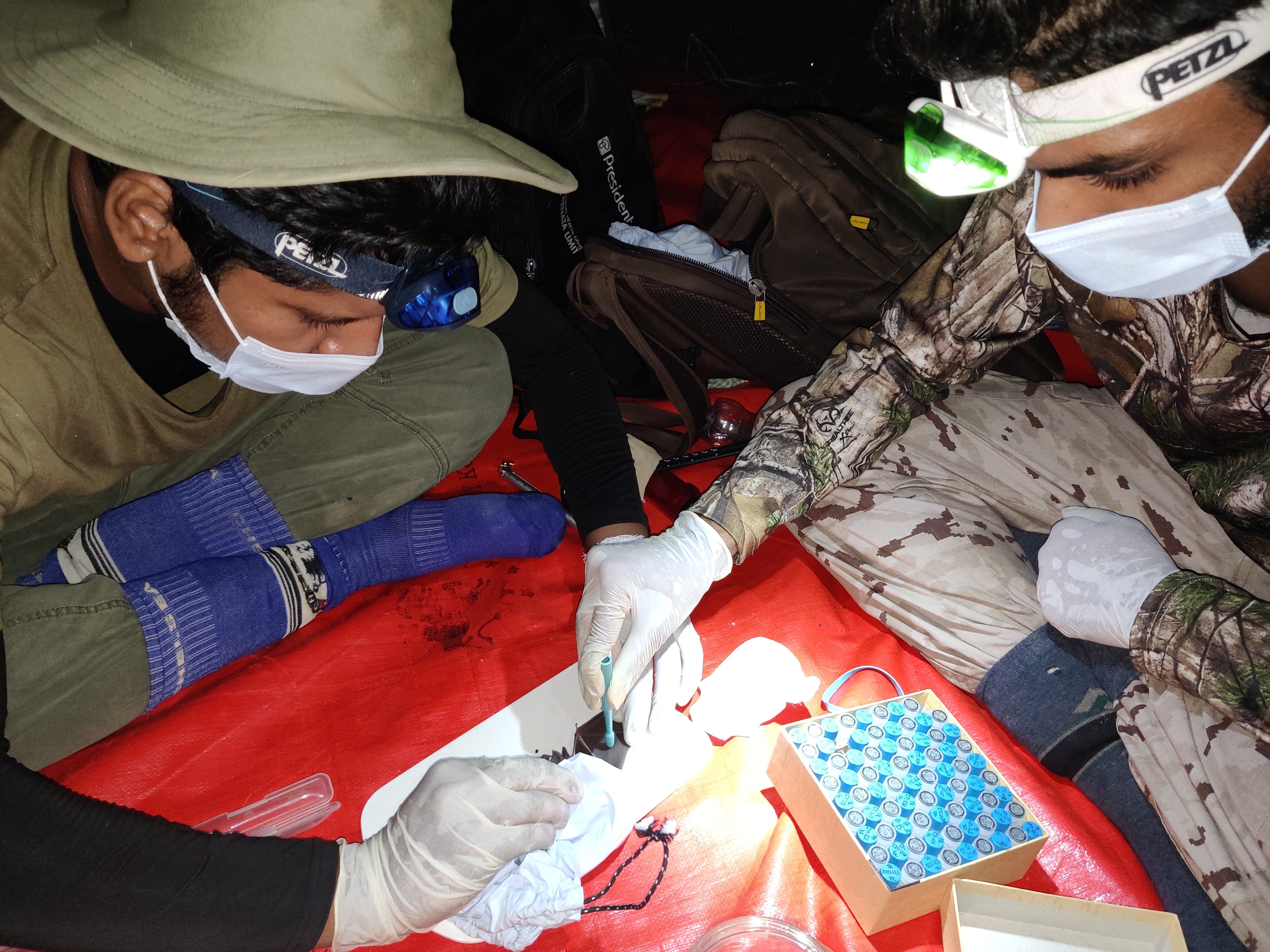
Research assistants (Left to right – Tania Akhter and Rifat Hasan) in the field collecting tissue and fecal samples.
Ashraf just finished his long waited first season of fieldwork this Summer 2022 in Bangladesh. The field season started with a Seminar as Dr. Tigga Kingston was invited to speak at the Jagannath University, Dhaka, Bangladesh as keynote speaker. Dr. Kingston’s talk was entitled “Diversity and Conservation of Bats in Paleotropics”. A further talk was given by Ashraf on the human dimension of bats and current bat research in Bangladesh, and the project “Bats of Bangladesh: Bat Assemblage Structure and Species Responses to Land-use Change” he was undertaking. Later, Dr. Kingston visited Ashraf’s field site to see if the study design was feasible and build bat research capacity. As part of the capacity building, Ashraf, and his team (4 students) received hands-on training on complementary field methods such as harp traps, mist nets, and acoustics to capture and record bats. They also got training on collecting morphometric data of bats and taxonomy.
In this season, Ashraf worked in three protected areas of Bangladesh. He and his team caught ~550 bats and ~17 species! The project was funded by the Rufford Foundation, Bat Conservation International, Michelle C. Knapp Memorial Scholarship, and obviously, the equipment support was provided by the Kingston Lab.
Tigga gives a talk at the Jagammatha UniversityTraining on collecting morphometric dataFirst harp trap ever deployed in Bangladesh!Training on setting up mist netsHands-on training to measure taxonomic featuresAdnan Ahmed (left) and Akash Mojumdar (right) collecting wing tissue sample
The end of last month brought a couple of presentations. Nick attended the 2014 CFLRP (Collaborative Forest Landscape Restoration Project) “All Hands” meeting in Santa Fe, NM on Thursday, March 27th. People from multiple agencies were there along with members of the public to discuss the status of the restoration of the southwest Jemez Mountains after the Las Conchas Wildfire of 2011. The title of Nick’s talk was “Impacts of the Las Conchas Wildfire on bat activity”.
That weekend, Joe presented at the 5th Texas Tech Annual Biological Sciences Symposium, giving a talk entitled “Roost Ensembles of Insectivorous Bats Differ in Response to Coffee Agriculture in Southeast Asia”.
Karina is in Erin Gillam’s lab at North Dakota State University, but is visiting DBS at Tech to work with Dr Baker. However, she has also joined our lab for meetings and fieldwork, and today gave us a super talk on her dissertation work – title below! Thanks Karina!
Tigga had a great time at the 3rd International Berlin Bat Meeting: Bats in the Anthropocene, where she opened the session on education and outreach with a plenary talk entitled “From research to outreach: integrative approaches and a call to arms” which was well received. The conference was a great success — congratulations to the organizers Christian Voigt and Ana G. Popa-Lisseanu.
Tigga at the conference banquet in the famous dinosaur hall of the Museum of Natural History in Berlin.
Tigga, Marina and Maria had a great time at NASBR during the last week of October. Tigga gave a talk entitled “The Role of Extreme Bandwidths in Frequency-modulated Echolocation Calls: A Tribute to Björn Siemers” in the acoustics session, which also featured a paper that Maria was a co-author on “Acoustic Behavior at Roosts of Two Distantly Related Disc-Winged Bats” (speaker was Karina Montero), and Marina’s poster “Comparing Three Bat Acoustic Sampling Methodologies for Large-scale Surveys” was very well received. Liz Siles from the Baker lab presented an oral paper in the student award section”New Insights on the Phylogenetic Diversity within the Genus Micronycteris (Chiroptera: Phyllostomidae)” (so had 15 whole minutes!!).
Tigga went on a slightly disappointing quest one evening to see Noctilioup close – it rained :0( – and I’m really sorry but Eptesicus fuscus just isn’t much of a substitute. However it was interesting to learn about the NOCTILIO project – an education research initiative. Keep up the great work!
The next meeting is combined with IBRC and is in Costa Rica (hurray!– Maria as to find me an Ectophylla alba – I still haven’t seen one).












 Kingston Lab