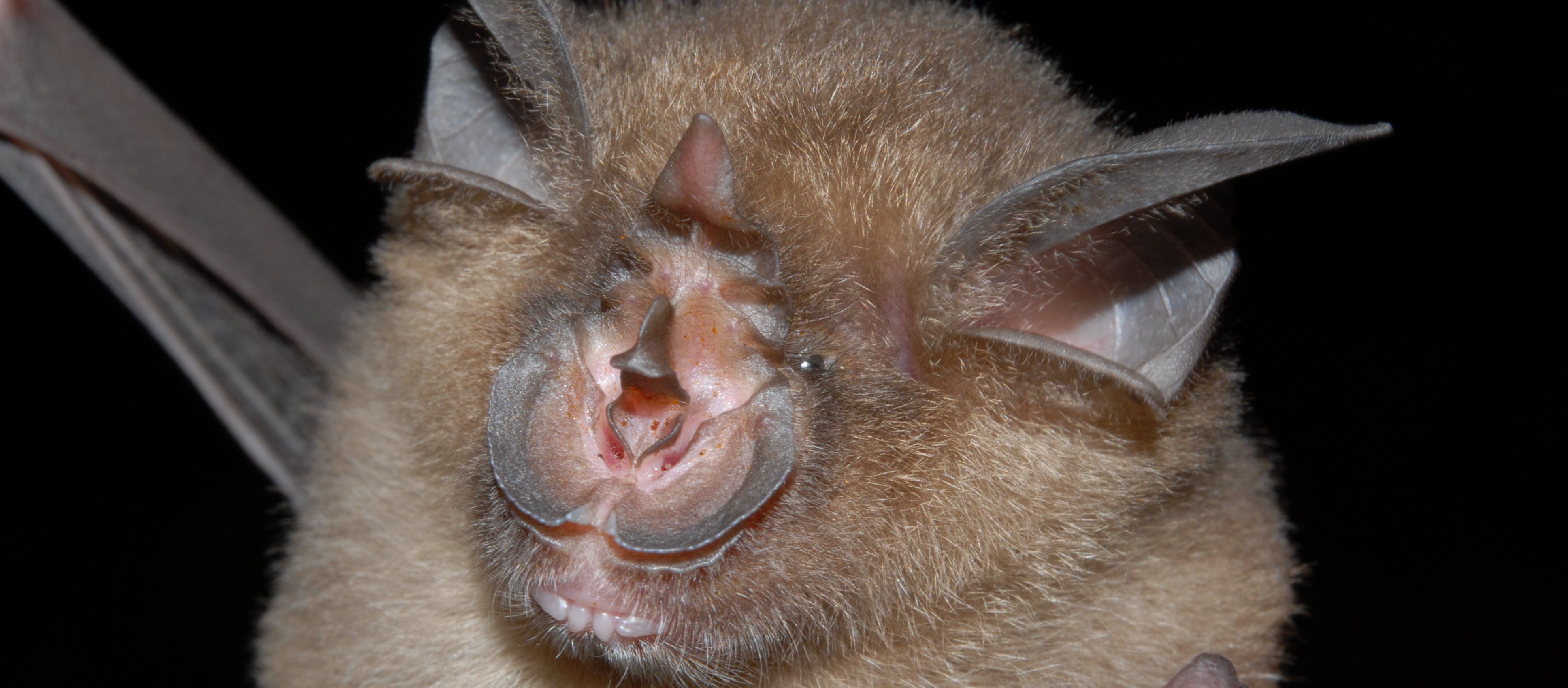
The Kingston Lab is happy to share a new publication from Ben and Tigga, just out in Animal Conservation. This one comes from years of hard fieldwork in the caves of Cross River State, Nigeria, and the findings are striking.
We set out to understand what influences Egyptian fruit bats (Rousettus aegyptiacus) to use some caves and not others. Cave area, cave complexity, cave temperature and humidity, dominant tree height etc…. all the factors known to influence roost selection in bats were accounted for. Our findings showed that hunting pressure from humans was the most important driver of roost use. Caves showing the highest levels of hunting pressure, measured using counts of abandoned hunting sticks, held the fewest bats and in many cases none at all. We also identified a clear threshold: beyond six hunting sticks, bat abundance drops sharply, suggesting that’s the point at which bats start abandoning roosts or are hunted to local extinction. Meanwhile, the two caves holding the biggest colonies in the landscape? Completely inaccessible to hunters. The bats, it seems, know what’s good for them.
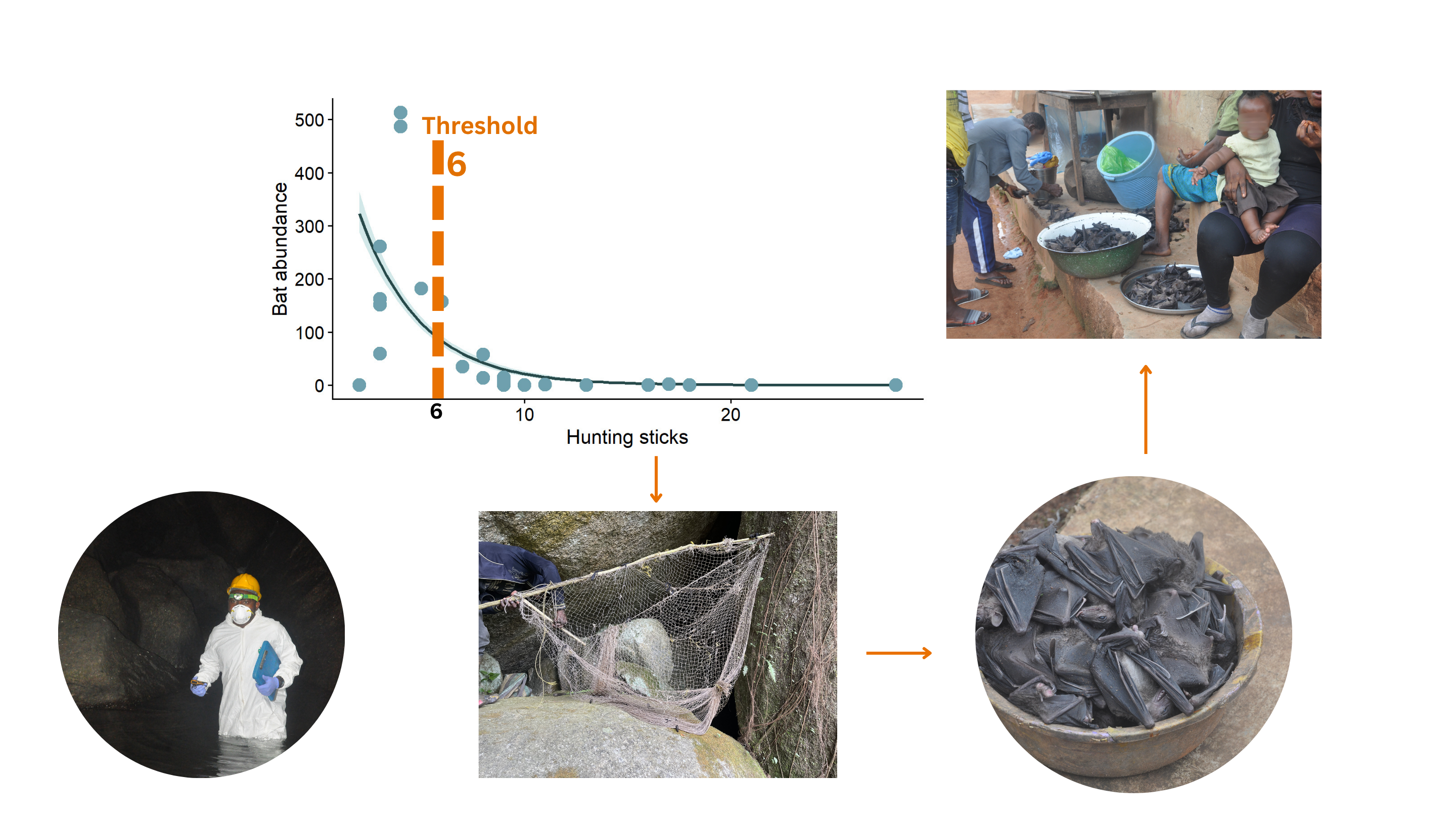
The conservation implications are significant on their own – R. aegyptiacus has slow reproductive rates, and offtake of up to 4000 bats per cave visit (as we observed in this study) makes recovery extremely difficult. But the One Health angle makes this even more urgent. This species is a known reservoir of Marburg virus, and intense hunting is redistributing bats across the landscape, and also concentrating large aggregations near human settlements, potentially increasing spillover risk.
Check out the full paper here!
 Kingston Lab