Nigeria Field Update 2024: Integrative Disease Ecology Field Season Successfully Completed!

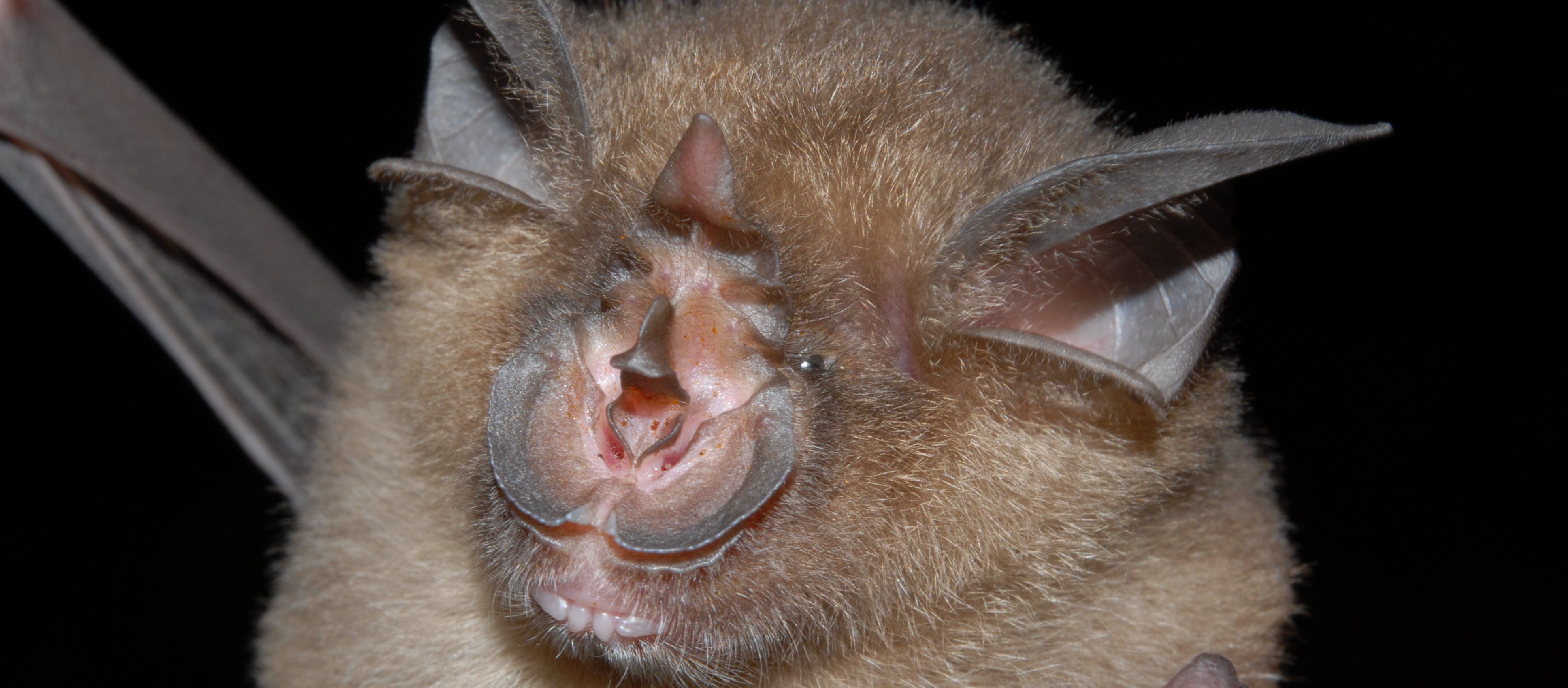
Our second field season in Nigeria wrapped up this summer after an intensive seven months of bat surveys and sampling (November 2023 – June 2024). Ben led a field team of 15 to survey 17 caves across two sites in southern Nigeria sampling 1266 bats. This work is part of our larger collaborative effort to understand how human disturbance affects the complex relationships between bats, their environment, and their host viruses – critical knowledge for predicting and preventing viral spillover events. While focusing on the ever-cute Egyptian fruit bat (Rousettus aegyptiacus), the team also sampled other 17 bat species including the beautiful Otomops martiensseni, a new country record for Nigeria!

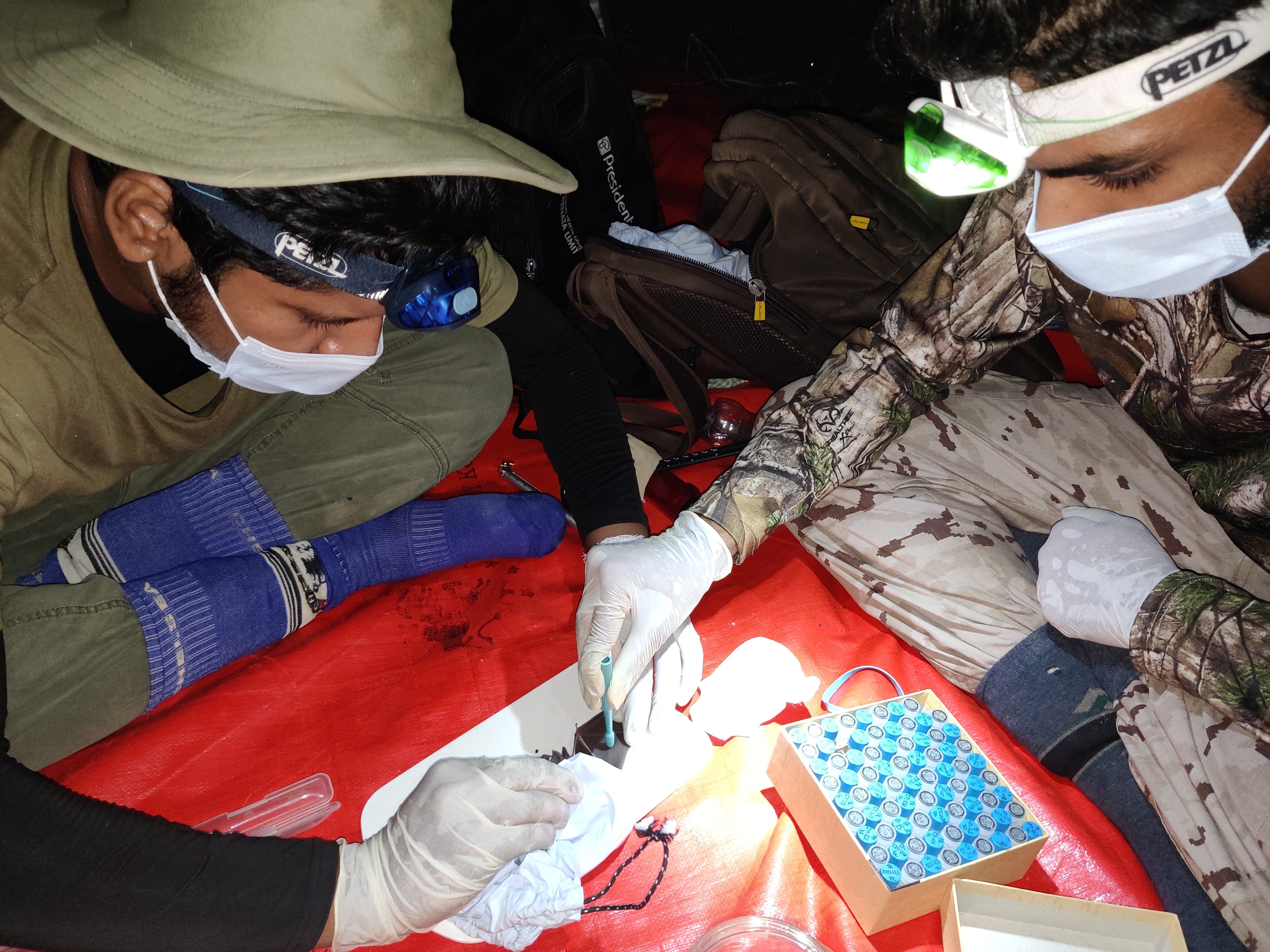
The team collecting samples
Caving is fun!
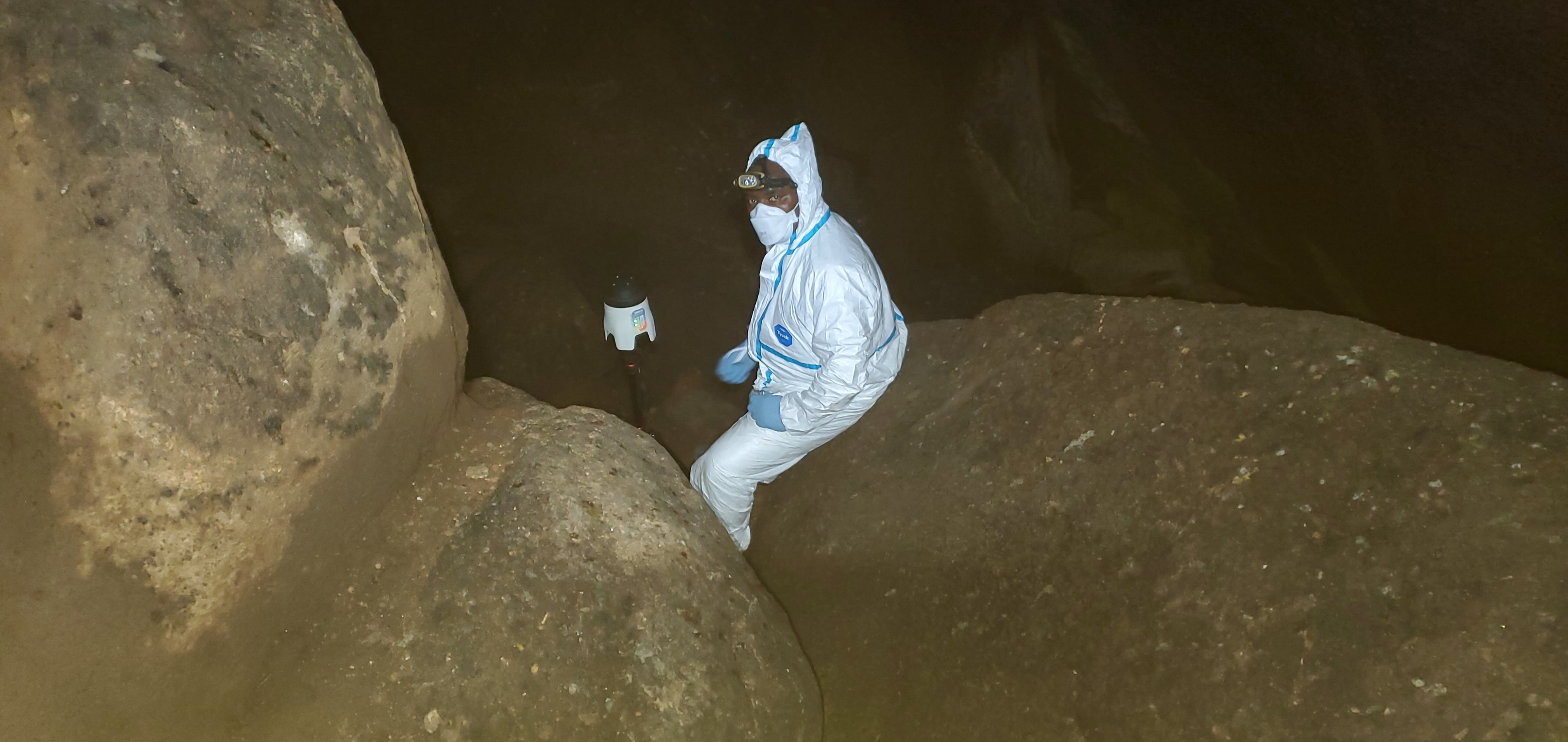
Ben installing an air sampler to trial a new e-sampling technique in a cave

Perhaps most importantly, this field season significantly strengthened the local capacity for bat research in Nigeria. Tigga and Dr. Simon Anthony were there to train field team on biosafety, sampling techniques etc.

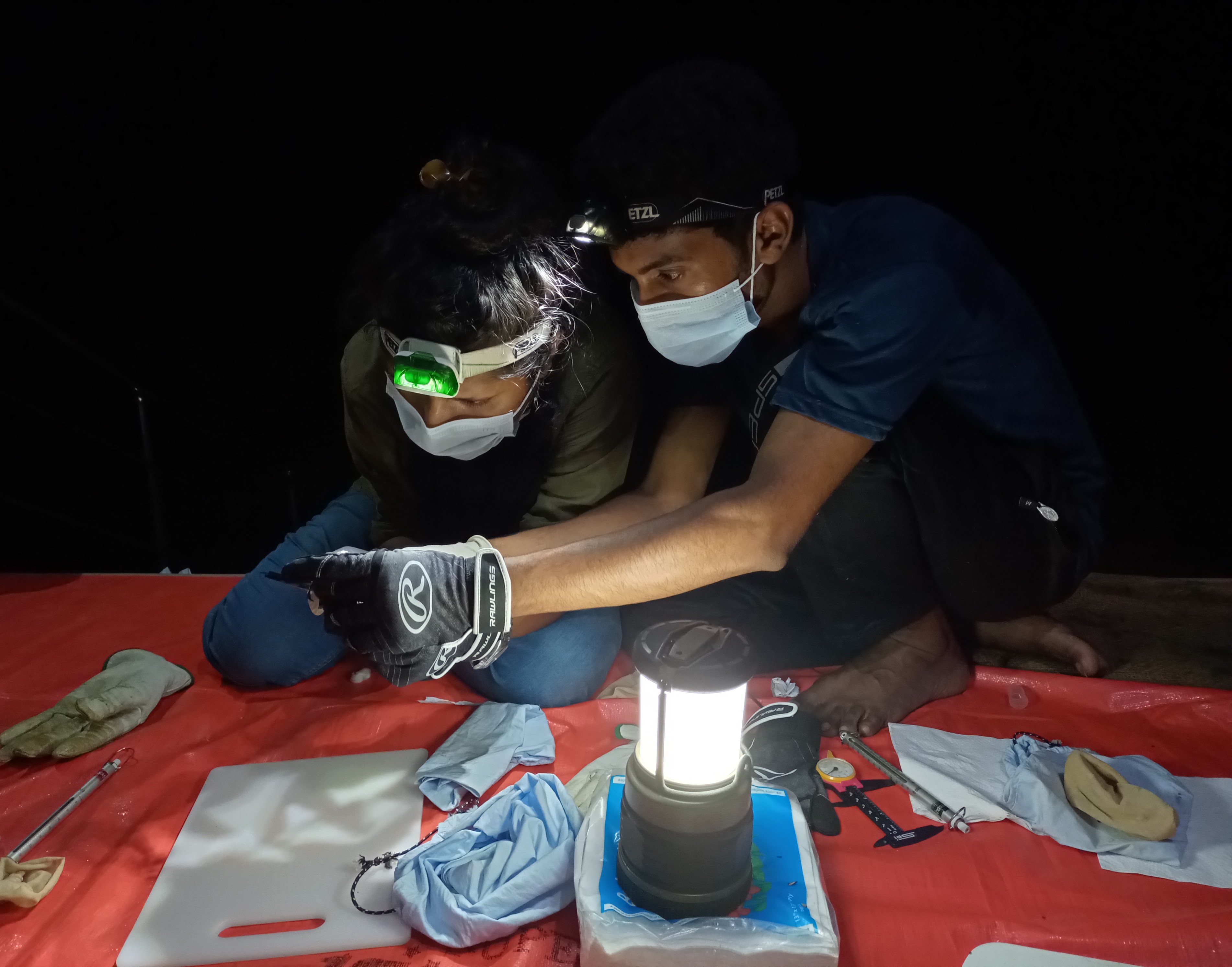
Tigga demonstrates the use of calipers

The field season came with its fair share of challenges—maintaining cold chains for sample preservation was no cakewalk, with liquid nitrogen sources a bone-rattling 10-hour drive away. Add that to the logistical hurdles of hauling a 15L liquid nitrogen-charged dry shipper up and down a steep mountain, requiring a grueling 9-hour hike each way. But the dedication of the field team, especially our Nigerian colleagues, made it all fun.
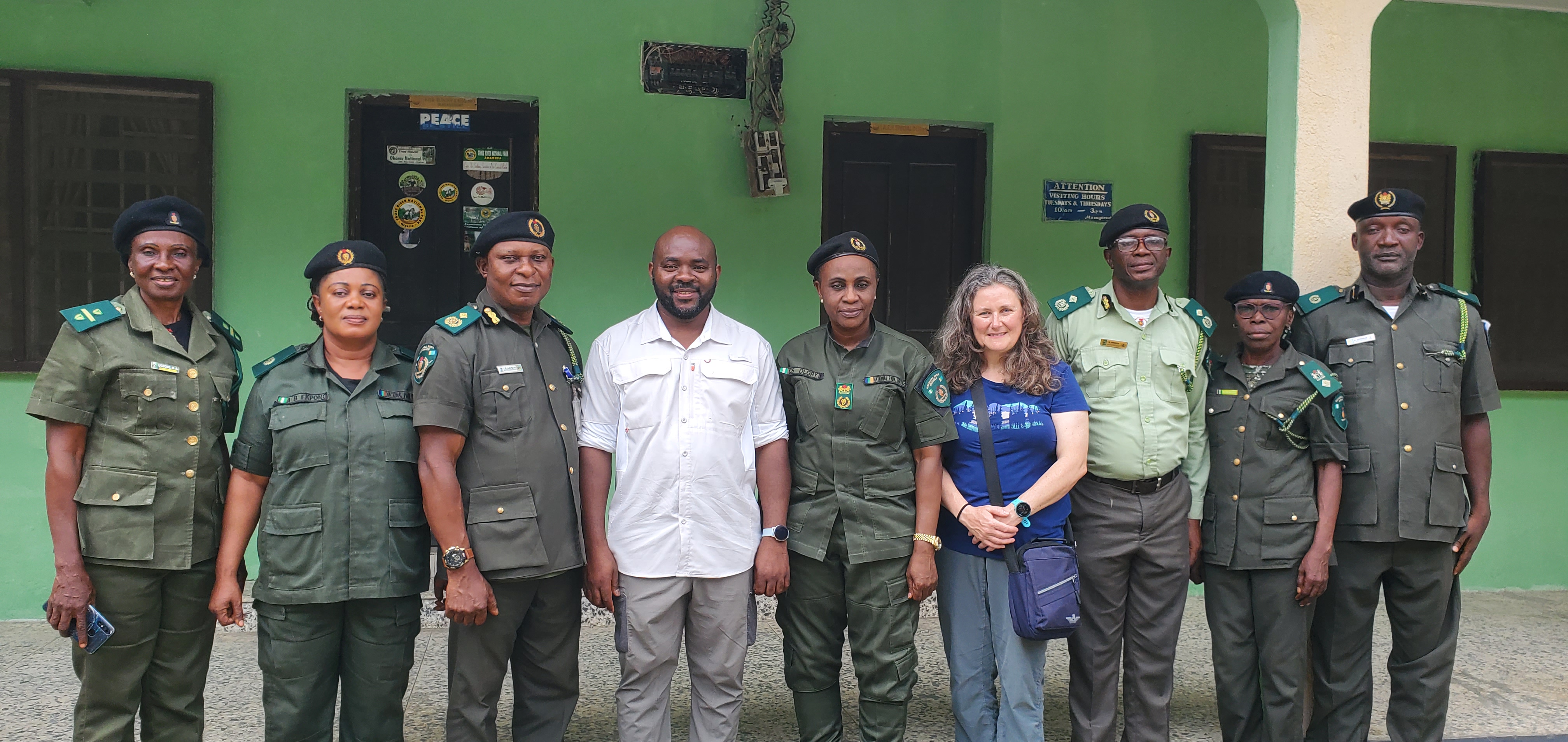
Ben and Tigga took time to visit the Conservator of Park, Cross River State National Park
When you have a 9-hour hike on your hands, it’s hard not to stop every now and then for snacks and photos!
You need an army of enthusiastic porters all the time

Ashraf’s First Field Season Yields ~550 Bats and ~17 Species!

Research assistants (Left to right – Tania Akhter and Rifat Hasan) in the field collecting tissue and fecal samples.

Ashraf just finished his long waited first season of fieldwork this Summer 2022 in Bangladesh. The field season started with a Seminar as Dr. Tigga Kingston was invited to speak at the Jagannath University, Dhaka, Bangladesh as keynote speaker. Dr. Kingston’s talk was entitled “Diversity and Conservation of Bats in Paleotropics”. A further talk was given by Ashraf on the human dimension of bats and current bat research in Bangladesh, and the project “Bats of Bangladesh: Bat Assemblage Structure and Species Responses to Land-use Change” he was undertaking. Later, Dr. Kingston visited Ashraf’s field site to see if the study design was feasible and build bat research capacity. As part of the capacity building, Ashraf, and his team (4 students) received hands-on training on complementary field methods such as harp traps, mist nets, and acoustics to capture and record bats. They also got training on collecting morphometric data of bats and taxonomy.

In this season, Ashraf worked in three protected areas of Bangladesh. He and his team caught ~550 bats and ~17 species!  The project was funded by the Rufford Foundation, Bat Conservation International, Michelle C. Knapp Memorial Scholarship, and obviously, the equipment support was provided by the Kingston Lab.