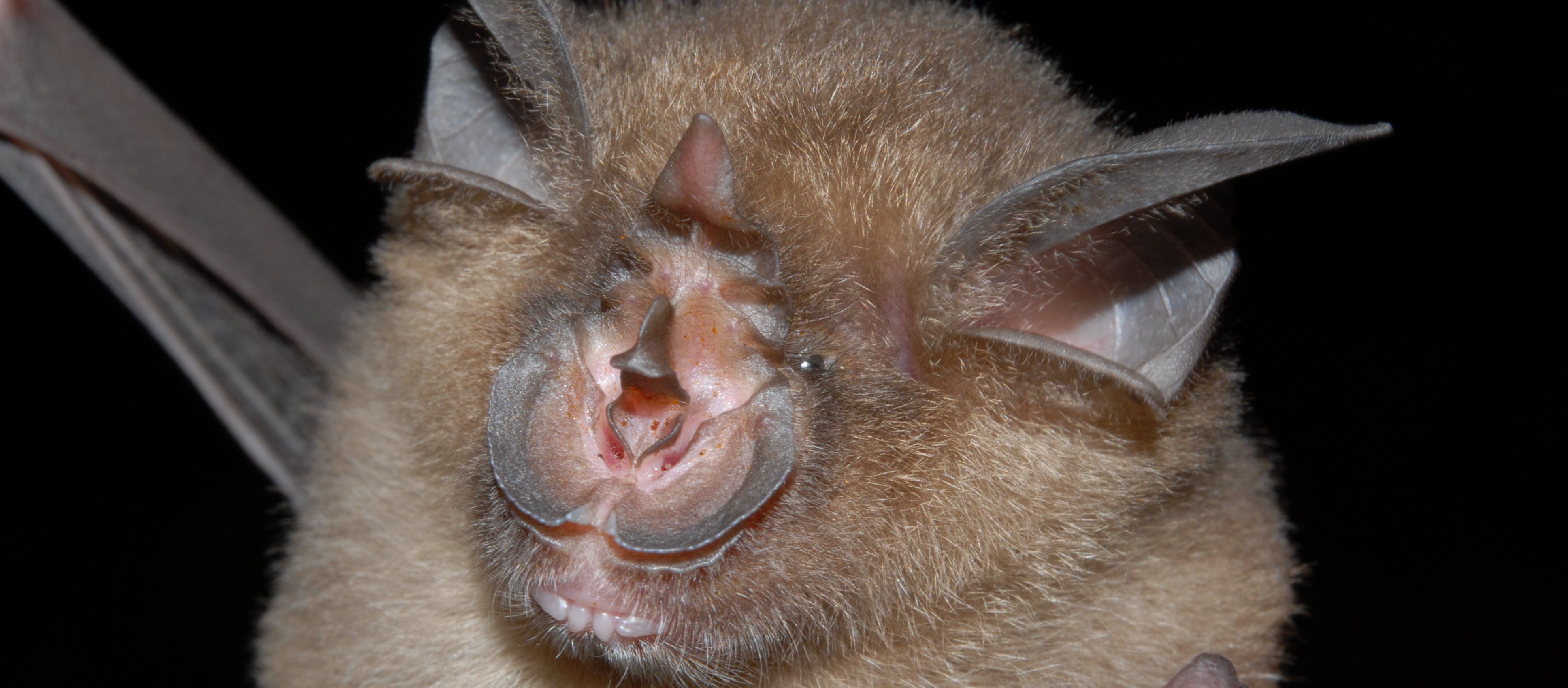
From research to action: the impact of Kingston lab at the Southeast Asian Bat Conference 2024

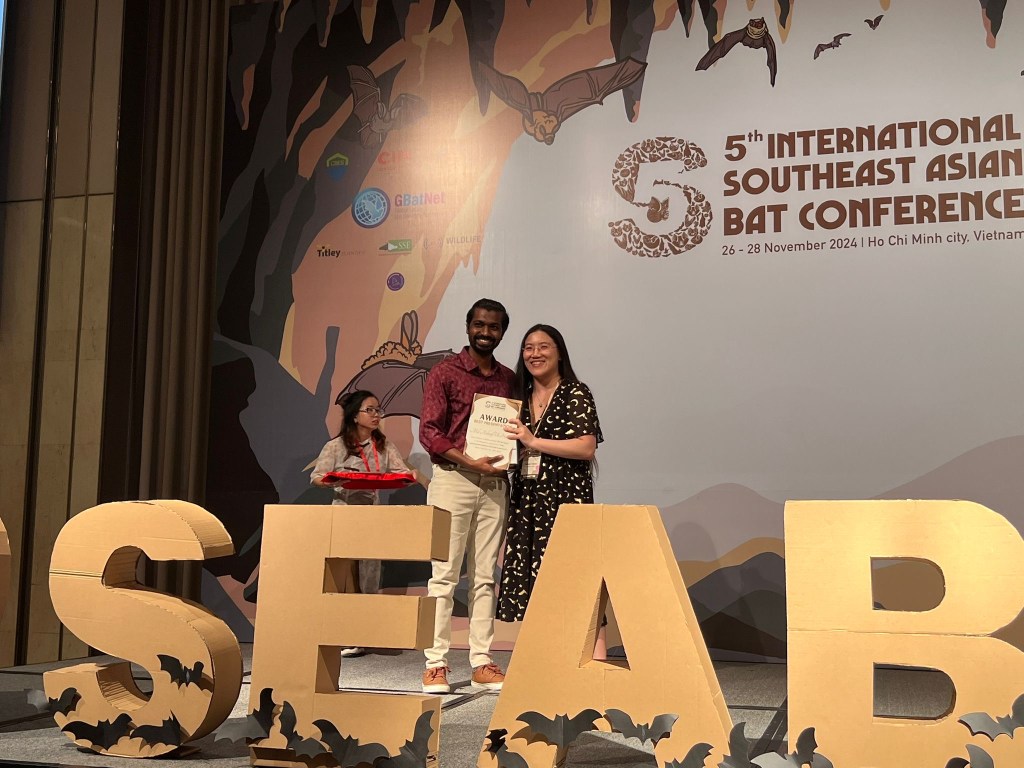
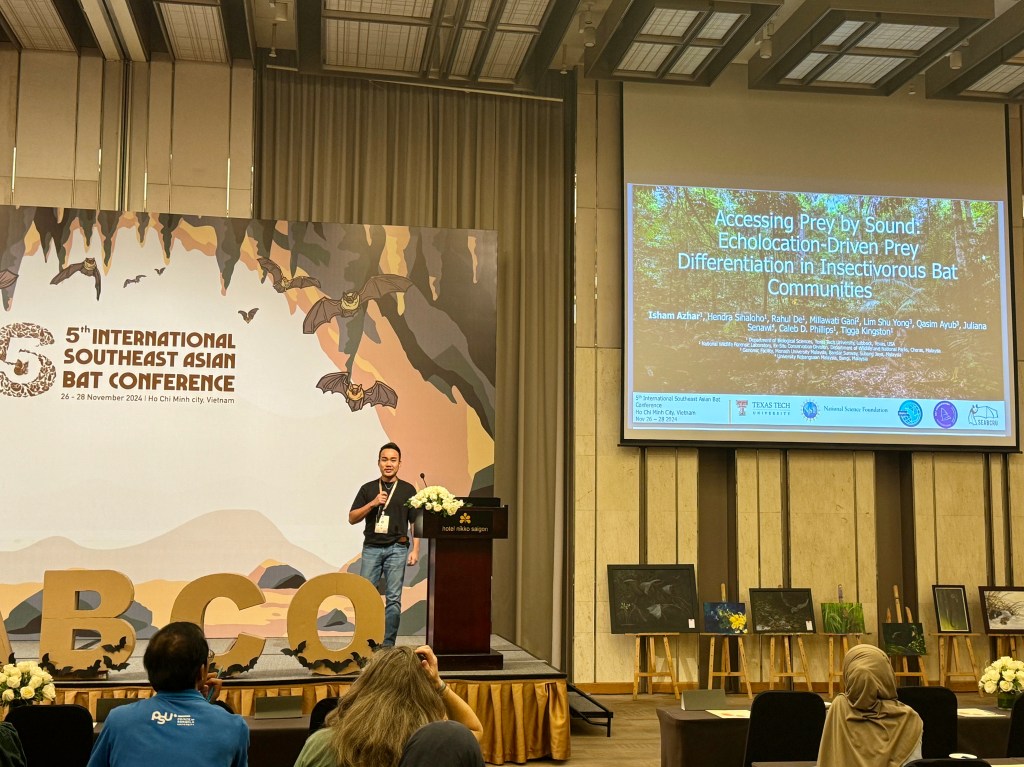
Kingston Lab members Isham and Ashraf attended in the 5th International Southeast Asian Bat Conference in Vietnam (November 25–28, 2024). Both presented their PhD research, with Ashraf’s presentation earning him the second-best presenter award of the conference – congratulations, Ashraf!
Tigga led two impactful workshops during the conference:

  • Field Hygiene in Practice: Demonstrating the use of Personal Protective Equipment (PPE) to prevent the risk of potential microbe transmission between humans and wildlife.
  • Cave Bat Conservation: Reviewing conservation strategies, identifying critical cave systems, developing monitoring systems, and fostering cross-country collaboration for unexplored cave surveys.
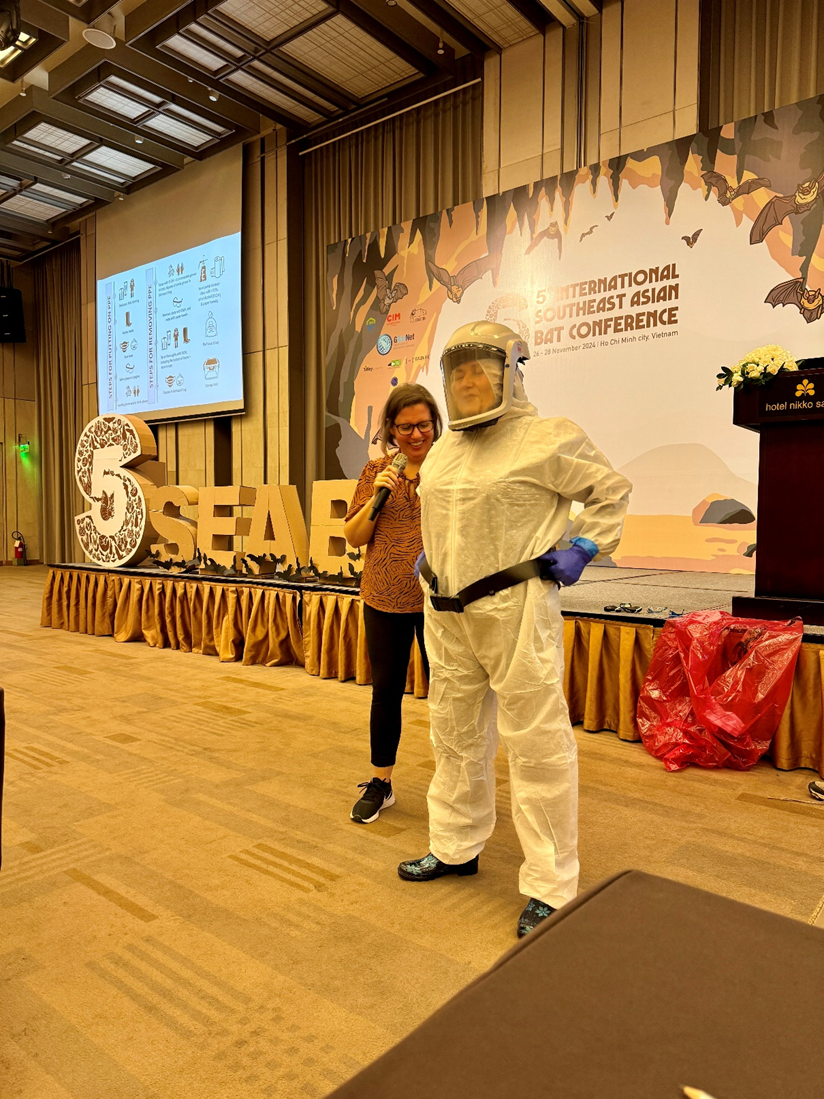
Tigga in action – suiting up for science and safety (because every bat mission needs the right gear!) with a PPE demo!

The post-conference trip to Cat Tien National Park featured hands-on demonstrations by Tigga and lab alumna Dr. Kendra Phelps, where they guided participants through field hygiene protocols from the IUCN SSC Bat Specialist Group. These demonstrations emphasized the use of appropriate PPE for studying cave bats, the application of disinfectants, and safe fieldwork practices to minimize microbe transmission risks between bats and humans.

Helping build the next generation of collaborative international bat researchers!

GBatNet’s student and early career scholars from around the world, including Ashraf and Abby, gathered in Tempe, Arizona, for our first-ever in-person student-only workshop on developing multidisciplinary, international research collaborations. Part of PI Tigga Kingston’s broader Global Union of Bat Diversity Networks, these students and recent grads were mentored in grant writing and project development by co-PIs Nancy Simmons and Susan Tsang, and former lab member Iroro Tanshi. Three very full days and a fantastic field trip to catch bats at a Macrotis californicus roost later (thank you Arizona Department of Fish and Game!), everyone walked away having written four collaborative grant proposals.

We look forward to seeing where these projects go!

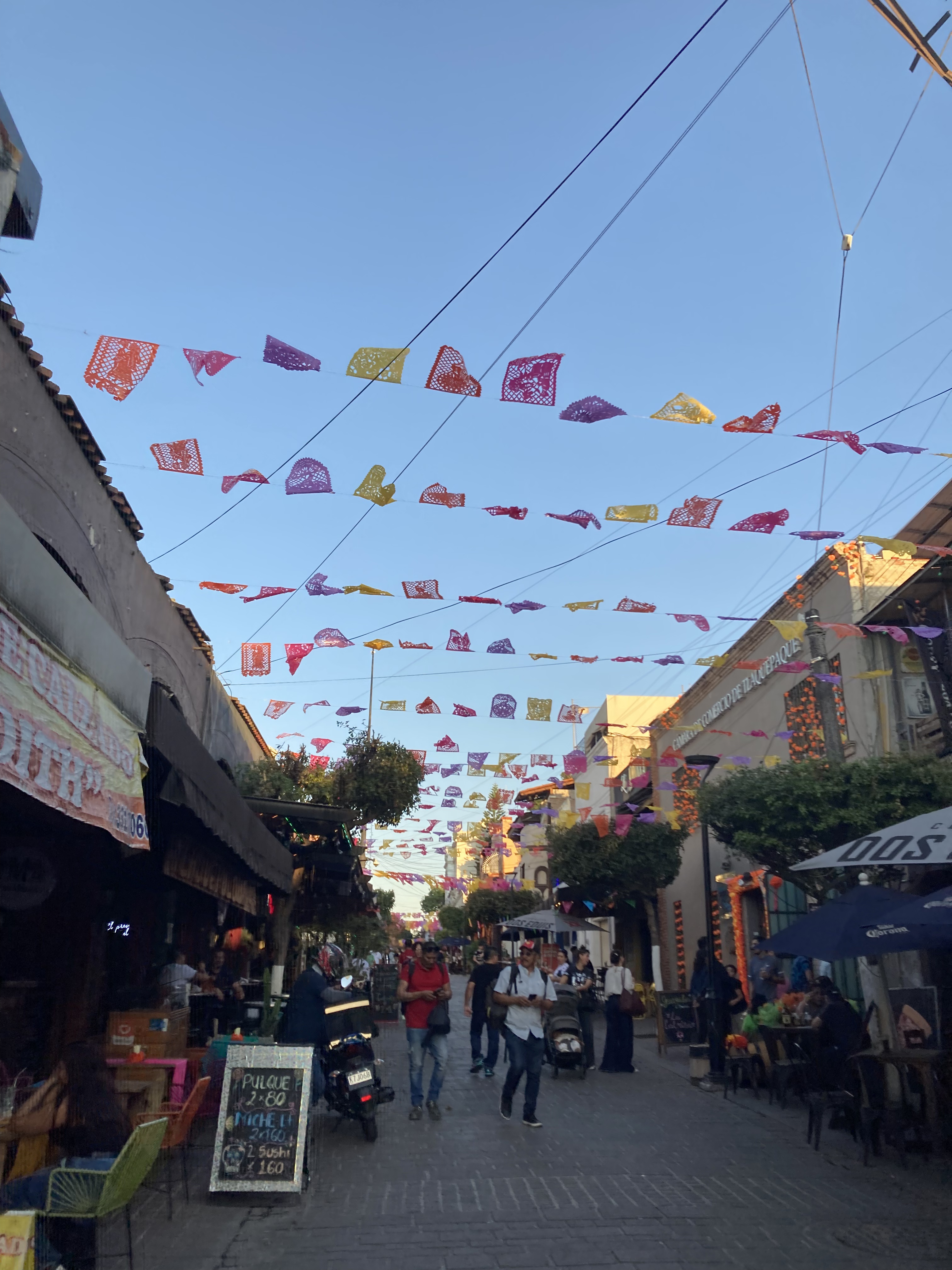
Bats and Taquilla in Guadalajara, NASBR 2024 was a blast!

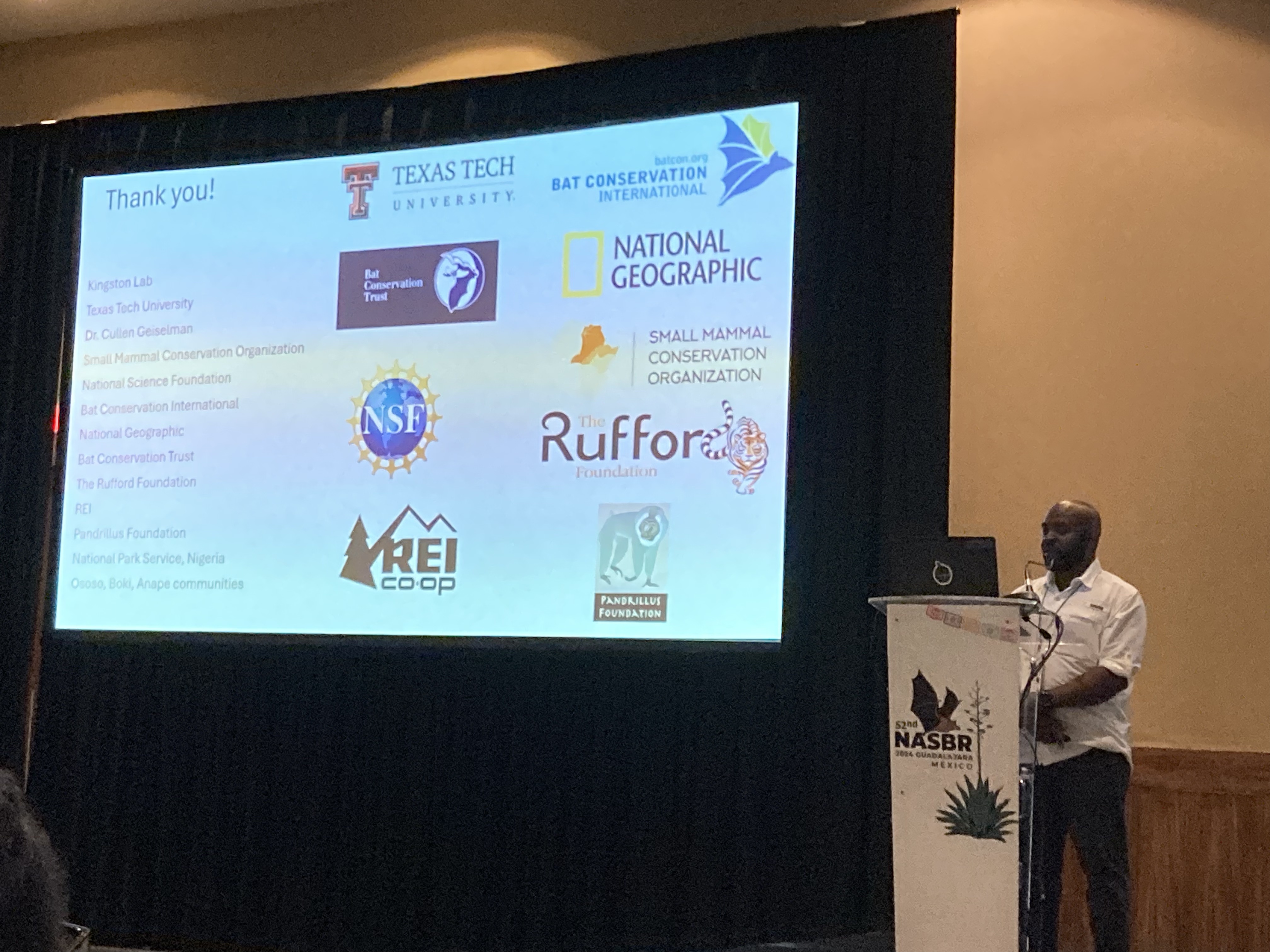
Lots of familiar faces of past and present lab members at NASBR 2024! Despite some technical difficulties, Ben presented his talk “Taste, Influence, and Availability: the Key Factors driving Bat Meat Consumption”. Ben’s talk showed that bat meat consumption is driven by an interplay of multiple socio-cultural factors rather than just economics.  These findings underscore the importance of structuring conservation and public health interventions to more integratively target all drivers of behavior concern. Abby won the Luis F. Bacardi Bat Conservation Award for her talk “Bat Hunting in Sub-Saharan Africa: Mapping the Distribution of a Conservation-Relevant Human Behavior Using Hypothesis-Driven Models”, which was full of stats, bats, and maps (three of her favorite things!). Former lab post doc Maria Sagot encouraged her fellow bat scientists to join EchoMap, a collaborative global effort to increase capacity-building for bat acoustic monitoring resources. Learn more about EchoMap here. And of course, everyone had a great time at the banquet!

GBatNet meeting 2024: building a sustainable future for bats

To promote a shared vision of sustainable bat diversity in a changing world, the Global Union of Bat Diversity Networks (GBatNet) organized a meeting in Houston, Texas, from May 21–23, 2024. The event united 79 participants, including 19 vibrant student representatives, among them were Abby, Ashraf, and Touseef from Kingston Lab, showcasing the lab’s leadership in global conservation efforts. Fifteen working groups shared updates on their projects and set actionable goals for the next 1–3 years. Student representatives actively engaged with the working groups, exploring opportunities and contributing their energy and ideas.

Participants of GBatNet 2024 united for a sustainable future in bat diversity

Isham won the Vernon Bailey Award 2023!


Isham recently attended the Texas Society of Mammalogists Annual Meeting and presented his work: “Forest Fragments Contribute to the Maintenance of Paleotropical Bats Functional Diversity” where he won the Vernon Bailey Award for the best poster presentation in classical mammalogy at the organismal level. His work highlights that there is an increasing dissimilarity between co-existing species in forest fragments relative to those in continuous forests, a pattern that may be linked to niche expansion. Overall, forest fragments may contribute to the maintenance of functional diversity of insectivorous bat communities at the landscape level, although large tracts of forest are important for forest specialists.

Postdoctoral Researcher on Bat Microbiomes

The labs of Tigga Kingston and Caleb Phillips at Texas Tech University are seeking to fill a post-doc position as part of the National Science Foundation-supported project “Community processes structuring assembly and disassembly of bat gut-microbial communities across a gradient of habitat degradation”. This project integrates bat genetics, molecular dietary analysis, and microbiome data from forest interior insectivorous bats sampled across a habitat degradation gradient in Malaysia with the objective of quantifying processes and relationships shaping microbiome communities. As such, the successful applicant with have expertise and enthusiasm for the integration of omics data and ecology.  The position will be funded for one year with a possible second year depending on performance. The position is open to applicants wishing to relocate to Lubbock, Texas, as well as to those preferring to work remotely within the United States.  Application packages should include CV, contact information for three references, Research Statement, and three examples of the applicant’s published work.  Please submit applications to caleb.phillips@ttu.edu with the subject line “Microbiome Assembly Postdoc”.