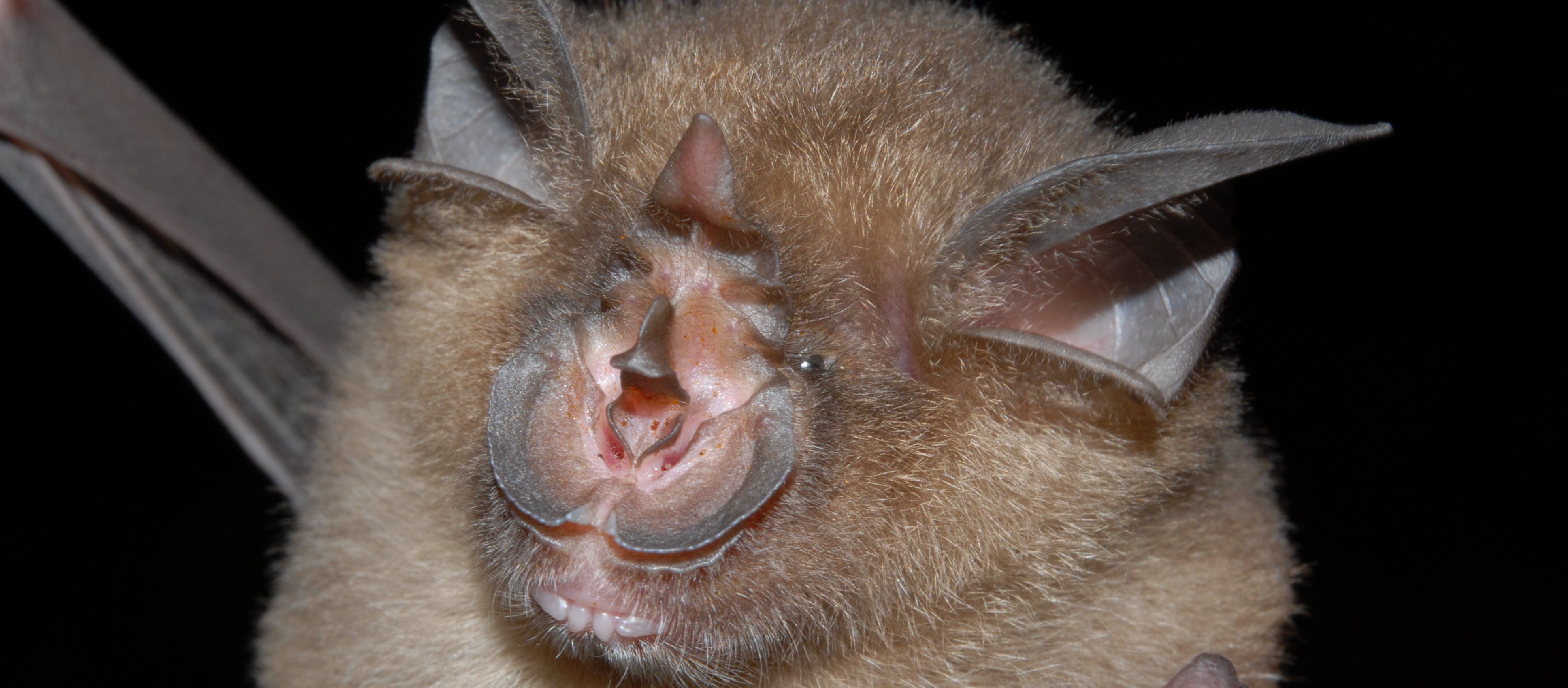
AMR is a growing One Health concern, and understanding the role of wildlife, especially species like flying foxes, in spreading resistant bacteria is crucial for the health of humans, animals, and the environment.
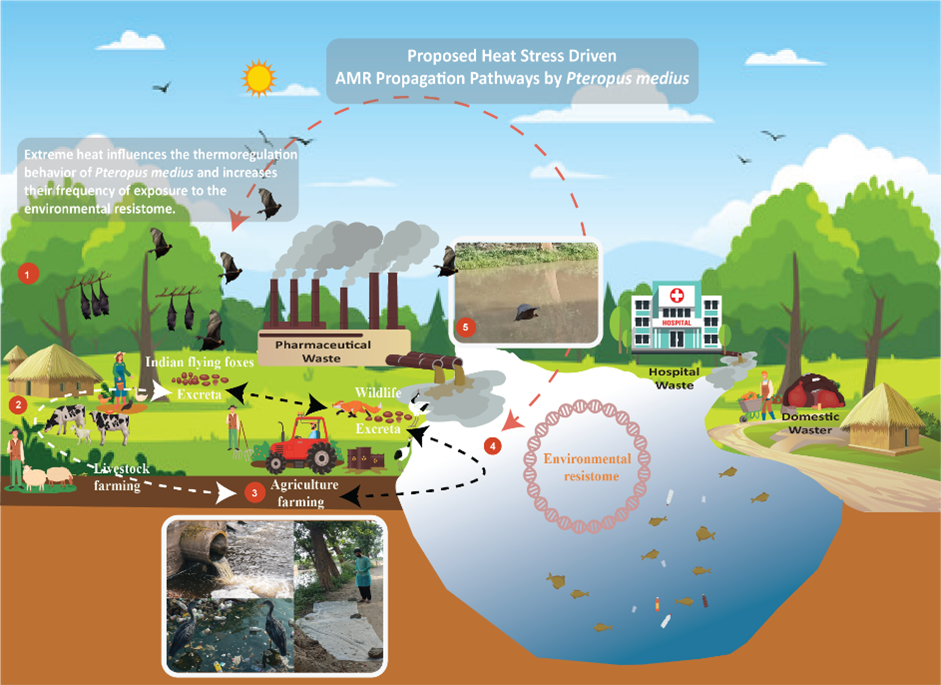
Touseef’s research focuses on an important, yet often overlooked, driver of antimicrobial resistance (AMR) – environmental temperature and relative humidity. These factors indirectly affect wildlife behaviors, which can increase the risk of encountering antimicrobial residues and pathogenic Extended Spectrum β-Lactamase (ESBL) producing E. coli.
Research Key Highlights:
- Resistance was found against last resort Reserve class antibiotics such as aztreonam (16%) and imipenem (2%).
- 46% of isolates showed multi-drug resistance.
- 37% were ESBL producers, with the blaTEM gene present in over 90% of isolates, particularly in winter samples.
- Environmental and land use factors like human settlement and water bodies were found to influence the isolation of resistant genes.
This research sheds light on the complex relationship between environmental factors, land use, and AMR propagation via P. medius, emphasizing the need for an integrated One Health approach to combat AMR.
 Kingston Lab