Last month I had an excellent trip to Kenya to visit with Dr Paul Webala at Karatina University, which resulted in a Letter of Intent between Texas Tech and Karatina that we hope will facilitate future collaboration and student exchange between our institutes. We then went off to western Kenya in pursuit of bats, starting with the most easterly section of of Africa’s tropical rainforest, preserved in Kakamega Forest. It was beautiful, and we caught some super bats ….
-
-
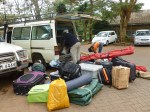
Loading up at the Nairobi National Museum. The Mighty Nissan knows no fear.
-

-
View of Kakamega forest
-

-
The beauty of Kakamega
-

-
“The Francis” four-bank forest harp trap on its first African Adventure.
-
-
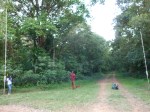
Mike and Beryl setting up a triple net
-

-
Bad day for the Mighty Nissan — manage to push it through the worst …….
-

-
.. only to be within 200 m of solid ground, but blocked by a tree-fall. Thanks to KWS for rescuing us!
-
-
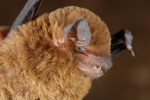
Ahhh minnies — the same the (old) world over!
-
-
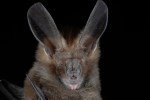
A teeny weeny Nycteris! (just as wiggly as their SE Asian relatives)
-
-
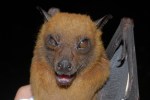
This Myoncyteris is the “temperament” equivalent to the SE Asian Cynopterus. For the unitiated…. “bitey” or “spawn of the devil” sums it up
-
-
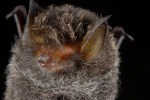
OMG I managed to get a photo of a Kerivoula WITH ITS MOUTH CLOSED!!
-

-

-
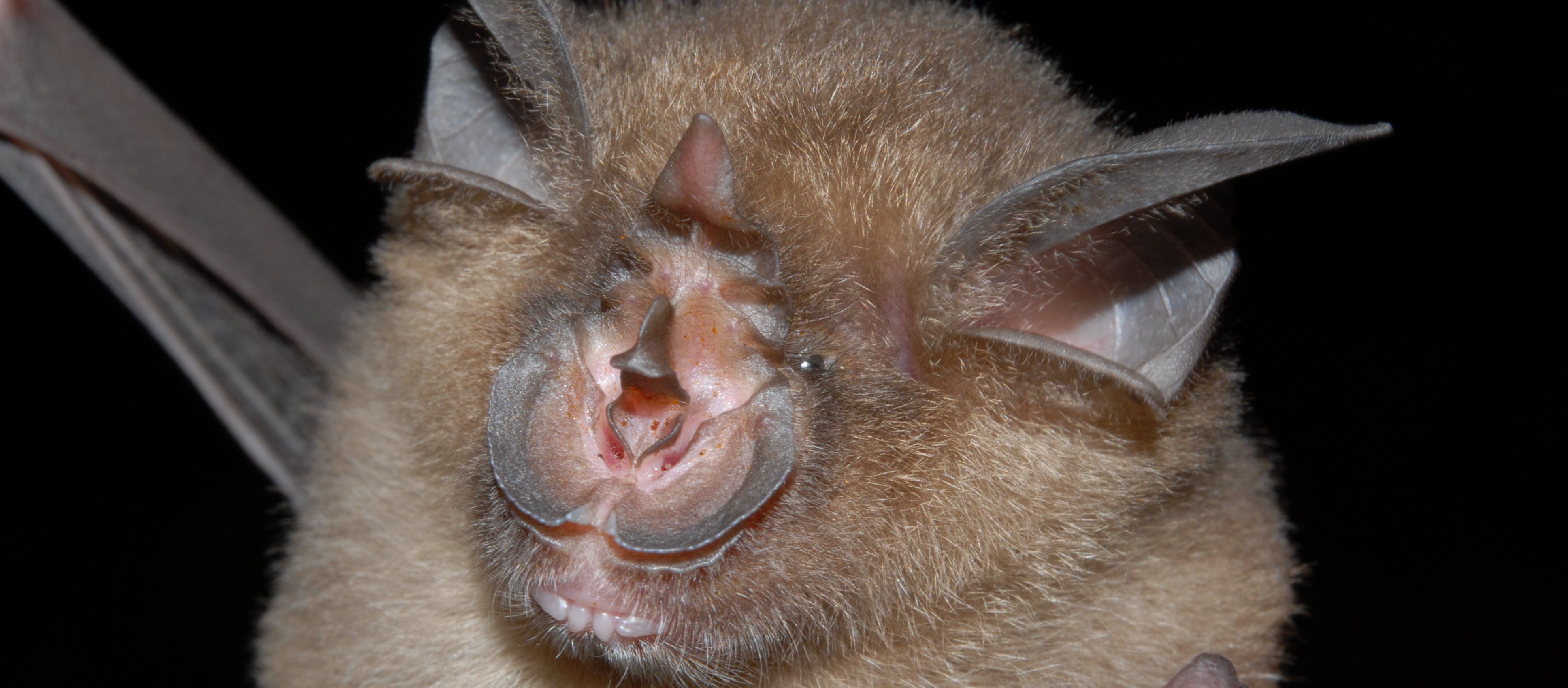
The world’s fluffiest Hipposideros!
-
-
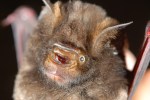
Forest Hipposideros
-

-
Epomorphorus sp from a triple net
We then started heading towards the Lake Victoria area, but stopped on en route at an Eidolon roost that Beryl will be monitoring as part of a continent-wide initiative, and building on Paul’s work on colonies in this area that was supported for several years by Rufford.
-

-
Setting up a triple net at the Eidolon roost
-

-
Paul Webala with friend (Eidolon)
-
-
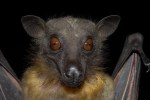
Eidolon helvum
-
-
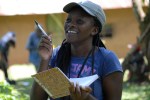
Beryl Makori counting Eidolon as part of the continent-wide monitoring network
We stayed at the Impala Sanctuary just outside Kisumu, on the shores of Lake Victoria, where we had a highly productive time catching and recording edge/gap bats.
-

-
Form an orderly queue please
-
-
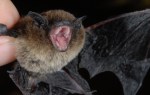
In the beginning there were pipistrelles. Then there were … a load of new things. I can now pronounce Neoromicia (most of the time). This is N.nana.
-

-
N. rendalli
-

-
And last but not least, N. tenuipinnis
-

-
N. tenuipinnis with stunningly translucent wings
-
-
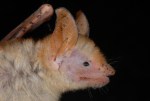
Its a very good job this Myotis is pretty because it is *very* bitey and wriggly (had to have shutter speed @ 1/250th to stand a chance of getting a picture)
-

-
You see — beautiful wing coloration. I see — mean bitey bat mashin’ up on the bat bag. Sir Paul McCartney sees — lyrical inspiration
-

-
Mean face
-

-
Mean face (2). I could go on….
-
-
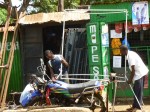
“The Francis” about to be cloned in Kisumu
We had enough time for a trip to one of the fishing villages on the Lake’s shores — very exciting for me as I teach about the catastrophic biodiversity collapse precipitated by the introduction of the Nile perch and Tilapia in both my Ecology and Conservation Biology classes.
-

-
The Bat Team on the shores of Lake Victoria. Left to Right Dr Paul Webala, Beryl (Beryl Achieng Makori), Mike (Michael Bartonjo) and Simon (Wafula Simon Masika).
-
-
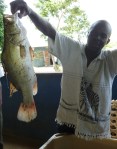
Nile perch
-
-
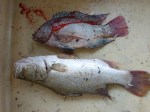
Twin evils of Lake Victoria — Tilapia and Nile perch
-

-
Fresh Tilapia for lunch
-
-
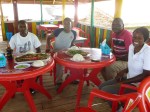
Lunchtime on the Lake — Mike, Simon, Paul, Beryl
-
-
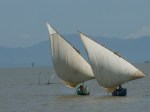
Local fishermen returning to the village
I had a wonderful time and would like to thank Paul for being such an awesome host, and was very excited to work with Beryl, Mike and Simon (great bat futures ahead of you all). Thanks to Texas Tech (Department of Biological Sciences, College of Arts and Sciences, and the Vice President for Research’s Office) for funding the trip. I’m sure great things will come of it.



 Kingston Lab