
Abby and Touseef were both recognized at the 2022 Texas Tech Graduate Awards Luncheon. Touseef was recognized for his Graduate Student Research Support award and Abby for her GRFP. Congratulations guys!
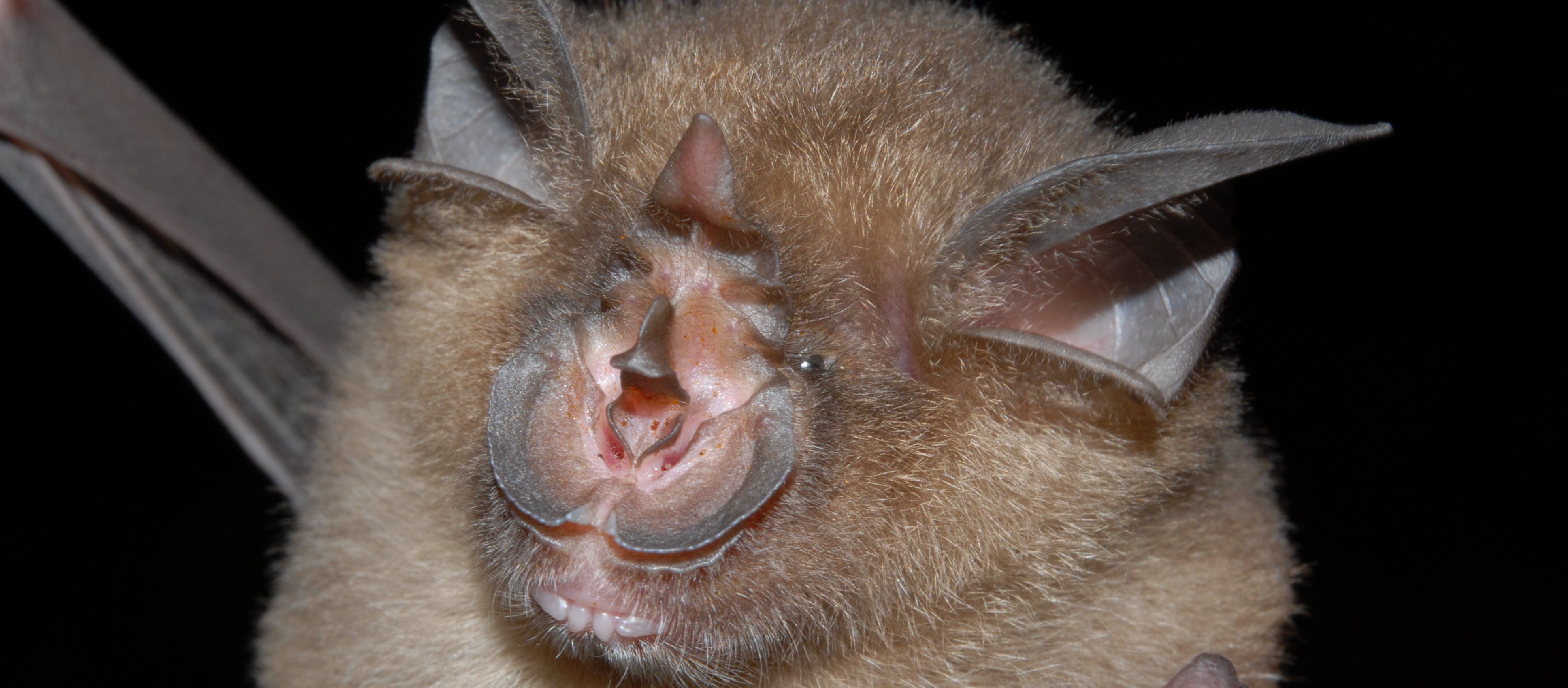
Abby and Touseef were both recognized at the 2022 Texas Tech Graduate Awards Luncheon. Touseef was recognized for his Graduate Student Research Support award and Abby for her GRFP. Congratulations guys!
Tigga, Abby, and Elaine are authors in “Global Medicinal Use of Bats: A Systematic Literature and Social Media Review” that was published in Diversity. This paper quantifies the various uses of bats, such as for food or medicine, around the world by their IUCN regions. It was determined that, “Consumption for food was prevalent in regions of Asia, Africa, and Oceania, whereas medicinal use was most commonly reported in South Asia (where it exceeded consumption for food), Southeast Asia, and to a lesser extent, Africa and South America.” The paper also quantifies the various aliments that are treated with bats.

The publications keep coming! Tigga and Joe are co-authors on “A machine learning framework to classify Southeast Asian echolocating bats” that just came out in Ecological Indicators. This paper has all you can ask for, if what you’re asking for is using machine learning to classify bat calls in Southeast Asia. Field rats take note: “Our framework allows users to rapidly filter acoustic files for common species and isolate files of interest, cutting the total volume of data to be processed by 86%.” Not only a time saver, but this increases the capacity of researchers to use non-invasive sampling in regions without species-specific call records and can detect species that are often missed when employing other sampling methods.

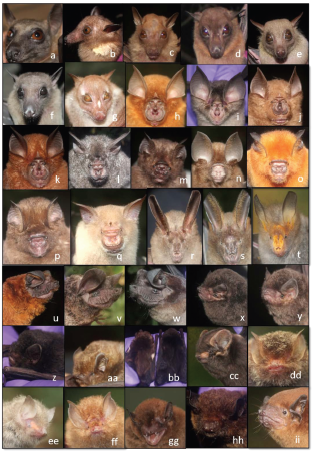
Iroro, Ben, and Tigga recently published ten new species-level bat records from Afi Mountain Wildlife Sanctuary and Cross River National Park in southeastern Nigeria. These new records are especially exciting because Nigeria is both under-sampled and a biodiversity hotspot! Check out the full publication “Hidden Afrotropical Bat Diversity in Nigeria: Ten New Country Records from a Biodiversity Hotspot“
Left: Portraits of 34 bats captured during the field survey at Afi Mountain Wildlife Sanctuary and Cross River National Park. M. torquata (e), R. hillorum (j), H. curtus (n), M. inflatus (x), G. cf. humeralis (aa), G. egeria (cc), K. cuprosa (dd), K. phalaena (ff), and N. eisentrauti (hh) are all new country records.

Tigga, along with Former lab members Joe Chun-Chia Huang and Juliana Senawi, recently co-authored “ChiroVox: a public library of bat calls” in PeerJ. The paper was timed to coincide with the launch of www.chirovox.org online bat call library. The library contains calls from across three cotenants and welcomes quality call contributions to help grow this valuable community resource.

A huge congratulations to Iroro on successfully defending her PhD dissertation last Wednesday! Her dissertation title is “Drivers of Diversity Patterns and Ensemble Structure of Forest Understory Insectivorous Bats Along Elevation Gradients in an Afrotropical Biodiversity Hotspot”. Thank you to everyone who has helped Iroro!
Over the last couple of months, Tigga has published a couple of new papers:
The first paper is “Human dimensions of bat conservation – 10 recommendations to improve and diversify studies of human-bat interactions”. The authors assess bat-related HD research papers and provide recommendations for how to better ground our research and directions for expansion.
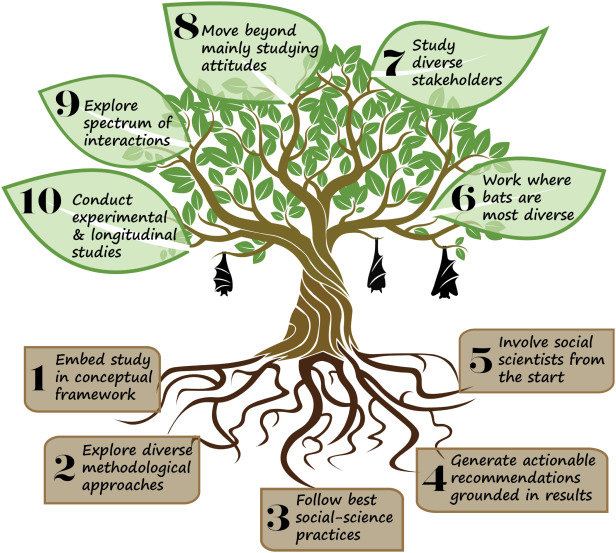
Straka, T. M., Coleman, J., Macdonald, E. A., & Kingston, T. (2021). Human dimensions of bat conservation – 10 recommendations to improve and diversify studies of human-bat interactions. Biological Conservation, 262, 109304. https://doi.org/10.1016/j.biocon.2021.109304
The second paper is “Setting the Terms for Zoonotic Diseases: Effective Communication for Research, Conservation, and Public Policy”. The authors categorized the misuse of zoonotic terms and clarified the definitions of these terms. The paper also provided frameworks to how to correct these miscommunications.
Shapiro, J. T., Víquez-R, L., Leopardi, S., Vicente-Santos, A., Mendenhall, I. H., Frick, W. F., Kading, R. C., et al. (2021). Setting the Terms for Zoonotic Diseases: Effective Communication for Research, Conservation, and Public Policy. Viruses, 13(7), 1356. MDPI AG. Retrieved from http://dx.doi.org/10.3390/v13071356
A huge congratulations to Tigga for receiving the 2021 President’s Excellence in Diversity and Equity Award, this award was received due, “to advancing diversity and promoting equity and inclusive excellence at Texas Tech”. There are four recipients of the award out of the pool of all Texas Tech staff, faculty, and students.
View the details of the President’s Excellence in Diversity and Equity Award here.

We are excited to share that Touseef’s poster entitled “Regional and Intersectional Gaps in One Health Research: Future Directions” has won an Outstanding Student Poster Award at the World Microbe Forum, the world’s leading platform for microbiologists. This award is presented jointly by American Society for Microbiologist (ASM) and Federation of European Microbiologist Societies (FEMS). One of only fourteen winners (out of over three thousand submissions), Touseef will present the poster this week in a special session for award winners.

A huge congratulations to Iroro for her 2021 Whitley award! Known as the “Green Oscars”, the award is given to “support the work of proven grassroots conservation leaders across the Global South”. Iroro’s award focuses on her rediscovery and efforts to save the Short-tailed Roundleaf Bat in Southeastern Nigeria and provides financial support to help her continue her work.
View Iroro’s Whitley page here or watch the full awards ceremony here.
 Kingston Lab