Book chapter in Adams & Pedersen’s Bat Evolution, Ecology and Conservation now out

Tigga’s chapter  in the new Bat Evolution, Ecology and Conservation book edited by Rick Adams and Scott Pedersen is now available in the online version of the book – if your library/institute has access to it. Rick and Scott intended it to be a an “update”, sort of, for the 1987 landmark volume “Recent Advances in The Study of Bats” for those who have that sitting on their shelves!

Kingston, T. (2013). Response of bat diversity to forest disturbance in Southeast Asia – insights from long-term research in Malaysia. Pp 169-185. In: Bat Evolution, Ecology and Conservation (eds. RA Adams, SC Pedersen). Springer Science Press.


Kingston Lab at the 16th IBRC and 43rd NASBR meeting

The lab had a great time earlier this month at the 16th IBRC in Costa Rica. Tigga convened a symposium with Richard Stevens entitled “Frontiers in Bat Assemblage Ecology: Novel Perspectives from the Old and New World” and gave a paper in the session (“Spatial analysis of species interactions in diverse assemblages”) as did Maria (“Detection and Characterization of Bat Hotspots: a Fusion Test of Local Spatial Autocorrelation”). Tigga was also involved “Building a Global Network for Bat Conservation Symposium” organized by BCI, with a paper presented by Tammy Mildenstein on the SEABCRU (“The Southeast Asian Bat Conservation Research Unit: regional bat conservation exceeding the sum of its parts”)

Julie (“Beyond Size: morphological predictors of bite force in a diverse insectivorous bat assemblage from Malaysia”), Ain (“The interplay between weather and reproduction in three cave-dwelling insectivorous bats in a Malaysian tropical rainforest”) and Joe (“Is bat coffee a potential “wing-wing” tool for biodiversity conservation in Southwestern Sumatra?”) entered the student competition with their presentations and congratulations to Joe on winning the Avinet Award!!  Kendra (“Conserving bats in the Philippines: assessing the impact of cave disturbance on bat assemblages”) and Marina (“Mobile transects are more effective at detecting bat passes than stationary points in low bat density landscapes”) both presented in the Ecological Monitoring symposium, and Colleen had a poster entitled “Effectiveness of Operational Mitigation in Reducing Bat Fatalities at the Sheffield Wind Facility, Vermont”.  Nick got his first exposure to bat nerds en masse — this was the largest IBRC so far with 650 people.

Other presenters from Dept of Biological Sciences at Tech were: Liz Siles, Cibele Sotero-Caio, Caleb Philips from Dr Baker’s lab, and Dr Carl Phillips.

The lab is very grateful to the College of Arts and Sciences, and the Department of Biological Sciences for financial assistance for the grad students’ travel.
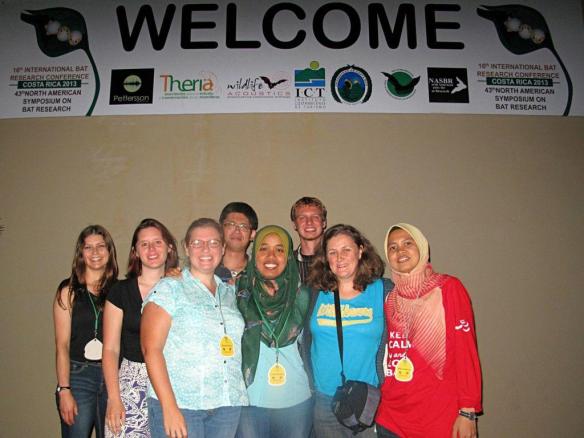
From left to right - Colleen, Marina, Kendra, Joe, Julie, Nick, Tigga, Ain

From left to right – Colleen, Marina, Kendra, Joe, Julie, Nick, Tigga, Ain


Texas Tech at IBRC
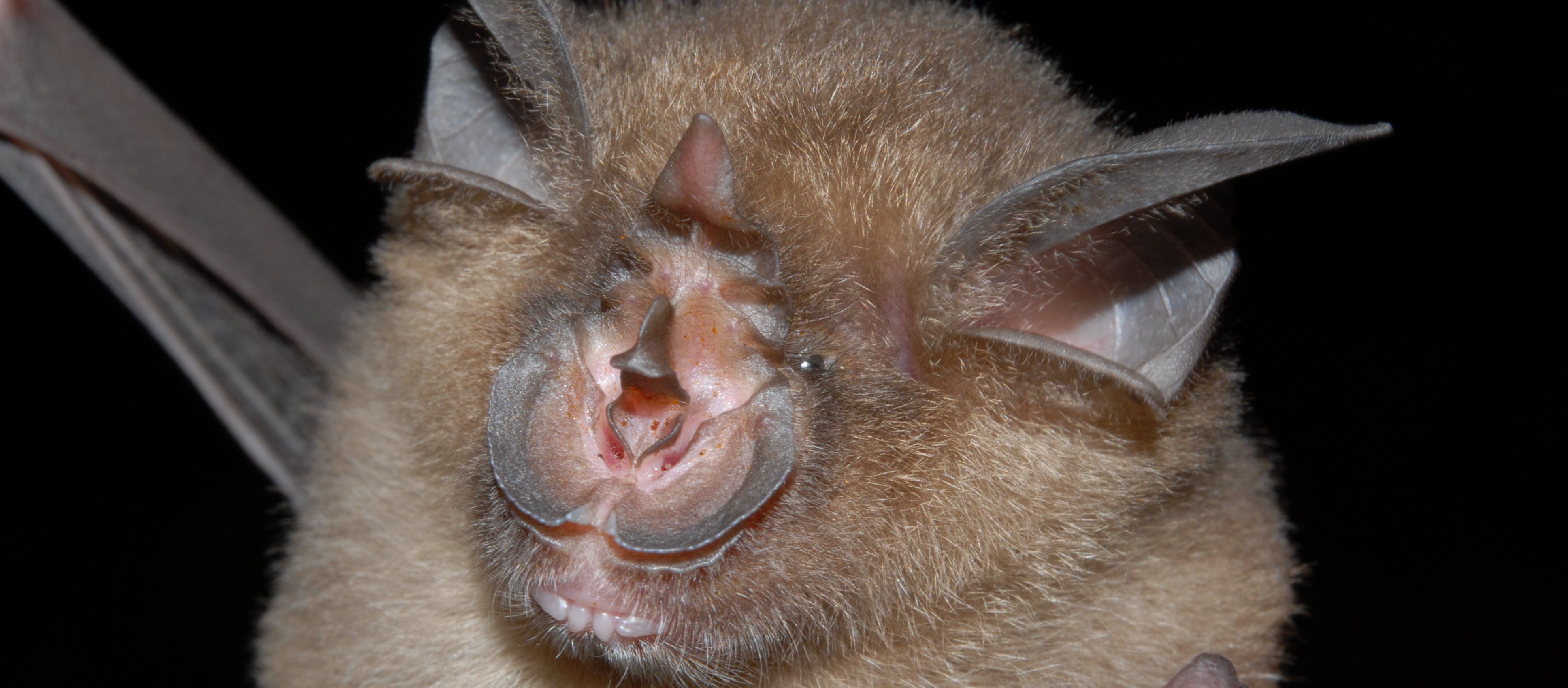
Texas Tech at IBRC

Failing to catch bats at Matador WMA

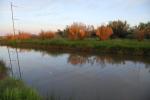
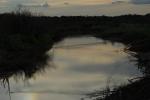
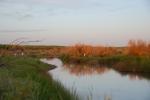
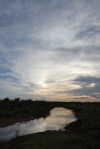
In an effort to get some bats to build up Marina’s full-spectrum call library, we embarked on a lab++ (Tigga, Marina, Danny, Maria, Liz, Karina) trip to Matador Wildlife Management Area. We set up some beautiful nets over the summer remnants of a river, but sadly didn’t catch anyone, probably in part because it was a full moon.

Visitor from Auburn University – Dr Wendy Hood

The semester ended with a wonderful visit from Dr Wendy Hood – Tigga’s academic sister from grad school days, now an assistant prof at Auburn University. Wendy studies nutritional ecology of vertebrate growth, reproduction, and performance and gave the departmental seminar  ‘Investigating the roles of nutrition, lactation, and bone metabolism in reproductive performance’, as well as going over some of her bat research in our lab meeting. We then found time for a quick jolly to Caprock Canyon…..

Wendy in Caprock Canyon

Wendy in Caprock Canyon

Tigga and Wendy at Caprock Canyon -- grad school sisters since Fall 1994!

Tigga and Wendy at Caprock Canyon — grad school sisters since Fall 1994!

Western Bat Working Group Meeting in Santa Fe

The first week of April, Marina and Nick went to the Western Bat Working Group Biannual Meeting in Santa Fe, NM. The meeting was geared to updating the Western Bat Species Regional Priority Matrix in the face of new threats such as climate change and white-nose syndrome. Break-out groups for different Landscape Conservation Cooperatives (LCCs) worked together to assess the scope and severity of different threats for every bat species in the western United States. Assessing threat levels for all the western bat species is a difficult process but worthwhile if we want to effectively manage and protect bats! Marina presented her poster “Comparing three bat acoustic sampling methodologies for large-scale surveys” and received lots of good feedback from researchers interested in conducting mobile acoustic surveys.

Nick was awarded a seat in a three day Wildlife Acoustics Bat Detector Training Course, led by Dr. Cori Lausen, through the Bob Berry Scholarship Fund. The course immediately followed the Western Bat Working Group Meeting, and covered the use and deployment of the SM2BAT+ and the EM3, along with an introduction to call analysis in Kaleidoscope Pro, SonoBat, and AnalookW. Nick is very thankful for this award, which has helped him become more knowledgeable in the set-up and deployment of these Song Meters, which he will use during his acoustic surveys beginning this summer in the Jemez Mountains of New Mexico.

Visitor from the Max Planck Institute

It was a real delight to have Daniela Schmieder visiting for a week at the beginning of the month. Dani worked with myself Julie and Ain in Malaysia a few years ago, where she was looking at echolocation performance in Kerivoula and Murina species for her Diploma (got some very nice papers out of it too, which you can learn more about here and here). She is now finishing up her PhD work on the role of functional morphology in resource partitioning of syntopic European bat species (primarily Rhinolophus species), at the Max Planck Institute for Ornithology in Seewiesen (which I visited earlier this year) where she is part of the late Bjoern Siemers’ Sensory Ecology Group.

She gave the lab a great presentation on her PhD research, and worked with me on one of her dissertation publications, but there was plenty of time for fun, as we did a day hike out to the Lighthouse at Palo Duro Canyon. Hopefully we will catch up with her at the IBRC (International Bat Research Conference) in Costa Rica, later this year. Below are some pics of her visit….

At the Lighthouse -- what cool bat nerds. From left to right, Tigga, Dani, Julie, Maria, Ain and Danny

At the Lighthouse — what cool bat nerds. From left to right, Tigga, Dani, Julie, Maria, Ain and Danny (honorary bat nerd) – 6 people, 5 nationalities 🙂 — Joe was studying for his quals or we would have had a sixth.

Lighthouse in the background, Dani (the tall one) with Julie and Ain. Intraspecific variation in action

Lighthouse in the background, Dani (the tall one) with Julie (right) and Ain (left).

Guns up! On campus with Julie (left) and Ain (right)

Learning Tech traditions – on campus with Julie (left) and Ain (right)

Congratulations to Kendra – one of 12 students awarded the 2013 Texas Tech Students of Integrated Scholarship!

Great news from Kendra — well done! Below she reports on this prestigious scholarship:

I am one of 12 students awarded the 2013 Texas Tech Students of Integrated Scholarship.   This scholarship spotlights “students who have embraced active learning experiences both within and external to the environs of Texas Tech University”.  Awardees are featured in All Things Texas Tech issued by the Provost Office at Texas Tech University.  Link to list of awardees: http://www.depts.ttu.edu/provost/attt/2013/03/studentscholars13.php.  Link to my profile: http://www.depts.ttu.edu/provost/attt/2013/03/studentscholars13/kendra_phelps.php


Texas Tech Annual Biological Sciences Symposium – congrats to Joe

Last weekend was the Texas Tech Annual Biological Sciences Symposium. Julie, Ain and Joe all gave oral presentations. Joe won the Warren Ballard Award for best oral presentation in the Resource Management and Conservation session for his paper entitled “The ecology and potential value of bat coffee in biodiversity conservation in southwestern Sumatra”. Well done Joe! Maria and Julie both served as judges. It was a super event, and it was delightful to have Dr Richard Stevens return to Tech to give the plenary talk.