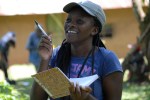
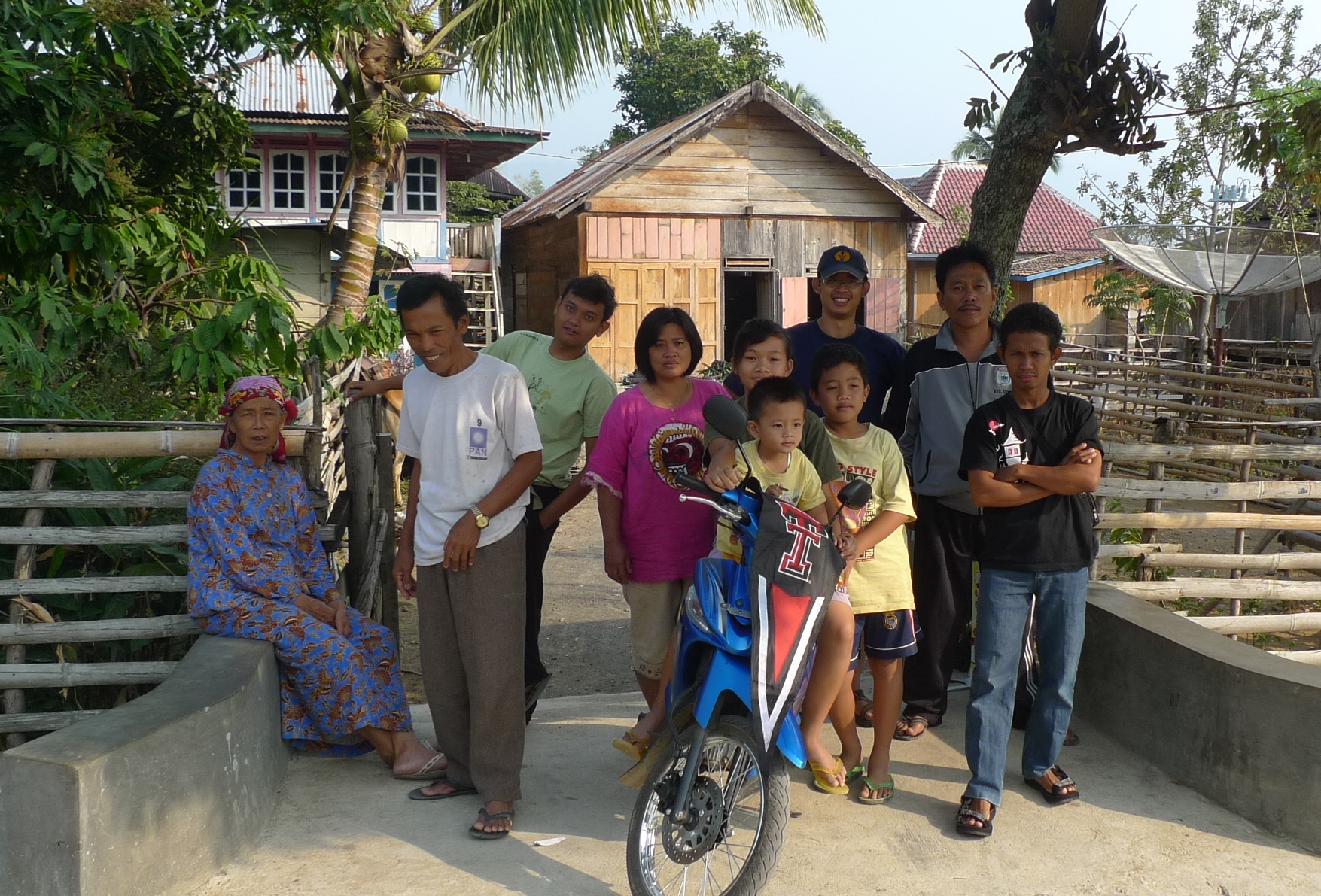
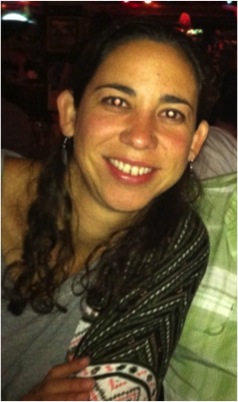
Congratulations to Kendra for being awarded a Texas Tech University Doctoral Dissertation Completion Fellowship. This means she is fully supported to do nothing but think science and write up her research for 12 months! How cool is that!
Category Archives: Uncategorized
Congratulations to Joe — first dissertation publication out today!
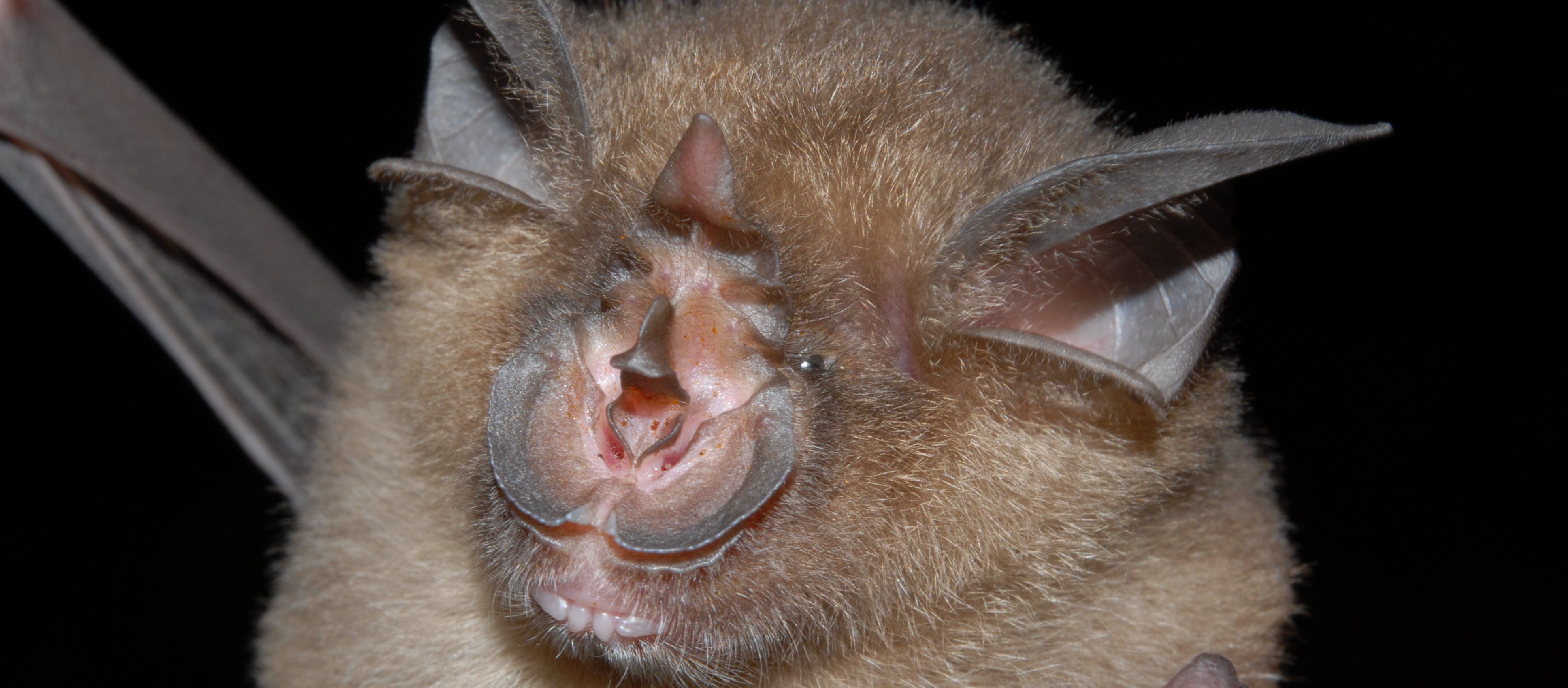
Joe’s first paper from his dissertation research was published today in Acta Chiropterologica. It is a superb account of the bat diversity captured during his research in South West Sumatra and reveals the significance of the area in and around Bukit Barisan Selatan National Park as chiropteran diversity hotspot for SE Asia. Especially useful for other researchers in Sumatra is a dichotomous key to all the bat species currently known for Sumatra, based on external features. Suprisingly little work has been done on bats on the island, we hope this paper and the key will facilitate more!
Joe Chun-Chia Huang, Elly Lestari Rustiati, Meyner Nusalawo, Ibnu Maryanto, Maharadatunkamsi, Sigit Wiantoro & Tigga Kingston. A recent survey reveals Bukit Barisan Selatan Landscape as chiropteran diversity hotspot in Sumatra. Acta Chiropterologica, 15(2): 413-449.
If you would like a copy, email Joe or myself.
Tigga announced as new IUCN Bat Specialist Group Co-Chair
I am honored to announce that I have been appointed as the new Co-Chair of the Species Survival Commission’s Bat Specialist Group. I am taking over from Professor Paul Racey, who served the group for nearly 30 years!
My responsibility is for the Old World bats and I will be serving alongside Professor Rodrigo Medellin who continues as the New World Chair.
Many thanks to Paul for all his hard work and the inspiration that he has been to so many of us!
Tigga
Announcement here
Welcome Iroro Tanshi and Macy Madden to the Kingston Lab :-)
Fall 2014 began with two new additions to the lab. Macy Madden joins us from Canisius College in New York, and Iroro Tanshi from the University of Benin, Nigeria. Both are enrolled in the PhD program and have research interests in Africa (South Africa, and Nigeria respectively), so it will be great to expand our collective knowledge of Old World bat conservation issues as their projects progress. We wish them a warm welcome (GUNS UP!).
ATBC Travel Award for Joe :-)
Well done to Joe in securing a travel grant to go toward the cost of attending the Association for Tropical Biology and Conservation meeting in Cairns this month. He will be giving a talk entitled “ROOSTING AND TROPHIC ENSEMBLES OF BATS RESPOND DIFFERENTLY TO COFFEE AGRICULTURAL INTENSIFICATION IN SOUTHEAST ASIA”. We look forward to hearing more about the meeting, as the only representative from the lab going.
Kendra and Maria at ASM
Kendra and Maria attended the 94th American Society of Mammalogist meeting earlier this month in Oklahoma City, OK. Kendra presented findings from her dissertation research regarding drivers of cave bat diversity and how those drivers can be used in making conservation decisions. The presentation was titled ” Anthropogenic and Environmental Factors Influencing Cave Bat Diversity in the Philippines: Implications for Conservation Agendas” and was co-authored with her collaborators, Dr. Marina Labonite and Reizl Jose, in the Philippines. It was received well and sparked some interesting conversations about conserving cave bats globally and developing criteria to identify priority caves to conserve cave bat populations. Kendra’s talk was preceded by Maria’s entitled “Roost Specialization Increases Extinction Risk in Bats” (with Gloriana Chaverri). The two papers were a great fit, as Maria’s analysis highlights the vulnerability of cave bats to disturbance.
Tigga in Kenya with Dr Paul Webala
Last month I had an excellent trip to Kenya to visit with Dr Paul Webala at Karatina University, which resulted in a Letter of Intent between Texas Tech and Karatina that we hope will facilitate future collaboration and student exchange between our institutes. We then went off to western Kenya in pursuit of bats, starting with the most easterly section of of Africa’s tropical rainforest, preserved in Kakamega Forest. It was beautiful, and we caught some super bats ….
- Loading up at the Nairobi National Museum. The Mighty Nissan knows no fear.
- View of Kakamega forest
- The beauty of Kakamega
- “The Francis” four-bank forest harp trap on its first African Adventure.
- Mike and Beryl setting up a triple net
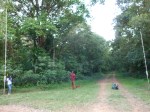
- Bad day for the Mighty Nissan — manage to push it through the worst …….
- .. only to be within 200 m of solid ground, but blocked by a tree-fall. Thanks to KWS for rescuing us!
- Ahhh minnies — the same the (old) world over!
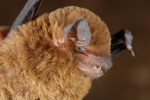
- A teeny weeny Nycteris! (just as wiggly as their SE Asian relatives)
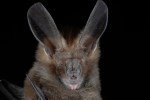
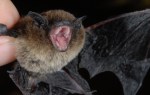
- This Myoncyteris is the “temperament” equivalent to the SE Asian Cynopterus. For the unitiated…. “bitey” or “spawn of the devil” sums it up
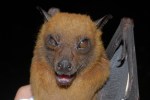
- OMG I managed to get a photo of a Kerivoula WITH ITS MOUTH CLOSED!!
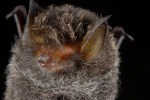
- The world’s fluffiest Hipposideros!
- Forest Hipposideros
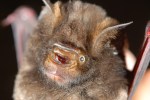
- Epomorphorus sp from a triple net
We then started heading towards the Lake Victoria area, but stopped on en route at an Eidolon roost that Beryl will be monitoring as part of a continent-wide initiative, and building on Paul’s work on colonies in this area that was supported for several years by Rufford.
- Setting up a triple net at the Eidolon roost
- Paul Webala with friend (Eidolon)
- Eidolon helvum
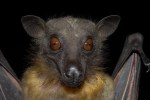
- Beryl Makori counting Eidolon as part of the continent-wide monitoring network
We stayed at the Impala Sanctuary just outside Kisumu, on the shores of Lake Victoria, where we had a highly productive time catching and recording edge/gap bats.
- Form an orderly queue please
- In the beginning there were pipistrelles. Then there were … a load of new things. I can now pronounce Neoromicia (most of the time). This is N.nana.
- N. rendalli
- And last but not least, N. tenuipinnis
- N. tenuipinnis with stunningly translucent wings
- Its a very good job this Myotis is pretty because it is *very* bitey and wriggly (had to have shutter speed @ 1/250th to stand a chance of getting a picture)
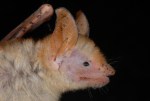
- You see — beautiful wing coloration. I see — mean bitey bat mashin’ up on the bat bag. Sir Paul McCartney sees — lyrical inspiration
- Mean face
- Mean face (2). I could go on….
- “The Francis” about to be cloned in Kisumu
We had enough time for a trip to one of the fishing villages on the Lake’s shores — very exciting for me as I teach about the catastrophic biodiversity collapse precipitated by the introduction of the Nile perch and Tilapia in both my Ecology and Conservation Biology classes.
- The Bat Team on the shores of Lake Victoria. Left to Right Dr Paul Webala, Beryl (Beryl Achieng Makori), Mike (Michael Bartonjo) and Simon (Wafula Simon Masika).
- Nile perch
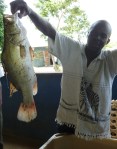
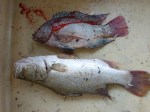
- Twin evils of Lake Victoria — Tilapia and Nile perch
- Fresh Tilapia for lunch
- Lunchtime on the Lake — Mike, Simon, Paul, Beryl
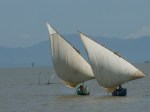
- Local fishermen returning to the village
I had a wonderful time and would like to thank Paul for being such an awesome host, and was very excited to work with Beryl, Mike and Simon (great bat futures ahead of you all). Thanks to Texas Tech (Department of Biological Sciences, College of Arts and Sciences, and the Vice President for Research’s Office) for funding the trip. I’m sure great things will come of it.
Congrats to Joe – Doctoral Dissertation Completion Fellowship
A very well done to Joe in being awarded a Texas Tech University Doctoral Dissertation Completion Fellowship. These are brand new fellowships that provide outstanding students full support (so no teaching!) for the final 12 months of their dissertation.
A big thanks to the Graduate School for this new initiative too!
Lab Visitor — Nathan Nieto
We had a great time last week when Dr Nathan Nieto from Northern Arizona University visited the department at Tech. Kendra invited him as we plan to work with him on the bat ectoparasite collection she made during her research on the response of cave bats to disturbance in the Philippines.
Nate’s research focuses on the emergence of infectious diseases from (primarily) wildlife reservoirs, and he gave a super talk that illustrates integrative approaches (from vertebrate reservoir communities to the molecular phylogeny of the pathogens) entitled “Sylvatic maintenance of endemic disease: pathogen evolution through a host community filter”.
Congratulations to Maria — tenure-track position at SUNY Oswego!

Good luck Maria!

Cultural Feast — lab potluck celebrating Maria’s new position. Theme was national/state dishes so we had Malaysia, Philippines, Costa Rica, England, Taiwan, US with vegan, vegetarian, Halal, Paleolithic dishes.
Sadly we will lose Maria at the end of this semester as she takes up her new position as a tenure-track Assistant Professor of Mammalogy in the Biology Department of State University of New York at Oswego. A super achievement and we wish her every success, although she will be greatly missed!
We had a pot-luck when we first heard (feast image below), but now everything is signed we can share the news.