Abby presenting her talkTigga explaining “What is GBatNet”
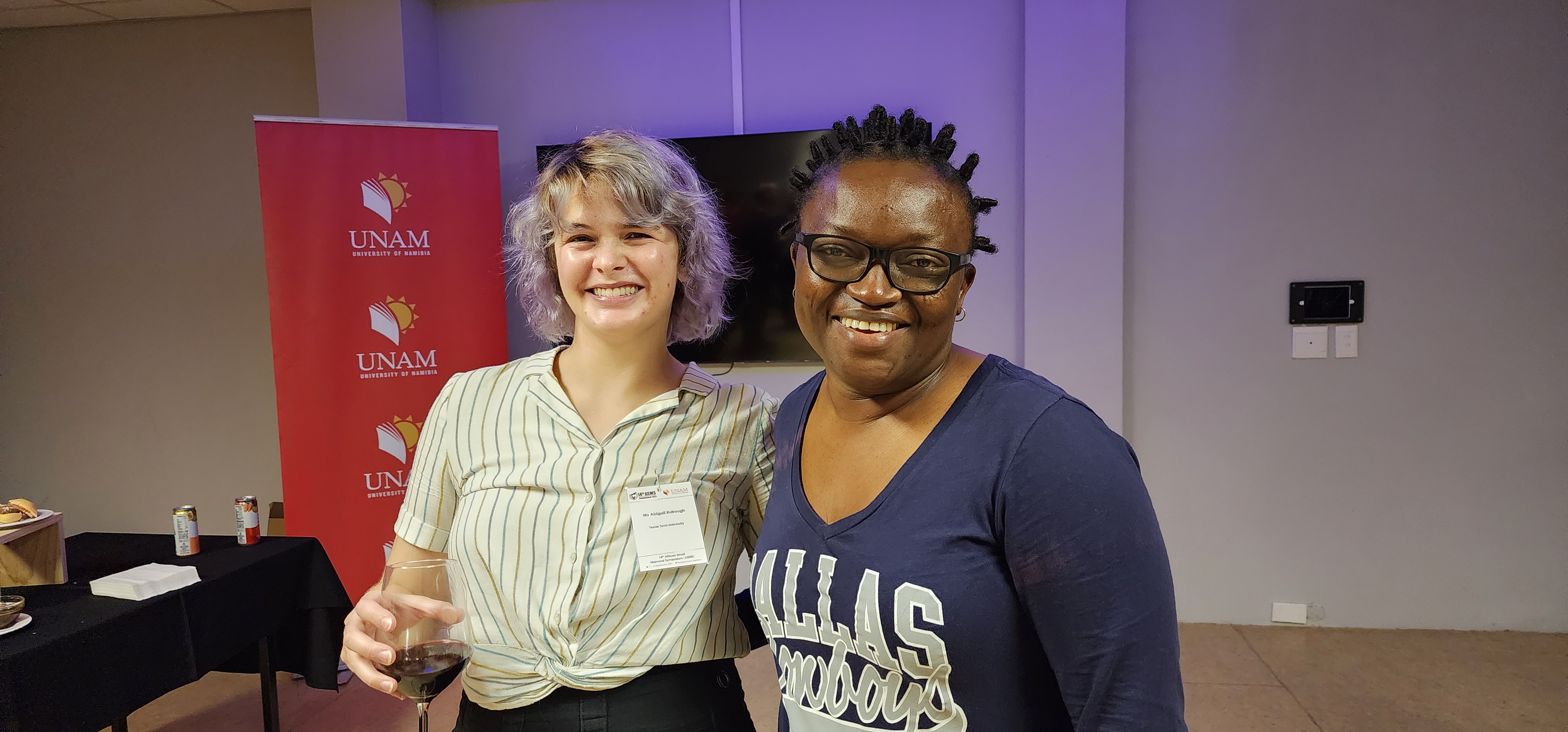
This September Tigga and Abby joined bat researchers from across Africa and around the world at the IUCN African bats Red List workshop and 14th African Small Mammal Symposium in Swakopmund Namibia. While there, Tigga led an evening workshop on grant writing, and Abby, along with fellow GBatNet student representative Cecilia Montauban, led one for students on writing applications.
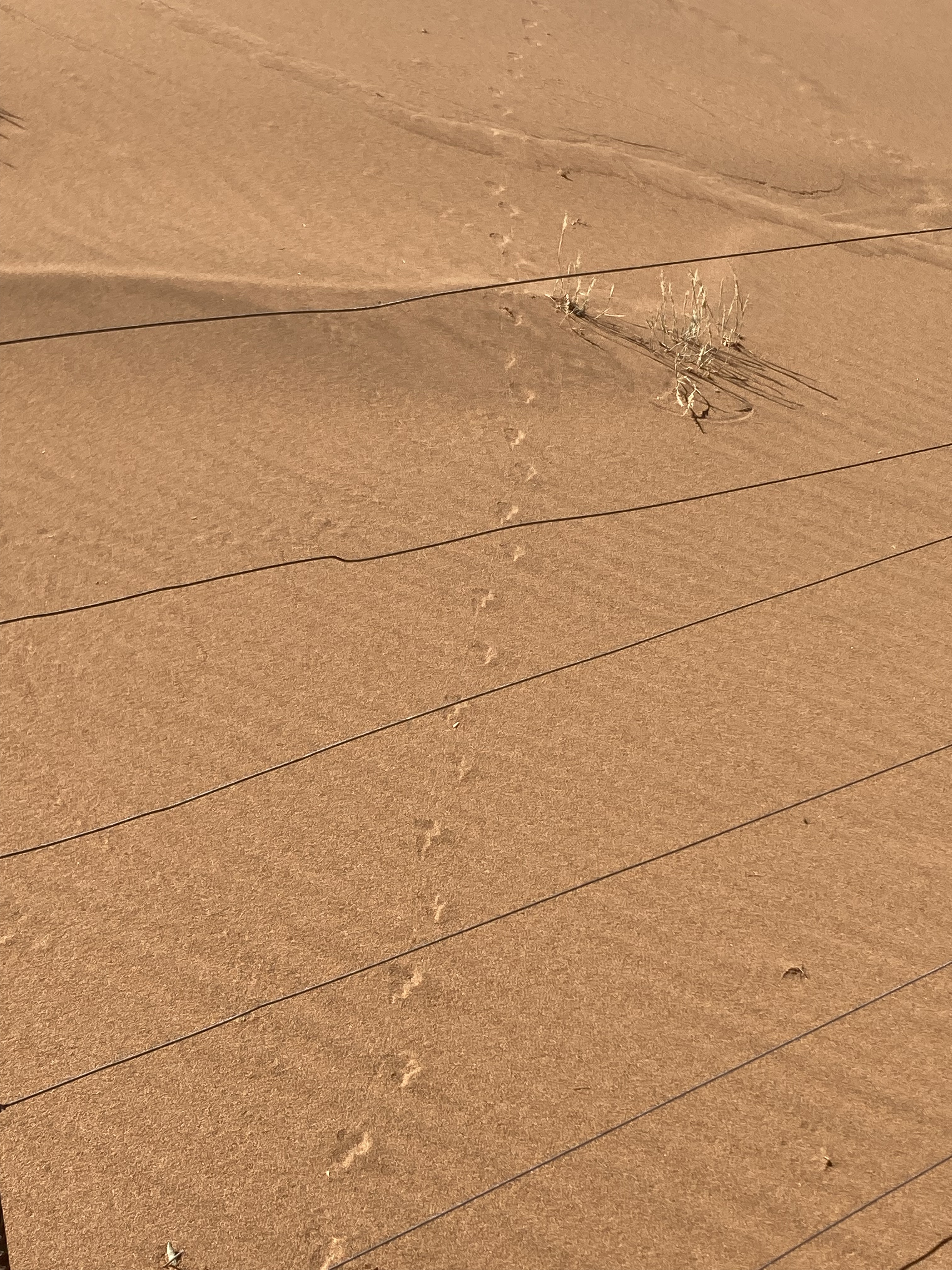
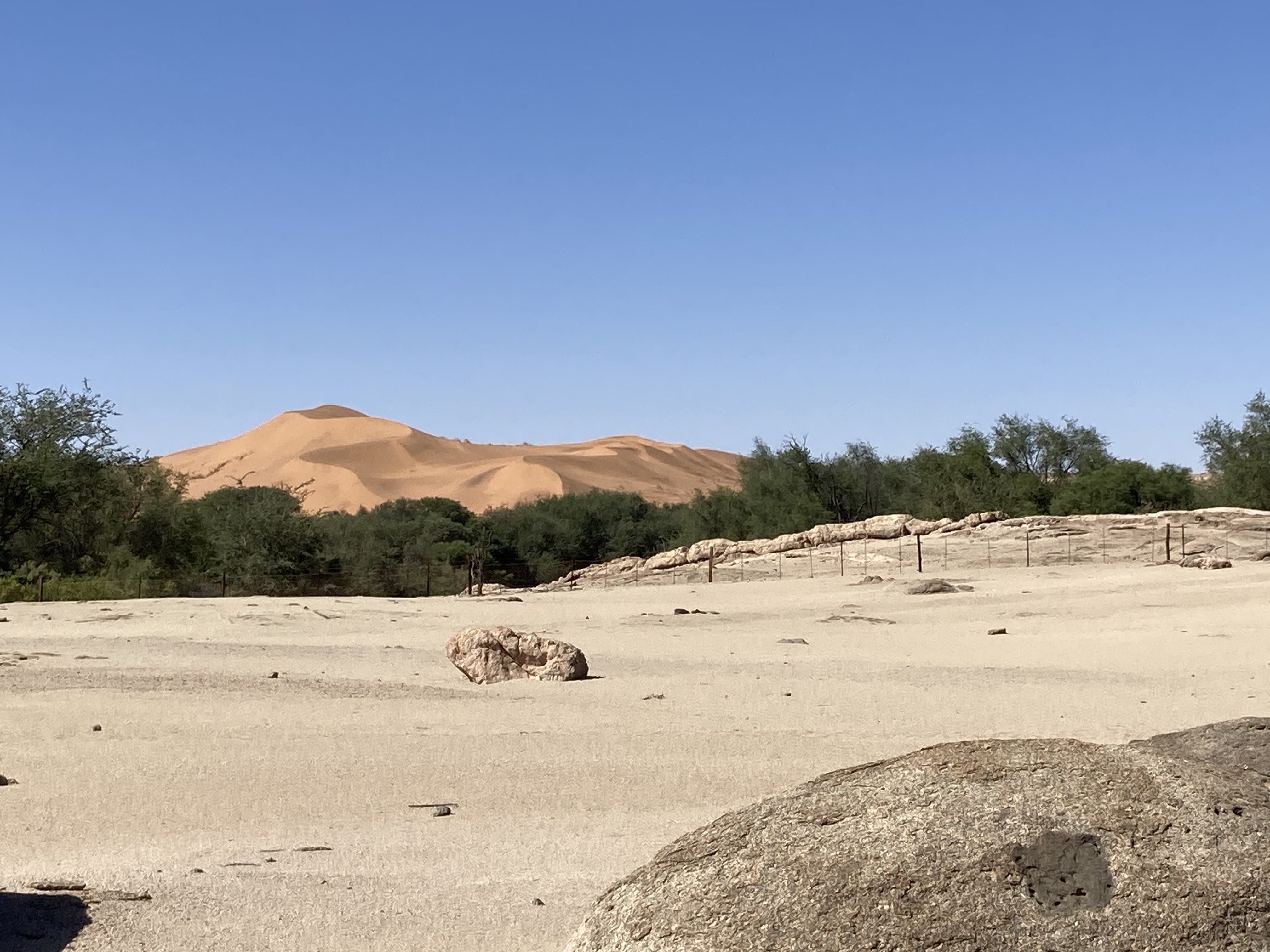
Kingston Lab past and presentWelwitschia!A good signSmall mammal tracksDunes as far as the eye can see
After the Red List workshop, they joined the African Small Mammal Symposium and presented work on modeling bat hunting in Sub-Saharan Africa and GBatNet. A mid-week field trip to the Gobabeb Training and Research Centre yielded some spectacular dunes and desert small mammal sightings!
Y’all know the quintessential activity for graduate students in the Kingston Bat Conservation Ecology lab – you guessed it: fieldwork!
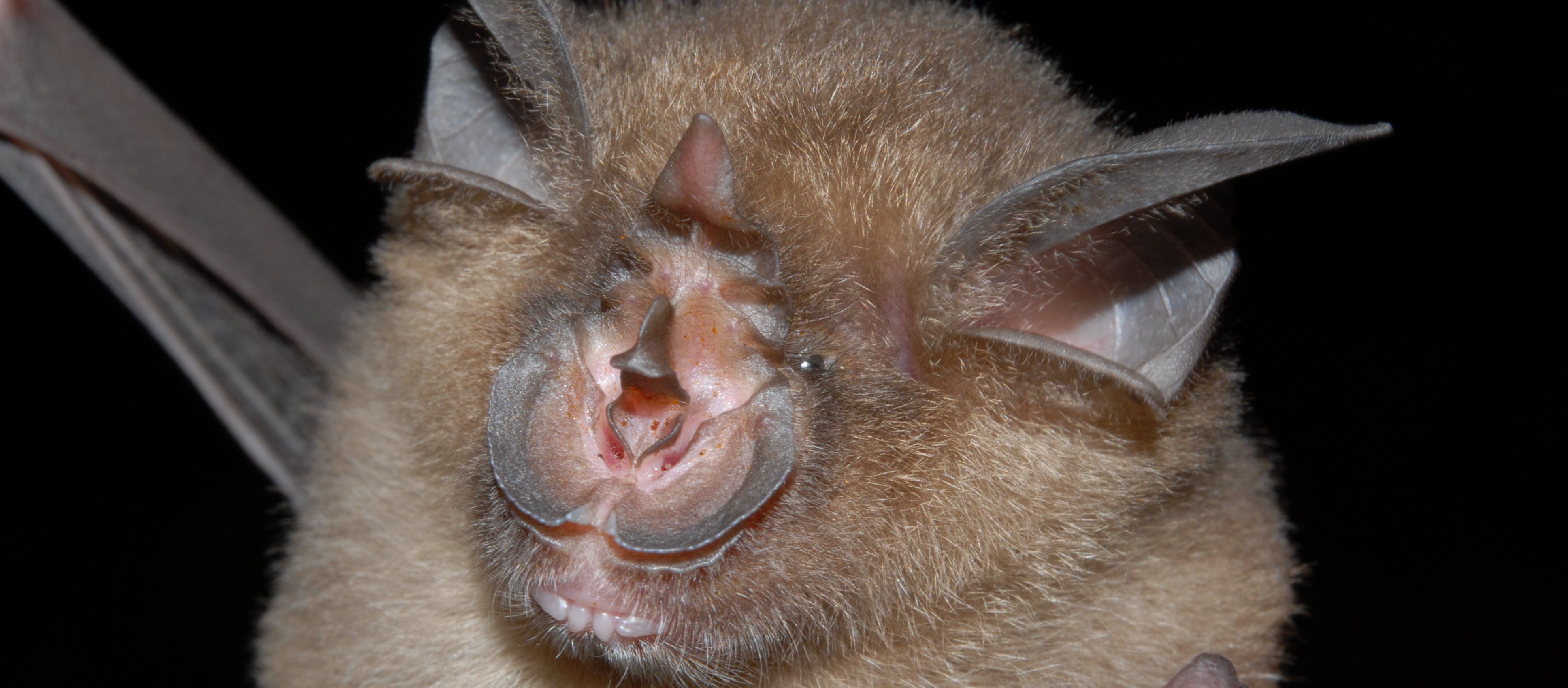
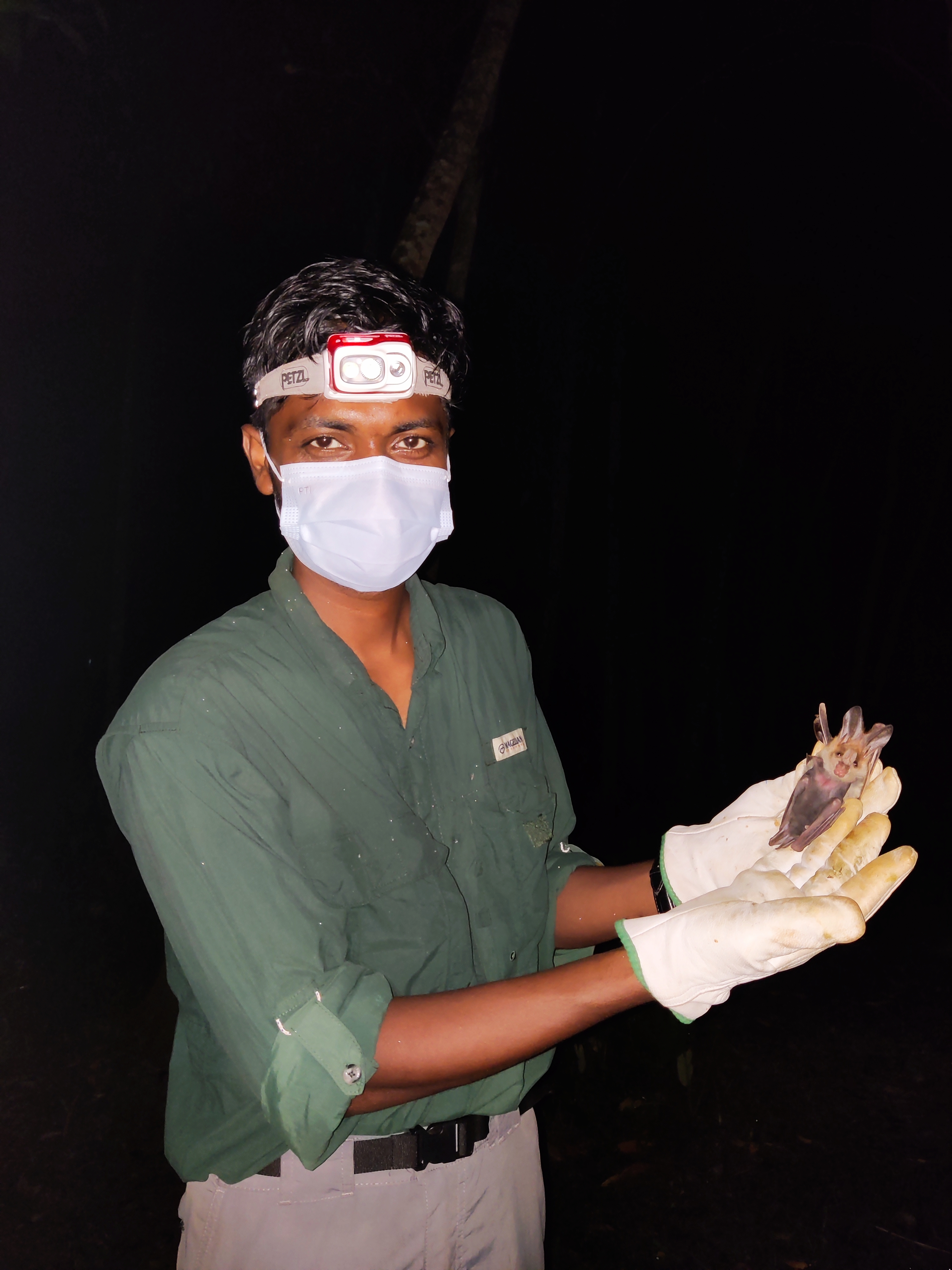
One of the bats the team captured last summer. It quickly became a darling to the whole team!
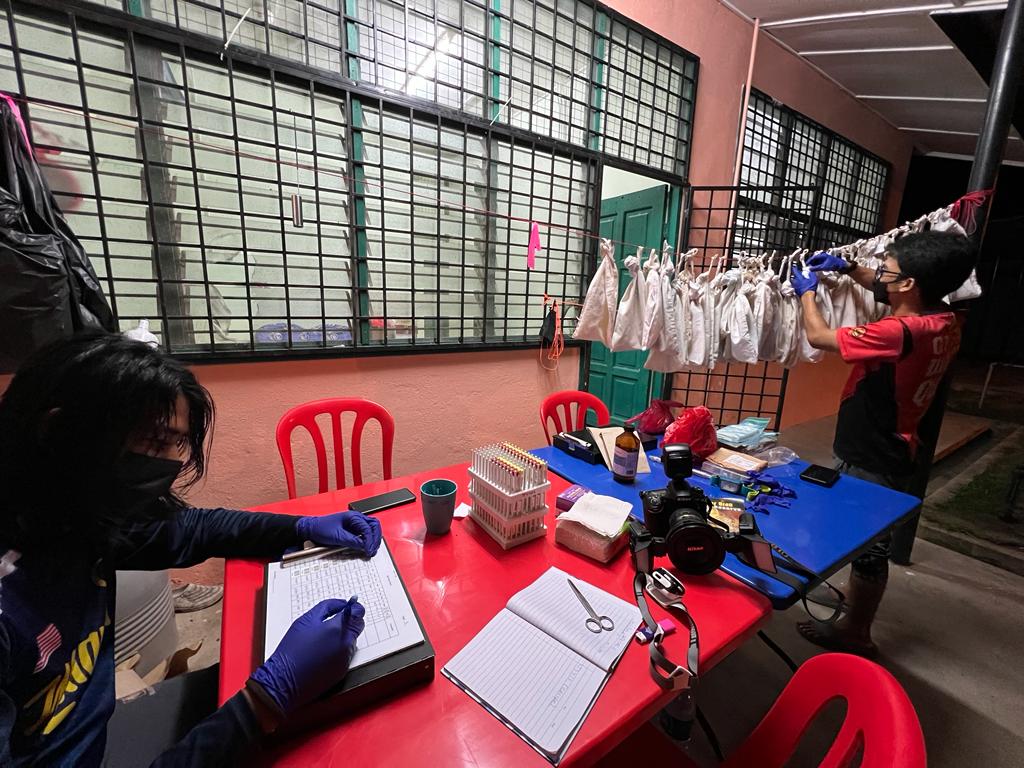
Isham led another field season in the summer of 2023, and it gets better each passing year! The weather favored them, and they had successful nights of bat trappings. The team covered two sites throughout the summer, capturing over 500 bats and surveying approximately 200 vegetation plots. Whew, that’s a lot of plots!
Dr. Kingston standing in front of the grand Mersawa tree.
Things really picked up when Dr. Kingston jumped on board halfway through the summer to gather materials for the Broader Impacts component of the project. She spent countless hours each day capturing some fine videos of the forests, the bats, and all the other critters calling the forest their home.
Here’s one with the team from Malaysia National University (UKM) after we wrapped up processing the final bat for the summer!
At the moment, we’re gearing up to get some of our hard work published! One of our projects, which is part of Isham’s dissertation is to look into processes behind the disassembly of bat assemblages when faced with fragmentation. We’re working hard to get this one published, so y’all best stay tuned for some more bat science straight out of the Kingston lab!
Parabiologist Shafiq in action; collecting samples from bats captured in Krau Wildlife Reserve, Malaysia.
Love 🧬#GENETICS, love 🦠 #MICROBES, love 🦇 #BATS? Excited by integrative research? Tigga Kingston and Caleb Phillips at Texas Tech University are hiring an #integrative biology #postdoc to join us on an NSF-supported project that integrates bat genetics, molecular dietary analysis, and microbiome data from forest-dependent bats sampled across a habitat degradation gradient in Malaysia to quantify processes and relationships shaping microbiome communities.
Required Qualifications: Doctoral Degree (or foreign equivalent) that incorporated bioinformatic approaches to answer questions in ecology, evolution, genetics or closely related fields. Examples would include, but not be limited to, genomics, metagenomics, or microbial ecology. The degree should be completed by May 2023. Proven interests in integrative science crossing disciplines and enthusiasm for the integration of omics data and ecology.
Preferred Qualifications: Strong communication skills across disciplines as demonstrated by published or submitted peer-reviewed scientific manuscripts. Keen interest in or experience with high dimensional, integrative data analyses. Applicants should be willing to work as part of a diverse multidisciplinary and multicultural team and be excited about educational outreach and engagement.
Brief Description of Duties & Opportunities: Our goals are to determine how genetics, sociality, and diet influence the assembly of bat microbiomes and how assembly processes are disrupted by habitat degradation. The postdoctoral researcher (PDR) will work closely with Dr Phillips employing informatic approaches to answer these questions. As part of the project, the postdoctoral researcher will have ample opportunity to build on or acquire primary skill sets in metagenomic and genomic analyses, advanced statistics. The PDR will work closely with Dr Kingston on the development and implementation of a broader impact program that brings bat and microbiome diversity to 4th and 5th graders. Specifically, the PDR will:
Analyze and integrate molecular ecological data sets including ddRADseq, diet and environmental insect sampling (COI gene) and microbiome composition (16S).
Build on or acquire primary skill sets in bioinformatics and statistics (e.g., structural equation modeling) and secondary skill sets in fieldwork and integrative analyses.
Prepare manuscripts including writing, editing, and figure preparation. May also assist in grant writing.
Assist with developing and implementing an innovative active-learning experience called “The Malaysian Bat Education Adventure”.
Work in close collaboration with the two PIs and graduate students.
Presenting at Scientific Conferences and Meetings.
The position is funded for one year with the possibility of a second year.
Apply!
Application packages should include CV, contact information for three references, Research Statement, and three examples of the applicant’s published work. Please submit applications to caleb.phillips@ttu.edu with the subject line “Integrative Microbiome Assembly Postdoc”.
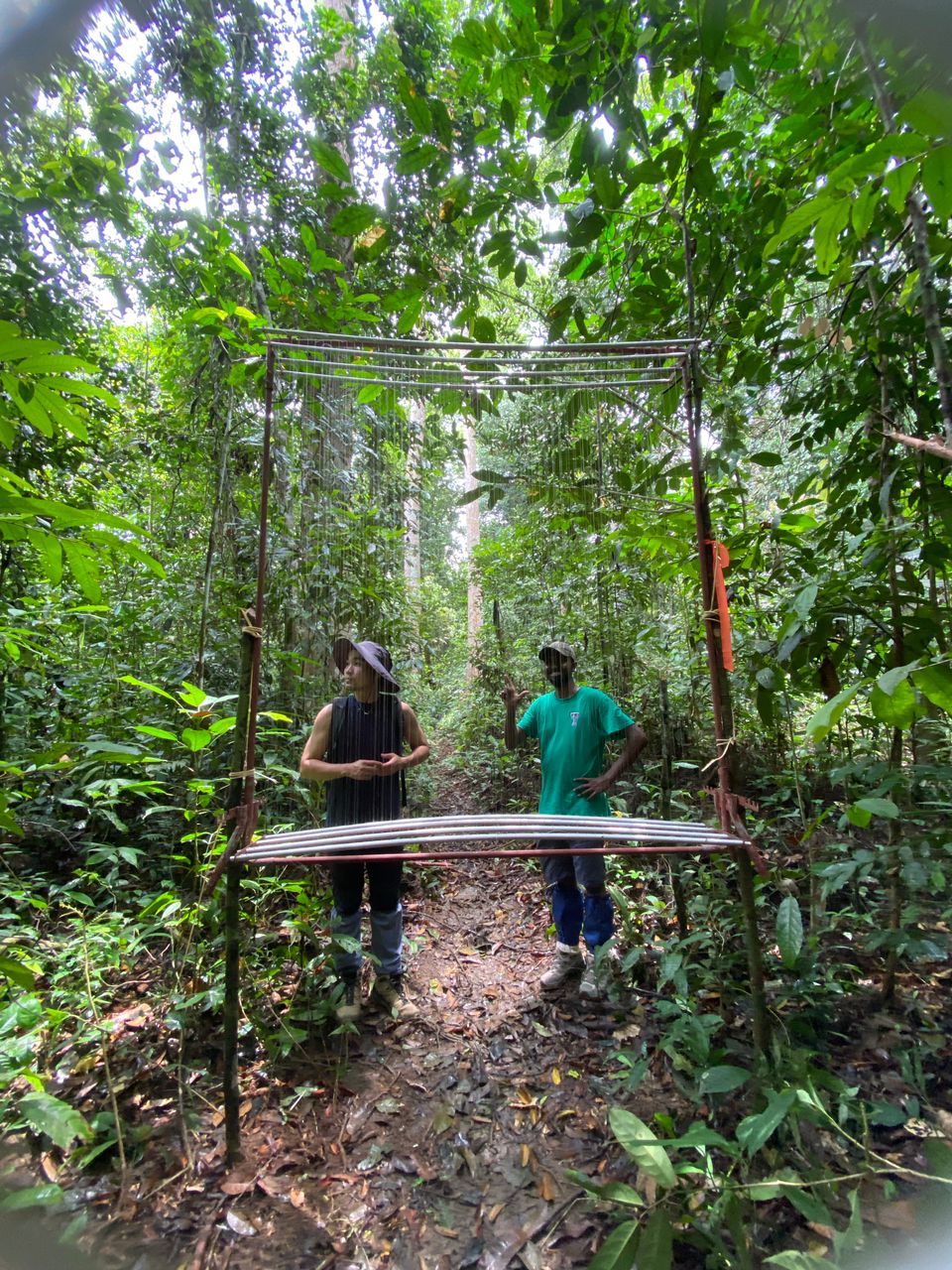
Isham and Ashraf set up harp traps to capture cool forest bats in Malaysia
Another day, another (student scholar) dollar! Congratulations to Isham for the 2023 Bat Conservation International student scholar award! Isham’s award will provide financial support to help his research on disentangling the processes structuring bat communities across a gradient of habitat degradation.

Isham recently attended the Texas Society of Mammalogists Annual Meeting and presented his work: “Forest Fragments Contribute to the Maintenance of Paleotropical Bats Functional Diversity” where he won the Vernon Bailey Award for the best poster presentation in classical mammalogy at the organismal level. His work highlights that there is an increasing dissimilarity between co-existing species in forest fragments relative to those in continuous forests, a pattern that may be linked to niche expansion. Overall, forest fragments may contribute to the maintenance of functional diversity of insectivorous bat communities at the landscape level, although large tracts of forest are important for forest specialists.
The effects of climate change have led to an increase in extreme heat events, causing mass deaths among fruit bats of the genus Pteropus in various parts of the world. The Indian flying fox (Pteropus medius) is facing a shrinking habitat, and its distribution has shifted from southern to central and northern regions in Pakistan to escape rising temperatures and heat events. This DW News documentary covered our research work on “Effect of Extreme Heat on Indian flying foxes in Pakistan“.
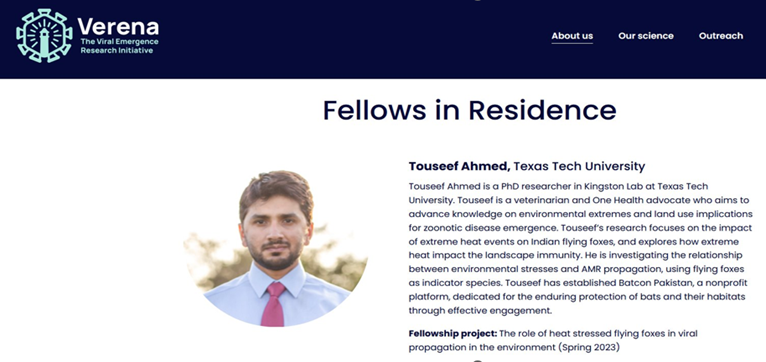
Touseef has been selected for the inaugural cohort of the Verena Initiative Fellows in Residence Program to build upon his existing research work. He will conduct his lab work at Colorado State University in June 2023 in collaboration with Dr. Anna Fagre, who is Research Lead for Biology Integration at Verena.
The Inaugural Cohort of the Verena Initiative Fellows in Residence
This fellowship will enable Touseef to build upon his existing research work by including bat-borne DNA viruses’ propagation. He will be investigating the impact of heat stress and dietary deficiency in propagation of DNA viruses by Indian flying foxes in the environment.
Verena Fellows in Residence Profile. Find More here.
Aren’t we all good students? Let’s hope the members of the Kingston lab can keep up with that pace!
Looks like Iroro is having a fruitful night! Told you to make sure the harp traps are in good shape. Those strings could use a bit of TLC, aside from our bat friends of course!
Just recently, Iroro and Ben teamed up to publish another portion of their findings from their bat-venture in Nigeria! Together with their co-authors, they discovered that the diversity of Afrotropical bats isn’t as depauperate as previously thought. In fact, they found that the Afrotropical bat diversity is comparable to that of other ecoregions, such as those in Peninsular Malaysia and Indonesia. Their conclusion? The underrepresentation of the Afrotropical bat diversity stems largely from undersampling the species-rich narrow ensemble. And why is that you ask? Well, it’s simply because earlier studies did not include harp traps in their surveys! So, Y’all, make sure those harp traps are in good shape, strings included, so you won’t miss out on any adorable, fuzzy, nocturnal winged creatures!
Touseef posed in front of his poster titled “Future directions for One Health Research; Regional and Sectoral Gaps“
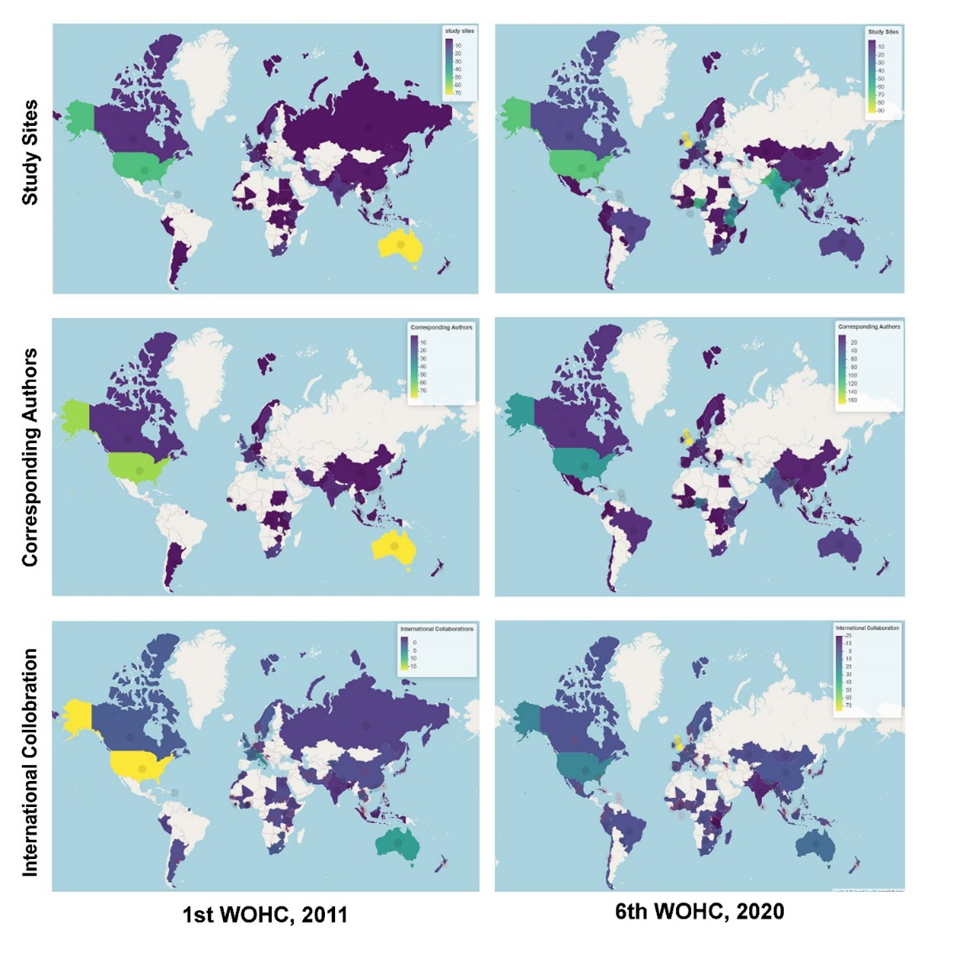
A competitive Travel Award by the Congress Organizing Committee enabled Touseef to attend the 7th World One Health Congress in Singapore to present his research “Future directions for One Health Research: Regional and Sectoral Gaps”. The concept of One Health highlights the important inter-relationships between health and well-being of people, animals, plants, and the environment which supports their existence. However, implementation of a One Health approach varies considerably between different geographical regions and remains challenging to implement without greater inclusivity of different disciplinary capacity and expertise. Identifying regional and sectoral gaps will help achieve One Health research parity.
Geographic distribution of One Health research. Comparison of abstract distributions from 1st and 6th World One Health Congress based on study sites, affiliation of corresponding authors, and international collaborations. Contributions to international collaborations were calculated as the difference between the number of studies conducted in the country and the number of corresponding author affiliations from the country. Negative and positive values indicate sink (received collaboration) and source (extended collaboration) of One Health research. Source countries such as US and UK for the 1st and 6th WOHC are indicated by yellowish green color while sink countries such as India and Pakistan for both Conferences are indicated by dark blue color. Check out our interactive web maps here!
Bat research is limited in Bangladesh, so to date estimates of bat diversity in the country have been based on a few ad hoc studies and expert opinion. To gain a more complete understanding, Ashraf compiled species occurrence data from the literature, museum records and the Global Biodiversity Information Framework (GBIF). He set out to confirm species presence and identify species that might be expected to occur in Bangladesh based on occurrence records in neighboring countries and habitat preferences. To visualize the distribution of bats, Ashraf made maps for each species recorded from Bangladesh and species that might occur in the country.
He found a total of 31 species are recorded for Bangladesh – but only 22 are associated with voucher records. Evidence for nine species came from photographs and/or human observation. An additional 81 species were recorded from surrounding countries. Of these, 38 species are highly likely to occur in Bangladesh.
Ashraf holding a female Greater false vampire bat (Lyroderma lyra) carrying its pup captured from his study site in Bangladesh
So what is next? To expand the country list, Ashraf recommended that surveys of bats in Protected Areas, caves and wetlands be prioritized. Surveys should use multiple methods, including contemporary techniques (harp traps and acoustics) that have not been used in Bangladesh before, as well as traditional ones (mist nets). He emphasized that voucher specimen collections are needed to confirm the presence of and distribution of bats in Bangladesh and identify areas central to bat conservation.
The locality records based on Ashraf’s study show the distribution of Greater false vampire bat (Lyroderma lyra) in Bangladesh
Citation: Ul Hasan, M. A., & Kingston, T. (2022). Bats of Bangladesh—A Systematic Review of the Diversity and Distribution with Recommendations for Future Research. Diversity, 14(12), 1042. https://doi.org/10.3390/d14121042











 Kingston Lab