A Warm Welcome to Dr Moe Moe to the Kingston Lab!

Moe Moe Aung joined the Department of Biological Sciences at Texas Tech University in April of this year (2024). She was a professor at the Zoology Department of Mandalay University, Myanmar. She worked on bat ecology and diversity in Myanmar with her colleagues and students, regional and international experts, and published findings in local and international research journals. She was awarded a visiting fellowship from the Institute of International Education-Scholar Rescue Fund (IIE-SRF) in 2022. However, some hard circumstances prevented her from traveling abroad. She arrived in April 2024 and has been working as a research fellow in the Kingston lab. She has been writing an updated review of Myanmar bats, as it has been nearly 25 years since Bates et al. 2000 reviewed the country’s bat fauna and reported 88 species. Since then, intensive surveys of bats have been conducted in Myanmar, resulting in some new species and many new records for the country, making a review timely.

Moe Moe steals the spotlight at the Carols of Light, shining brighter than the Texas Tech president!

She works on her research writing at the lab, the TTU library, or in comfortable places on the TTU campus. She has also been making the most of TTU’s professional development opportunities, taking online courses and attending on-campus symposia, trainings, and seminars. In her leisure time she likes to walk around the TTU campus and Lubbock neighborhoods.

Kingston Lab publications in 2024 – a wonderfully collaborative year focusing on One Health, trade in bats and human dimensions of bat conservation

We had a diverse range of publications come out this year, many of which illustrate the power of integrative and large team efforts. In March, a great team of disease ecologists, bat biologists, and policy experts, led by the inimitable Professor Raina Plowright, detailed a context-dependent tiered approach to minimize spillover of pathogens from bat to human populations through protection and restoration of places where bats feed, rest and aggregate. These ecological countermeasures are laid out as a model approach for diverse taxa. Tigga and former lab member Dr Iroro Tanshi contributed.

Plowright, R.K., Ahmed, A.N., Coulson, T. et al. Ecological countermeasures to prevent pathogen spillover and subsequent pandemics. Nat Commun 15, 2577 (2024). https://doi.org/10.1038/s41467-024-46151-9

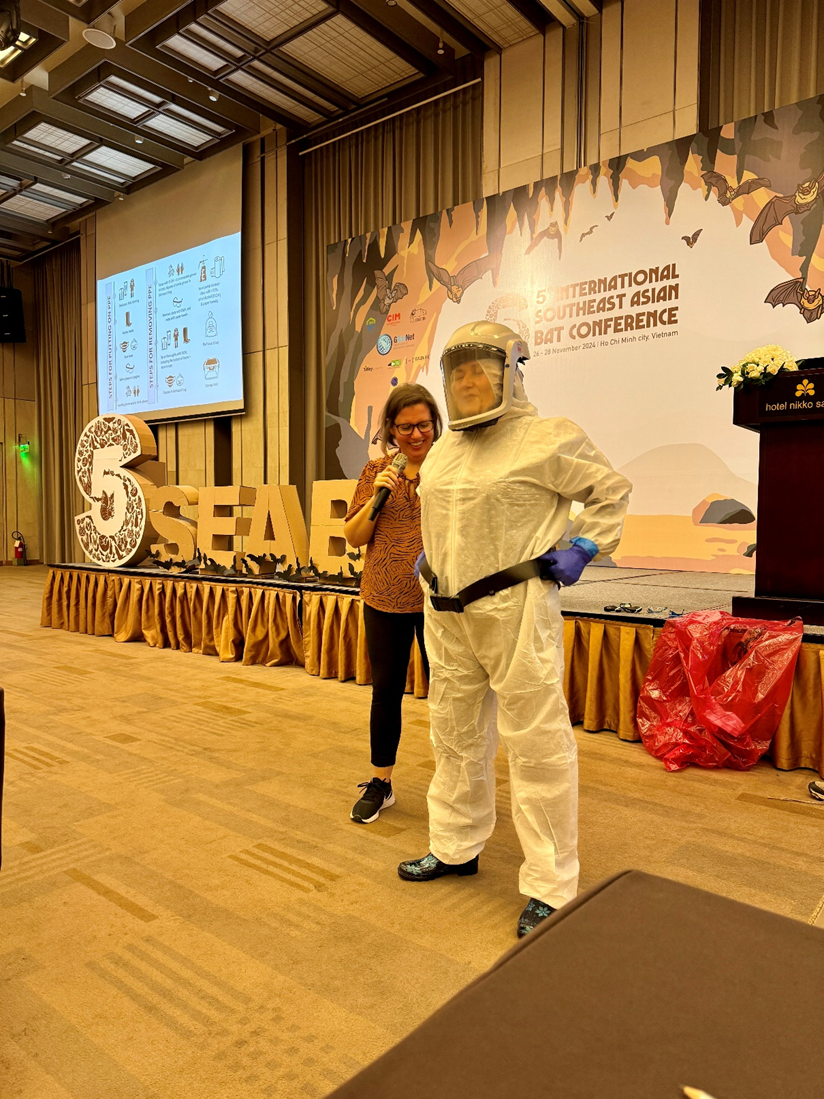
Bat field research frequently involves direct or close contact with bats, an interface that could potentially lead to spillover either from bats to humans or humans to bats. To empower the global bat research community to better protect themselves and bats, the  IUCN Species Survival Commission (SSC) Bat Specialist Group (BSG) One Health Working Group (OHWG) issued comprehensive guidelines for Field Hygiene in June of this year:

Shapiro, J.T., Phelps, K., Racey, P., Vincent a., Viquez-R, L., Walsh, A., Weiberg, M and Kingston, T. (2204) IUCN SSC BSG Guidelines for Field Hygiene. https://zenodo.org/records/12169643

The OHWG has been promoting the Guidelines through webinars, talks and demonstrations around the world, including the European Bat Research Symposium, National Bat Conference UK, 5th International Southeast Asian Bat Conference. Related, several members of the IUCN SSC BSG’s OHWG (Tigga, Wanda Markotter, Paul Racey, Lisa Worledge) contributed to a review, and something of a Public Service Announcement, of the need for bat handlers to be vaccinated against rabies.

M. Brock Fenton, Paul A. Faure, Enrico Bernard, Daniel J. Becker, Alan C. Jackson, Tigga Kingston, Peter H.C. Lina, Wanda Markotter, Susan M. Moore, Samira Mubareka, Paul A. Racey, Charles E. Rupprecht, and Lisa Worledge. 2024. Bat handlers, bat bites, and rabies: vaccination and serological testing of humans at risk. FACETS9(): 1-11. https://doi.org/10.1139/facets-2024-0056

The IUCN SSC BSG Bat Trade Working Group (BTWG) also produced a significant publication this year, with contributions from Tigga, Abby, and former lab member Dr Joe Chun-Chia Huang. The paper quantified the online trade in the US in the distinctive Kerivoula picta and received a lot of national and international attention, including coverage in the New York Times. Ultimately, it led to eBay removing all bat listings from their sites around the world (big THANK YOU eBay!).

Coleman, J.L., Randhawa, N., Huang, J.CC. et al. Dying for décor: quantifying the online, ornamental trade in a distinctive bat species, Kerivoula pictaEur J Wildl Res 70, 75 (2024). https://doi.org/10.1007/s10344-024-01829-9

Lab members also contributed to other IUCN BSG efforts, with Abby developing code to calculate EOO (extent of occurrence) and AOO (area of occurrence) used in Red List Assessments:

Monadjem, A., Montauban, C., Webala, P.W. et al. African bat database: curated data of occurrences, distributions and conservation metrics for sub-Saharan bats. Sci Data 11, 1309 (2024). https://doi.org/10.1038/s41597-024-04170-7

and Touseef leading the Red List Assessment for Pteropus medius:         

Ahmed, T., Murugavel, B., Sharma, B., Ul-Husan, A. & Salim, M. 2024. Pteropus medius. The IUCN Red List of Threatened Species 2024: e.T18725A230958344. https://www.iucnredlist.org/ja/species/18725/230958344

Related, Ben and Iroro contributed to a huge dataset of intactness estimates across Africa:

Clements, H.S., Do Linh San, E., Hempson, G. et al. The bii4africa dataset of faunal and floral population intactness estimates across Africa’s major land uses. Sci Data 11, 191 (2024). https://doi.org/10.1038/s41597-023-02832-6

Finally, two papers focused on human sentiments towards bats. The first was led by Amir Batrice, a former undergraduate researcher in the lab who worked with Abby to explore how people in Asia respond to posts of bat exploitation on social media:

Batrice, A. A., Kingston, T., & Rutrough, A. L. (2024). Measuring Asian Social Media Sentiments Toward Bat Exploitation. Anthrozoös37(4), 619–635. https://doi.org/10.1080/08927936.2024.2345474

The second took a deeper dive into the role of emotions towards bats, focusing on how emotions towards bats changed through COVID-19 and influence intent to perform bat-conservation actions. Four of the contributors (Tanja Straka, Joanna Coleman, Ewan MacDonald and Tigga) are members of the IUCN BSG Human Dimensions Working Group.

Straka, T.M., Coleman, J.L., Macdonald, E.A. et al. Beyond biophobia: positive appraisal of bats among German residents during the COVID-19 pandemic - with consequences for conservation intentions. Biodivers Conserv 33, 2549–2565 (2024). https://doi.org/10.1007/s10531-024-02872-3
Helping build the next generation of collaborative international bat researchers!

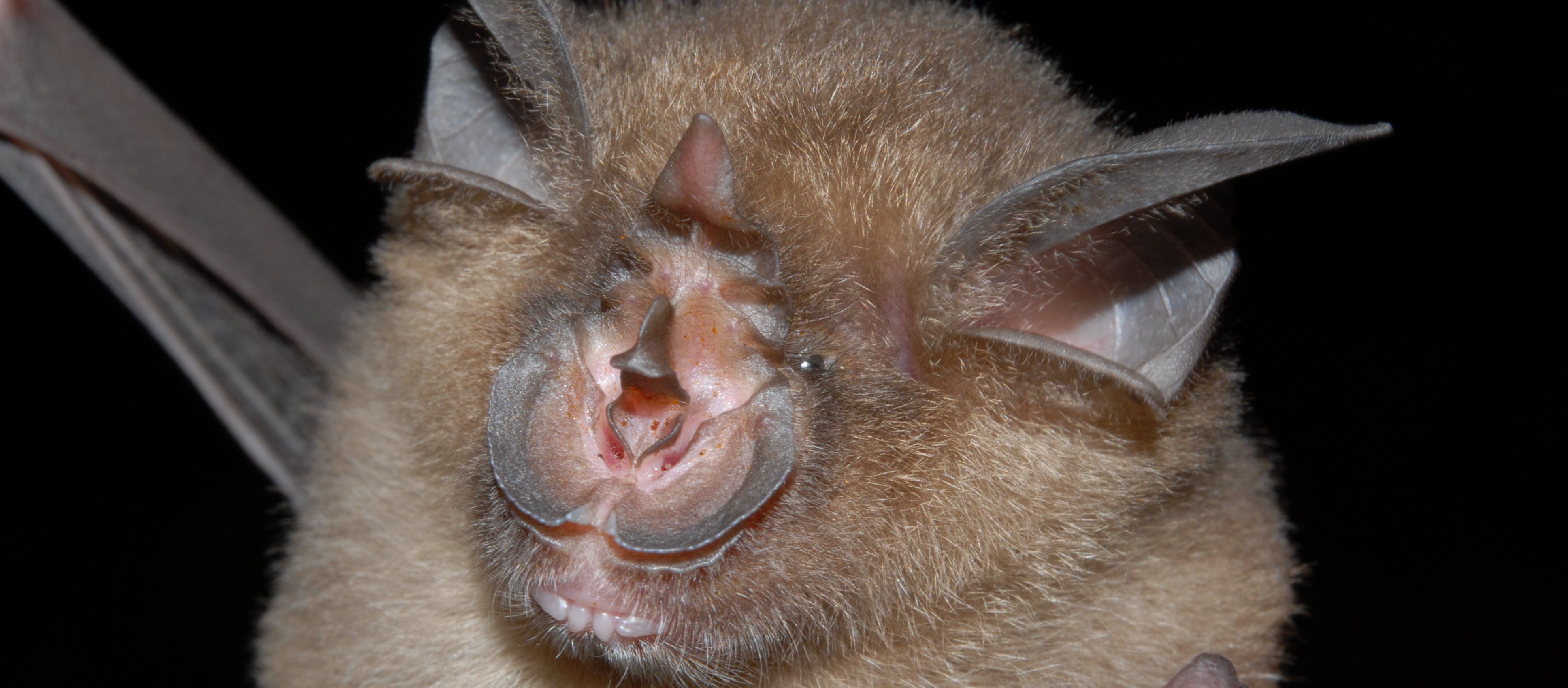
GBatNet’s student and early career scholars from around the world, including Ashraf and Abby, gathered in Tempe, Arizona, for our first-ever in-person student-only workshop on developing multidisciplinary, international research collaborations. Part of PI Tigga Kingston’s broader Global Union of Bat Diversity Networks, these students and recent grads were mentored in grant writing and project development by co-PIs Nancy Simmons and Susan Tsang, and former lab member Iroro Tanshi. Three very full days and a fantastic field trip to catch bats at a Macrotis californicus roost later (thank you Arizona Department of Fish and Game!), everyone walked away having written four collaborative grant proposals.

We look forward to seeing where these projects go!

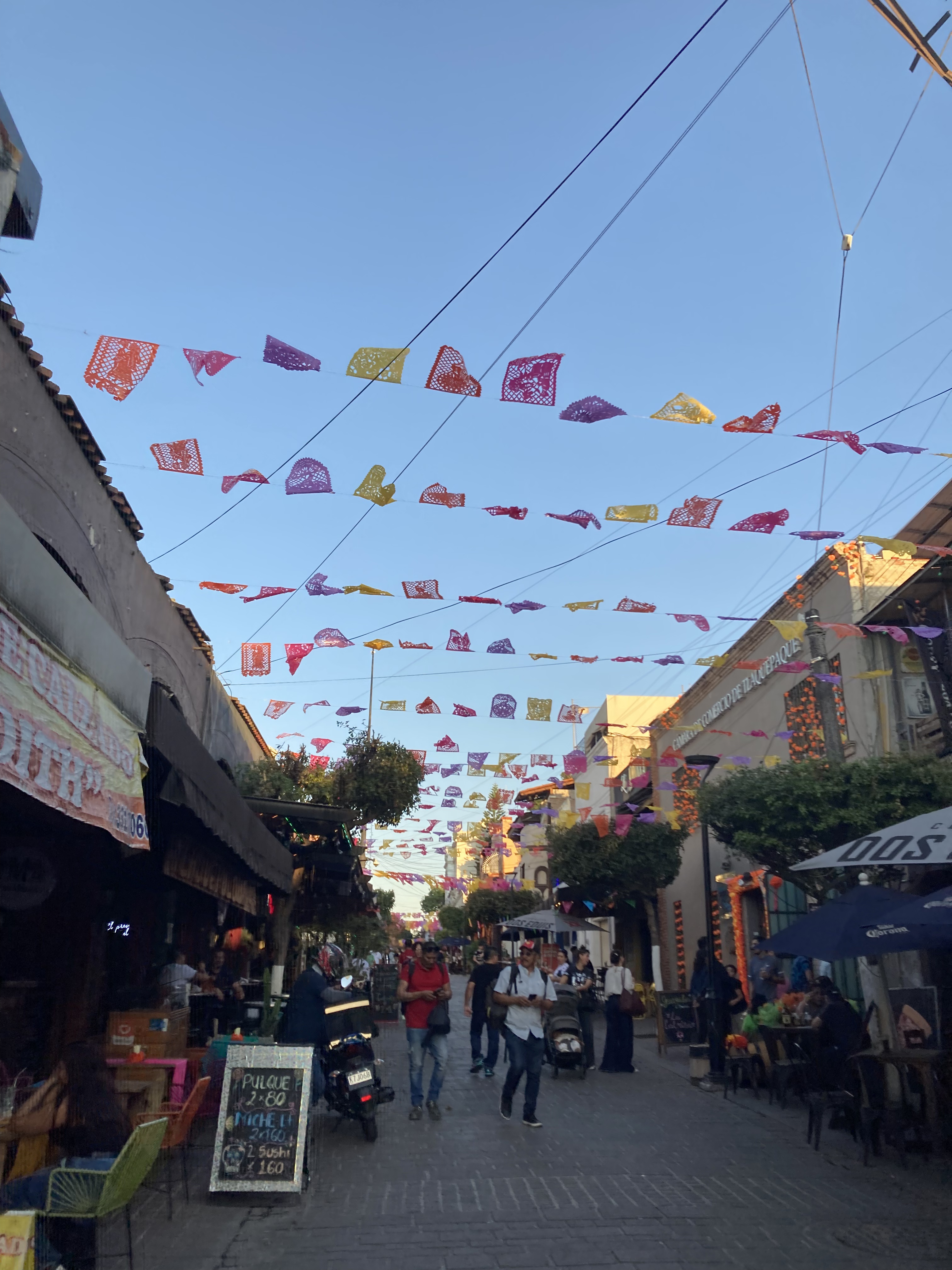
Bats and Taquilla in Guadalajara, NASBR 2024 was a blast!

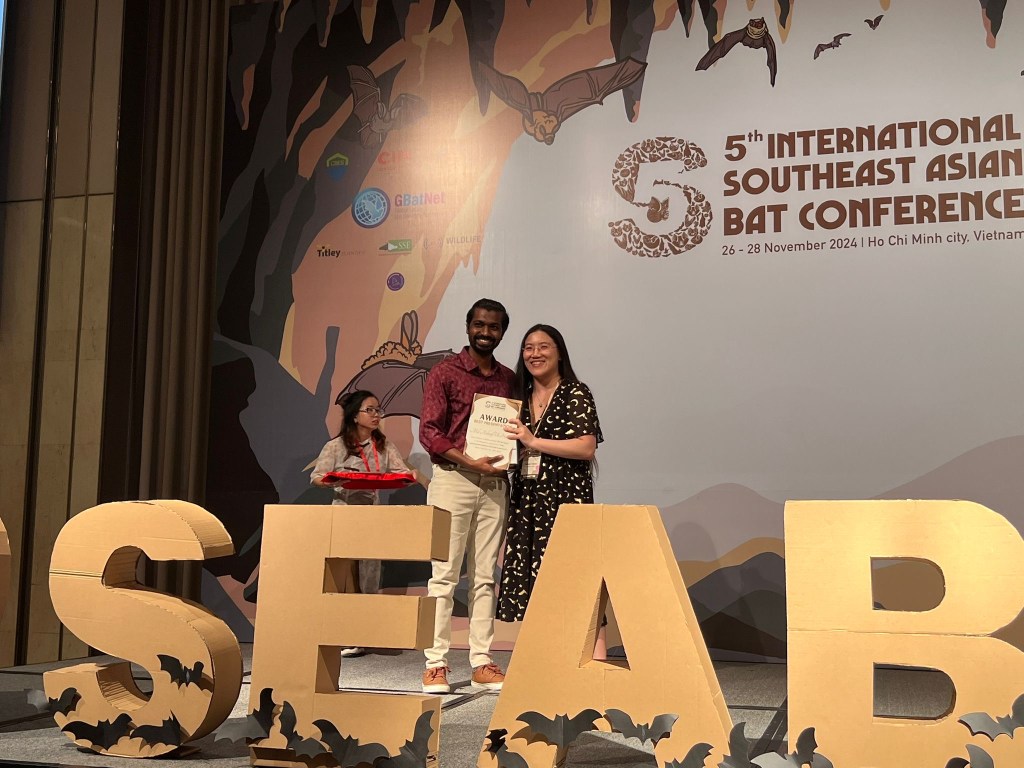
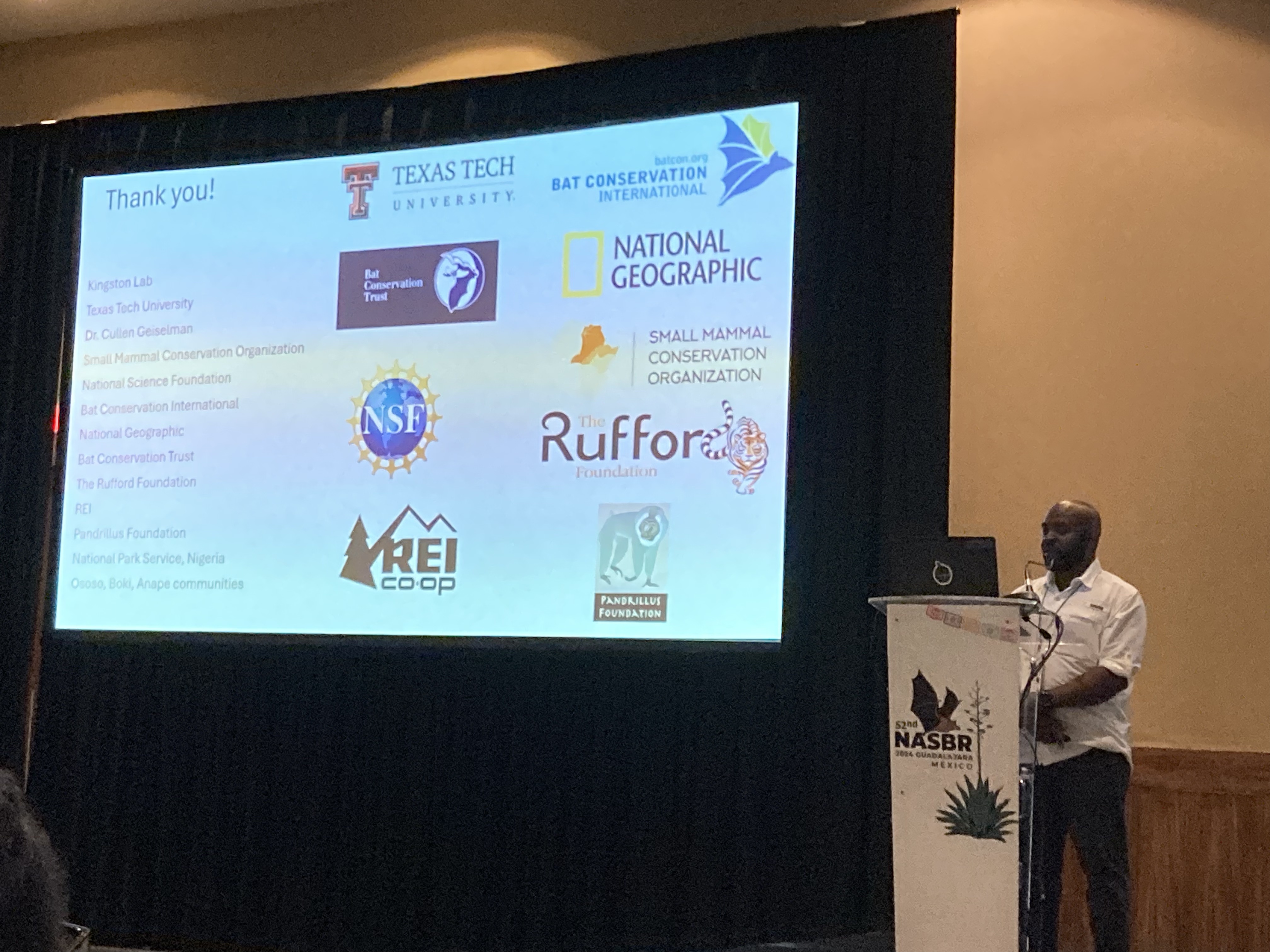
Lots of familiar faces of past and present lab members at NASBR 2024! Despite some technical difficulties, Ben presented his talk “Taste, Influence, and Availability: the Key Factors driving Bat Meat Consumption”. Ben’s talk showed that bat meat consumption is driven by an interplay of multiple socio-cultural factors rather than just economics.  These findings underscore the importance of structuring conservation and public health interventions to more integratively target all drivers of behavior concern. Abby won the Luis F. Bacardi Bat Conservation Award for her talk “Bat Hunting in Sub-Saharan Africa: Mapping the Distribution of a Conservation-Relevant Human Behavior Using Hypothesis-Driven Models”, which was full of stats, bats, and maps (three of her favorite things!). Former lab post doc Maria Sagot encouraged her fellow bat scientists to join EchoMap, a collaborative global effort to increase capacity-building for bat acoustic monitoring resources. Learn more about EchoMap here. And of course, everyone had a great time at the banquet!

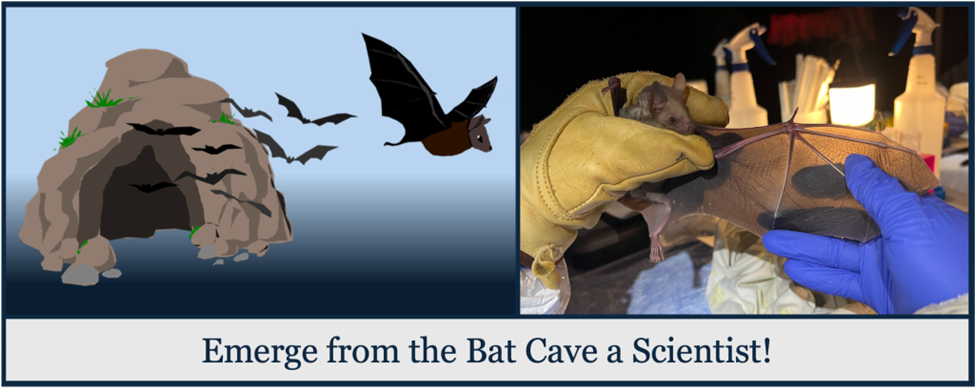
From the Bat Cave – Integrative Disease Ecology Research for Undergraduates

Do you have an interest in bats, ecology, and viromes?
Are you looking for an opportunity to conduct field research?
Are you ready to sink your teeth into cutting-edge research?

We are seeking self-motivated, curious, and collaborative students for an exciting 7-week paid National Science Foundation (NSF) research experience investigating environment-host-virome dynamics within wild Egyptian fruit bats (Rousettus aegyptiacus). This interactive learning and research opportunity introduces undergraduates to integrative disease research, including fieldwork in Puerto Rico! Students will receive guided mentorship, attend daily group meetings, and get hands-on training in fieldwork, data analysis, coding, and science communication!

Eligible participants must be US citizens, US nationals, or US permanent residents and current students or recent college graduates. Selected undergraduates will devote five weeks to online training and group activities and 10 days to in-person field ecology training in Puerto Rico. All travel and accommodation expenses to Puerto Rico will be covered. Undergraduates will also receive a stipend of $5,000 for the 7 weeks. We particularly encourage students from underrepresented minorities to apply. Don’t let this NSF funded opportunity fly by! Apply now to join this Bat Cave for Summer 2025!

Application deadline is October 31, 2024. For more information and application instructions, please visit the link: https://lmdavalos.github.io/post/24-09-18-batcave/

Touseef Awarded Travel Grant to Present at the 8th World One Health Congress in South Africa!

AMR is a growing One Health concern, and understanding the role of wildlife, especially species like flying foxes, in spreading resistant bacteria is crucial for the health of humans, animals, and the environment.

Touseef’s research focuses on an important, yet often overlooked, driver of antimicrobial resistance (AMR) – environmental temperature and relative humidity. These factors indirectly affect wildlife behaviors, which can increase the risk of encountering antimicrobial residues and pathogenic Extended Spectrum β-Lactamase (ESBL) producing E. coli.  

Proposed Environmental Antimicrobial Resistance Propagation Pathways by Pteropus medius

Research Key Highlights:

  • Resistance was found against last resort Reserve class antibiotics such as aztreonam (16%) and imipenem (2%).
  • 46% of isolates showed multi-drug resistance.
  • 37% were ESBL producers, with the blaTEM gene present in over 90% of isolates, particularly in winter samples.
  • Environmental and land use factors like human settlement and water bodies were found to influence the isolation of resistant genes.

This research sheds light on the complex relationship between environmental factors, land use, and AMR propagation via P. medius, emphasizing the need for an integrated One Health approach to combat AMR.

Kingston lab talks about Malaysian bats and their prey in Long Beach!

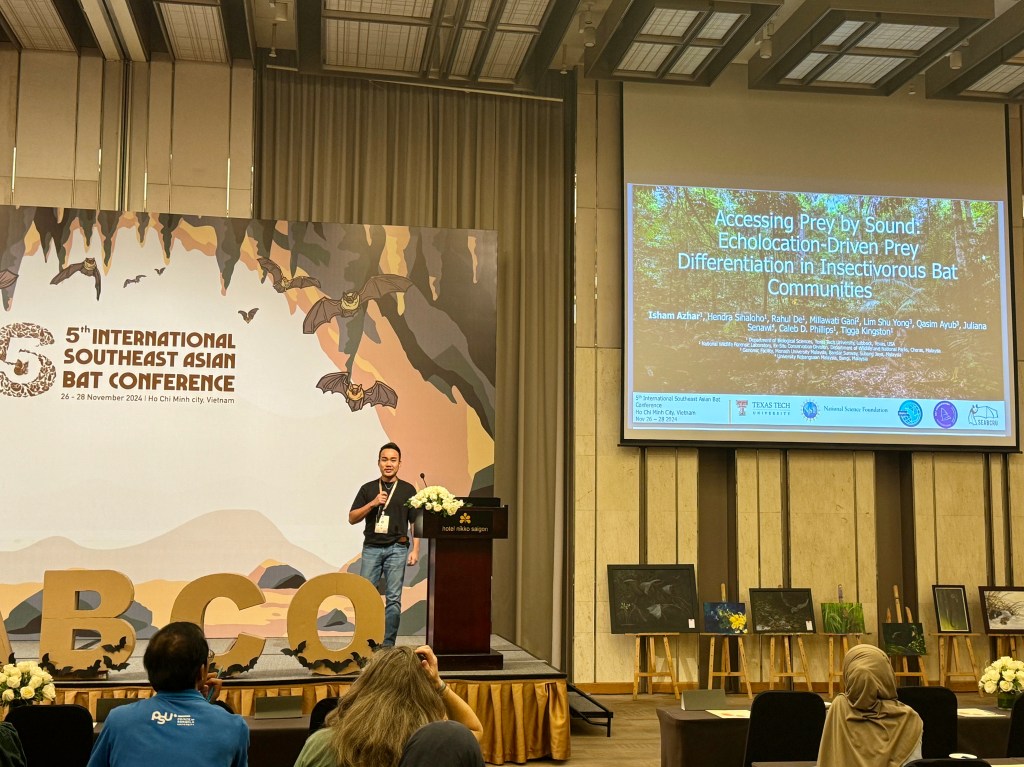
Our Malaysian bat project team (Isham, Hendra and Rahul) represented the Kingston lab at the 109th annual meeting of the Ecological Society of America in Long Beach, California from August 4 to 8, 2024. Isham’s brilliant presentation showed how the expected environmental filtering and niche packing for insectivorous bats were significant in continuous forests but not in the fragmented patches, highlighting the role of stochastic processes in fragmented landscapes. Hendra gave a data-rich yet engrossing talk on optimizing methods for metabarcoding insects from bulk samples captured using light traps. He demonstrated that four subsamples of 100μL each recovered 90% Operational Taxonomic Units (OTU; equivalent to species) from these homogenized samples of potential bat prey. Rahul’s presentation carried Hendra’s research forward by identifying forest characteristics that influenced insect alpha diversity. Additionally, his work showed that dietary diversity of insectivorous bats was not linked to prey diversity and there was limited overlap between OTUs recovered from light traps and those from bat feces.   

In addition to the super-insightful plenary sessions, our team had a great time dashing from room to room catching up on much cool science being presented simultaneously! With over 3500 attendees, plenty of exhibitions and dedicated career counselling sessions, they benefitted immensely in terms of networking opportunities.  

Nigeria Field Update 2024: Integrative Disease Ecology Field Season Successfully Completed!

Our second field season in Nigeria wrapped up this summer after an intensive seven months of bat surveys and sampling (November 2023 – June 2024). Ben led a field team of 15 to survey 17 caves across two sites in southern Nigeria sampling 1266 bats. This work is part of our larger collaborative effort to understand how human disturbance affects the complex relationships between bats, their environment, and their host viruses – critical knowledge for predicting and preventing viral spillover events. While focusing on the ever-cute Egyptian fruit bat (Rousettus aegyptiacus), the team also sampled other 17 bat species including the beautiful Otomops martiensseni, a new country record for Nigeria!

The team collecting samples
Caving is fun!
Ben installing an air sampler to trial a new e-sampling technique in a cave

Perhaps most importantly, this field season significantly strengthened the local capacity for bat research in Nigeria. Tigga and Dr. Simon Anthony were there to train field team on biosafety, sampling techniques etc.

Tigga demonstrates the use of calipers

The field season came with its fair share of challenges—maintaining cold chains for sample preservation was no cakewalk, with liquid nitrogen sources a bone-rattling 10-hour drive away. Add that to the logistical hurdles of hauling a 15L liquid nitrogen-charged dry shipper up and down a steep mountain, requiring a grueling 9-hour hike each way. But the dedication of the field team, especially our Nigerian colleagues, made it all fun.

Ben and Tigga took time to visit the Conservator of Park, Cross River State National Park
When you have a 9-hour hike on your hands, it’s hard not to stop every now and then for snacks and photos!
You need an army of enthusiastic porters all the time

GBatNet meeting 2024: building a sustainable future for bats

To promote a shared vision of sustainable bat diversity in a changing world, the Global Union of Bat Diversity Networks (GBatNet) organized a meeting in Houston, Texas, from May 21–23, 2024. The event united 79 participants, including 19 vibrant student representatives, among them were Abby, Ashraf, and Touseef from Kingston Lab, showcasing the lab’s leadership in global conservation efforts. Fifteen working groups shared updates on their projects and set actionable goals for the next 1–3 years. Student representatives actively engaged with the working groups, exploring opportunities and contributing their energy and ideas.

Participants of GBatNet 2024 united for a sustainable future in bat diversity

From Green Canopies to Golden Fields: Ashraf Presents the Odyssey of Bangladeshi Bats to Texan Audiences

Ashraf was telling a bat story, keeping the audiences hanging on every word

At the 42nd annual Texas Society of Mammalogists meeting in February 2024, Ashraf presented a poster on how bat assemblages are responding to land-use change in Bangladesh. During his two-year adventure in the world of bats, he documented 16 bat species across 5 families and 4 feeding guilds, employing a combination of mist nets and harp traps. His research illustrates that bat species diversity is greater in forests compared to degraded land-use within the protected areas. In addition, Ashraf demonstrated that bat species composition varies across study sites, emphasizing that forested areas are home to specialist bat species, in contrast to degraded sites. Remarkably, Ashraf’s study pioneered the use of the harp trap as a successful method for capturing forest understory bats in Bangladesh, representing a substantial leap forward in the country’s bat research.