Congrats To Kendra!

Well done to Kendra in securing a Helen DeVitt Jones Graduate Fellowship from the TTU Graduate School (thanks Graduate School – your support is appreciated!). Helen DeVitt Jones “was a great humanitarian and patroness of education and the fine arts, and was born into one of the early ranching families of West Texas”. You can read more about her contribution to TTU and our area  here

Kendra in action!

Kendra in action!

Nick and Joe’s presentations

The end of last month brought a couple of presentations. Nick attended the 2014 CFLRP (Collaborative Forest Landscape Restoration Project) “All Hands” meeting in Santa Fe, NM on Thursday, March 27th.  People from multiple agencies were there along with members of the public to discuss the status of the restoration of the southwest Jemez Mountains after the Las Conchas Wildfire of 2011.   The title of Nick’s talk was “Impacts of the Las Conchas Wildfire on bat activity”.

That weekend, Joe presented at the 5th Texas Tech Annual Biological Sciences Symposium, giving a talk entitled “Roost Ensembles of Insectivorous Bats Differ in Response to Coffee Agriculture in Southeast Asia”.

Both talks were well received — great job guys!


Rodrigo Medellin visit to TTU

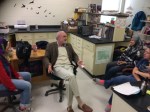
We had a lovely day today with Dr Rodrigo Medellin visiting. Maria invited him to give a departmental seminar in the department, which went over very well and was entitled “How to do mammal conservation science, implement it, and not die trying” . It was also a great chance to have chat … here he is with the lab

Tigga at the SEABCRU Flying Fox Workshop in Cambodia

Tigga spent the last couple of weeks in Cambodia for the SEABCRU Flying Fox Workshop 2013. We started off with a meeting of the Flying Fox Team (Tammy Mildenstein, Sara Bumrungsri, Paul Racey, Kevin Olival, CE Nuevo and Sheema Abdul Aziz) to catch up on some of their writing commitments — which they are doing an awesome job on. Then we prepared for and moved into the SEABCRU Flying Fox workshop, with participants from Cambodia, Vietnam and Thailand. The workshop went even better than I could have hoped, and we have made some great new connections for the SEABCRU in Cambodia and southern Vietnam, and got great press coverage in the Cambodian Daily and Phnom Penh Post. More details about the workshop here and here . Thanks to Neil Furey (from the SEABCRU cave team) and Sophany and Sarak at RUPP for being such excellent hosts!.

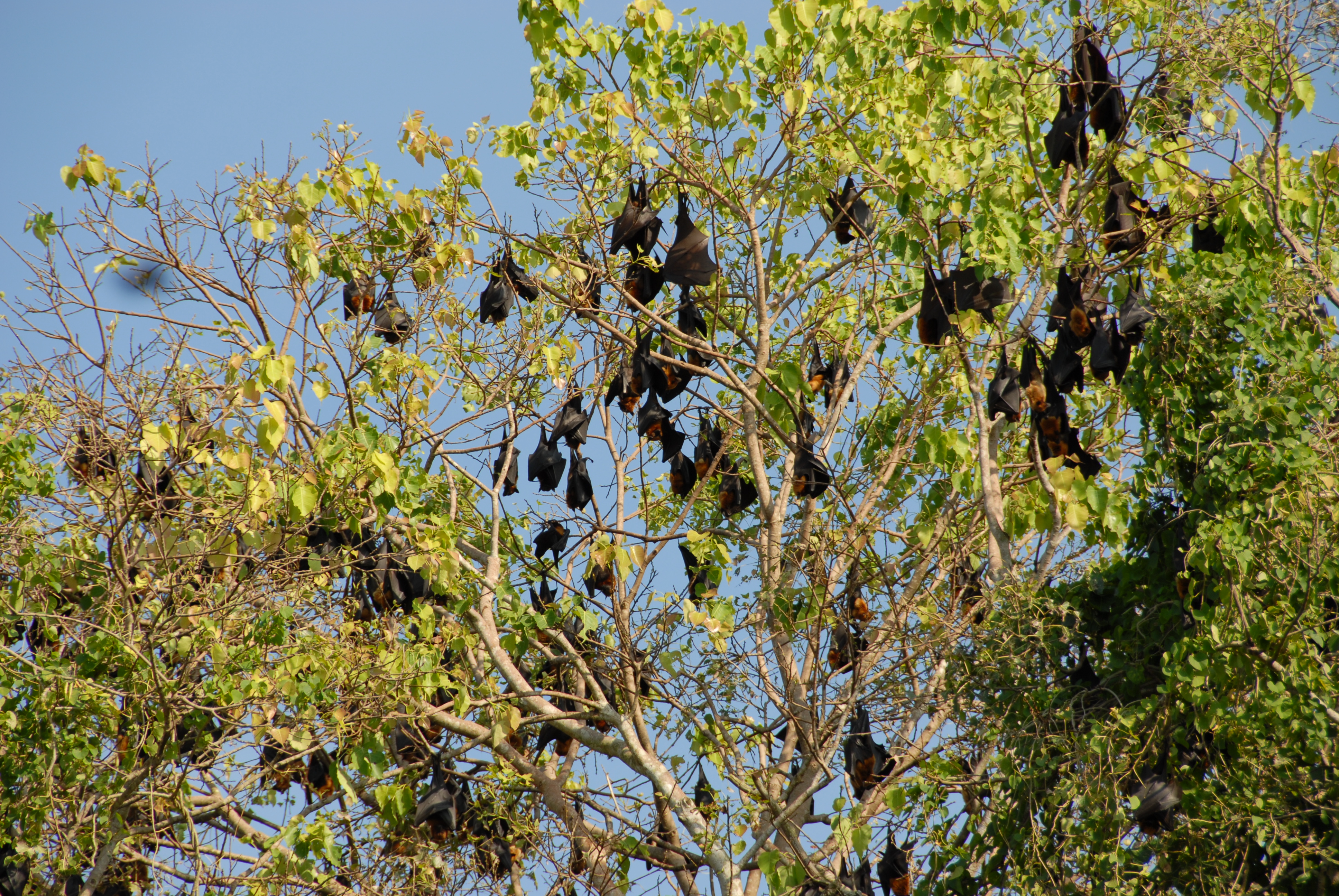
One, two, mobs (as they'd say in Oz). Part of the workshop focused on counting flying foxes like these Pteropus lylei

One, two, mobs (as they’d say in Oz). Part of the workshop focused on methods for estimating flying fox colony sizes. These are Pteropus lylei

Book chapter in Adams & Pedersen’s Bat Evolution, Ecology and Conservation now out

Tigga’s chapter  in the new Bat Evolution, Ecology and Conservation book edited by Rick Adams and Scott Pedersen is now available in the online version of the book – if your library/institute has access to it. Rick and Scott intended it to be a an “update”, sort of, for the 1987 landmark volume “Recent Advances in The Study of Bats” for those who have that sitting on their shelves!

Kingston, T. (2013). Response of bat diversity to forest disturbance in Southeast Asia – insights from long-term research in Malaysia. Pp 169-185. In: Bat Evolution, Ecology and Conservation (eds. RA Adams, SC Pedersen). Springer Science Press.


Kingston Lab at the 16th IBRC and 43rd NASBR meeting

The lab had a great time earlier this month at the 16th IBRC in Costa Rica. Tigga convened a symposium with Richard Stevens entitled “Frontiers in Bat Assemblage Ecology: Novel Perspectives from the Old and New World” and gave a paper in the session (“Spatial analysis of species interactions in diverse assemblages”) as did Maria (“Detection and Characterization of Bat Hotspots: a Fusion Test of Local Spatial Autocorrelation”). Tigga was also involved “Building a Global Network for Bat Conservation Symposium” organized by BCI, with a paper presented by Tammy Mildenstein on the SEABCRU (“The Southeast Asian Bat Conservation Research Unit: regional bat conservation exceeding the sum of its parts”)

Julie (“Beyond Size: morphological predictors of bite force in a diverse insectivorous bat assemblage from Malaysia”), Ain (“The interplay between weather and reproduction in three cave-dwelling insectivorous bats in a Malaysian tropical rainforest”) and Joe (“Is bat coffee a potential “wing-wing” tool for biodiversity conservation in Southwestern Sumatra?”) entered the student competition with their presentations and congratulations to Joe on winning the Avinet Award!!  Kendra (“Conserving bats in the Philippines: assessing the impact of cave disturbance on bat assemblages”) and Marina (“Mobile transects are more effective at detecting bat passes than stationary points in low bat density landscapes”) both presented in the Ecological Monitoring symposium, and Colleen had a poster entitled “Effectiveness of Operational Mitigation in Reducing Bat Fatalities at the Sheffield Wind Facility, Vermont”.  Nick got his first exposure to bat nerds en masse — this was the largest IBRC so far with 650 people.

Other presenters from Dept of Biological Sciences at Tech were: Liz Siles, Cibele Sotero-Caio, Caleb Philips from Dr Baker’s lab, and Dr Carl Phillips.

The lab is very grateful to the College of Arts and Sciences, and the Department of Biological Sciences for financial assistance for the grad students’ travel.
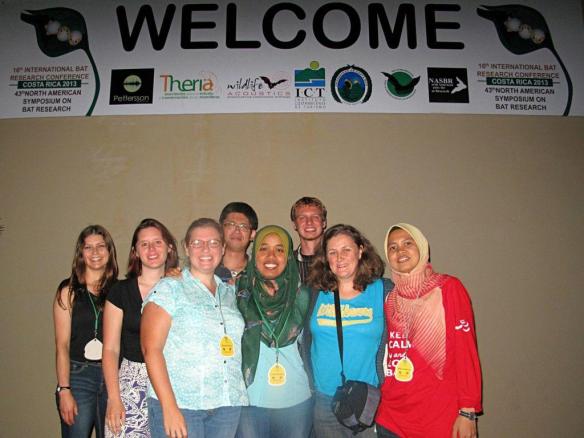
From left to right - Colleen, Marina, Kendra, Joe, Julie, Nick, Tigga, Ain

From left to right – Colleen, Marina, Kendra, Joe, Julie, Nick, Tigga, Ain


Texas Tech at IBRC
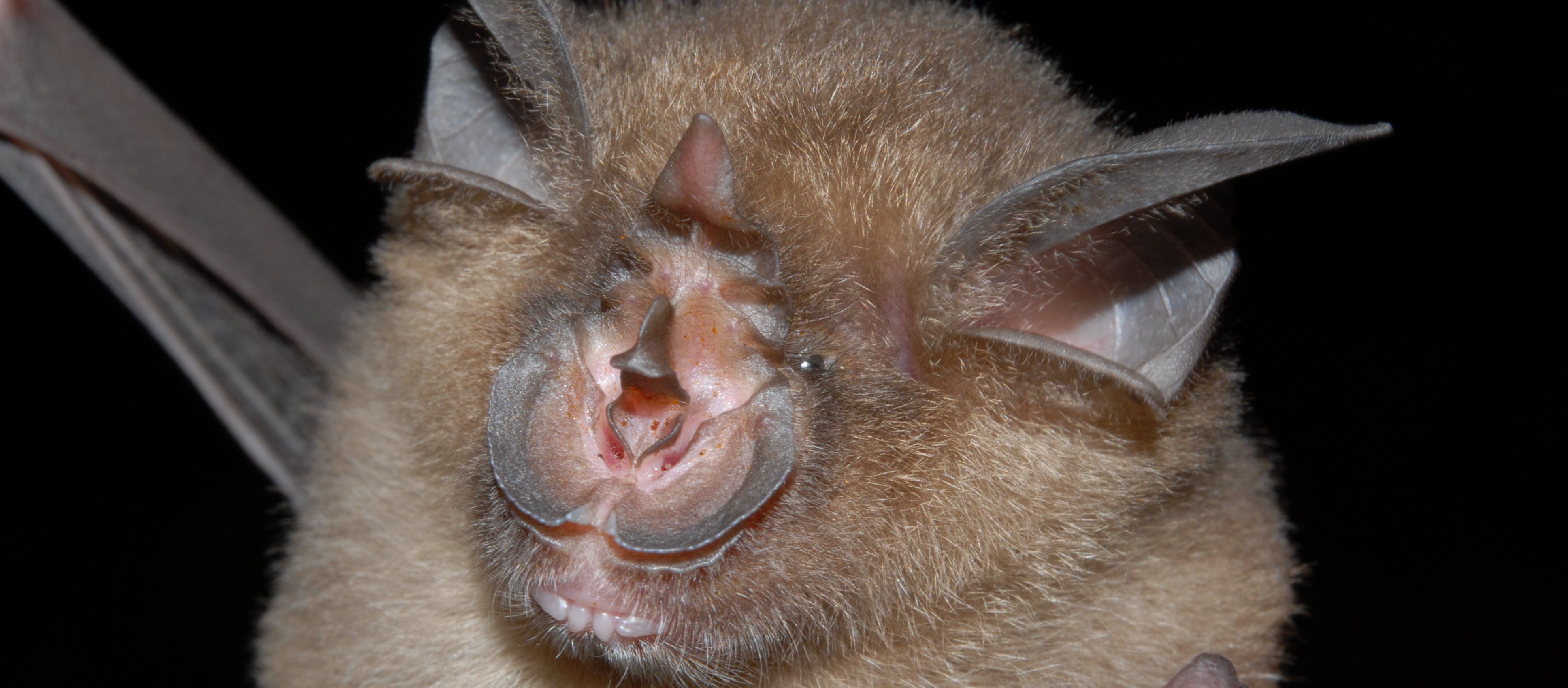
Texas Tech at IBRC

Failing to catch bats at Matador WMA

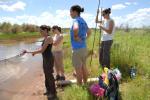
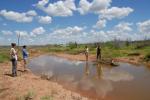
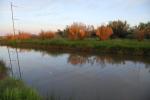
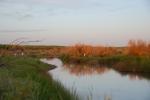
In an effort to get some bats to build up Marina’s full-spectrum call library, we embarked on a lab++ (Tigga, Marina, Danny, Maria, Liz, Karina) trip to Matador Wildlife Management Area. We set up some beautiful nets over the summer remnants of a river, but sadly didn’t catch anyone, probably in part because it was a full moon.