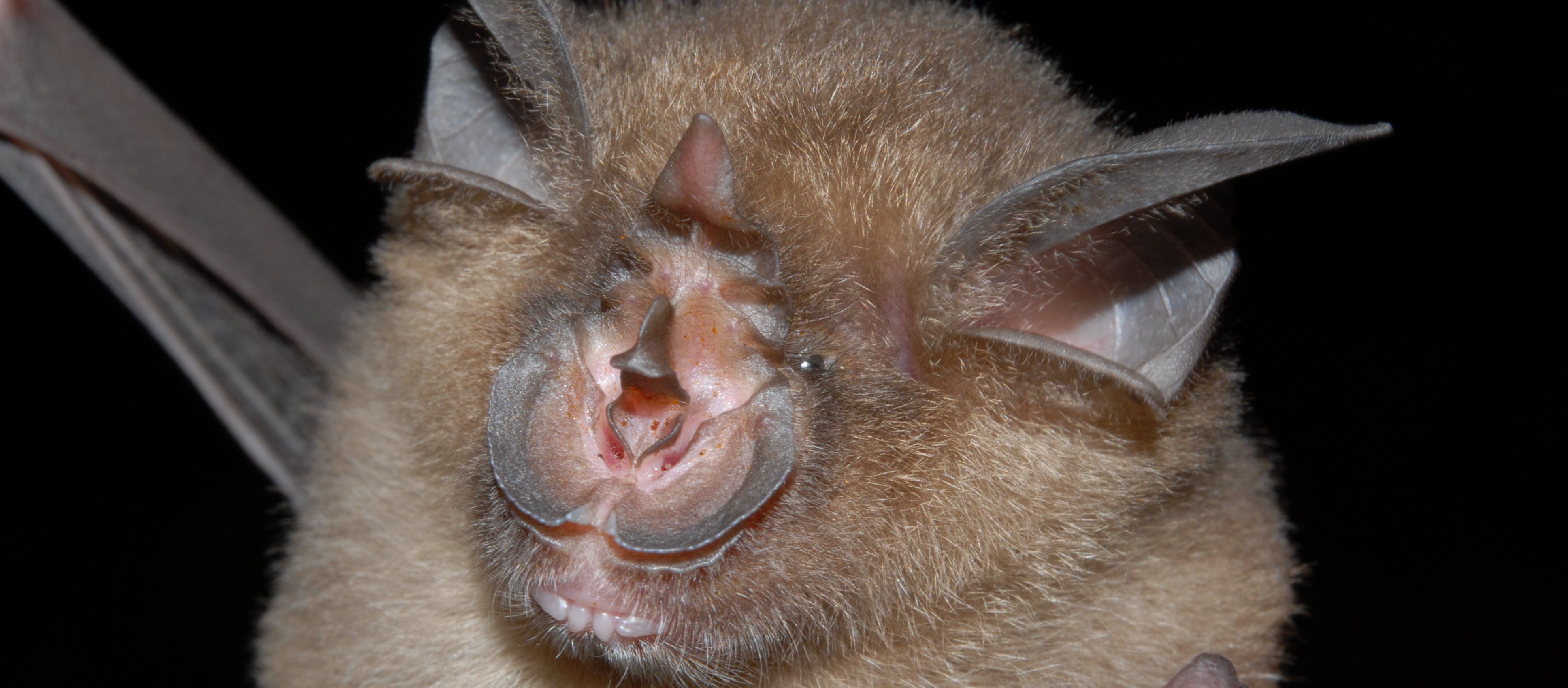
Our second field season in Nigeria wrapped up this summer after an intensive seven months of bat surveys and sampling (November 2023 – June 2024). Ben led a field team of 15 to survey 17 caves across two sites in southern Nigeria sampling 1266 bats. This work is part of our larger collaborative effort to understand how human disturbance affects the complex relationships between bats, their environment, and their host viruses – critical knowledge for predicting and preventing viral spillover events. While focusing on the ever-cute Egyptian fruit bat (Rousettus aegyptiacus), the team also sampled other 17 bat species including the beautiful Otomops martiensseni, a new country record for Nigeria!
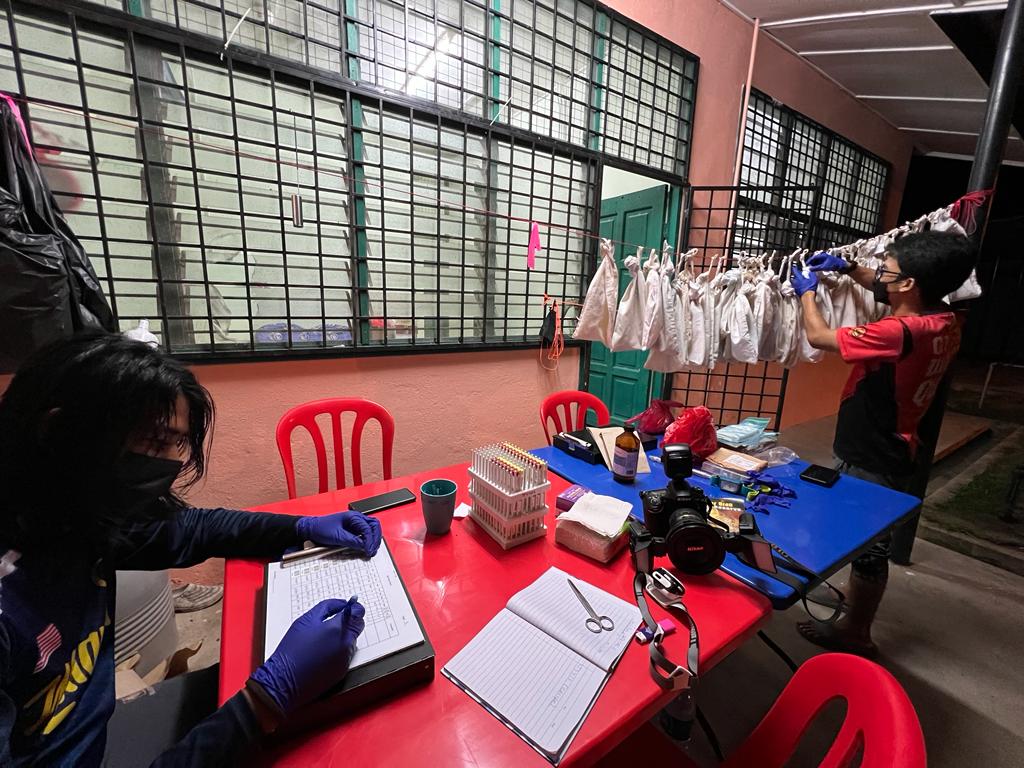
The team collecting samples
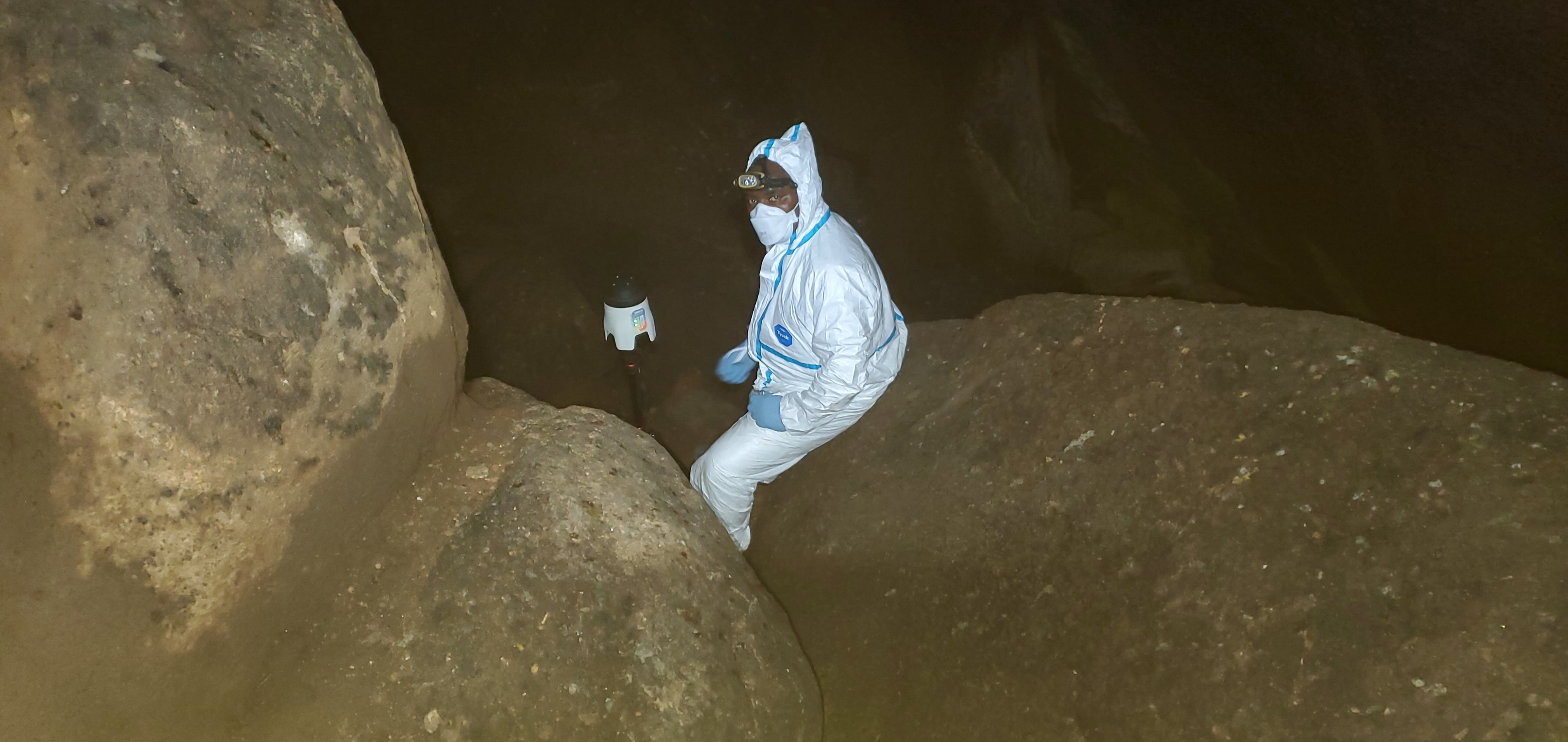
Caving is fun!
Ben installing an air sampler to trial a new e-sampling technique in a cave
Perhaps most importantly, this field season significantly strengthened the local capacity for bat research in Nigeria. Tigga and Dr. Simon Anthony were there to train field team on biosafety, sampling techniques etc.
Tigga demonstrates the use of calipers
The field season came with its fair share of challenges—maintaining cold chains for sample preservation was no cakewalk, with liquid nitrogen sources a bone-rattling 10-hour drive away. Add that to the logistical hurdles of hauling a 15L liquid nitrogen-charged dry shipper up and down a steep mountain, requiring a grueling 9-hour hike each way. But the dedication of the field team, especially our Nigerian colleagues, made it all fun.
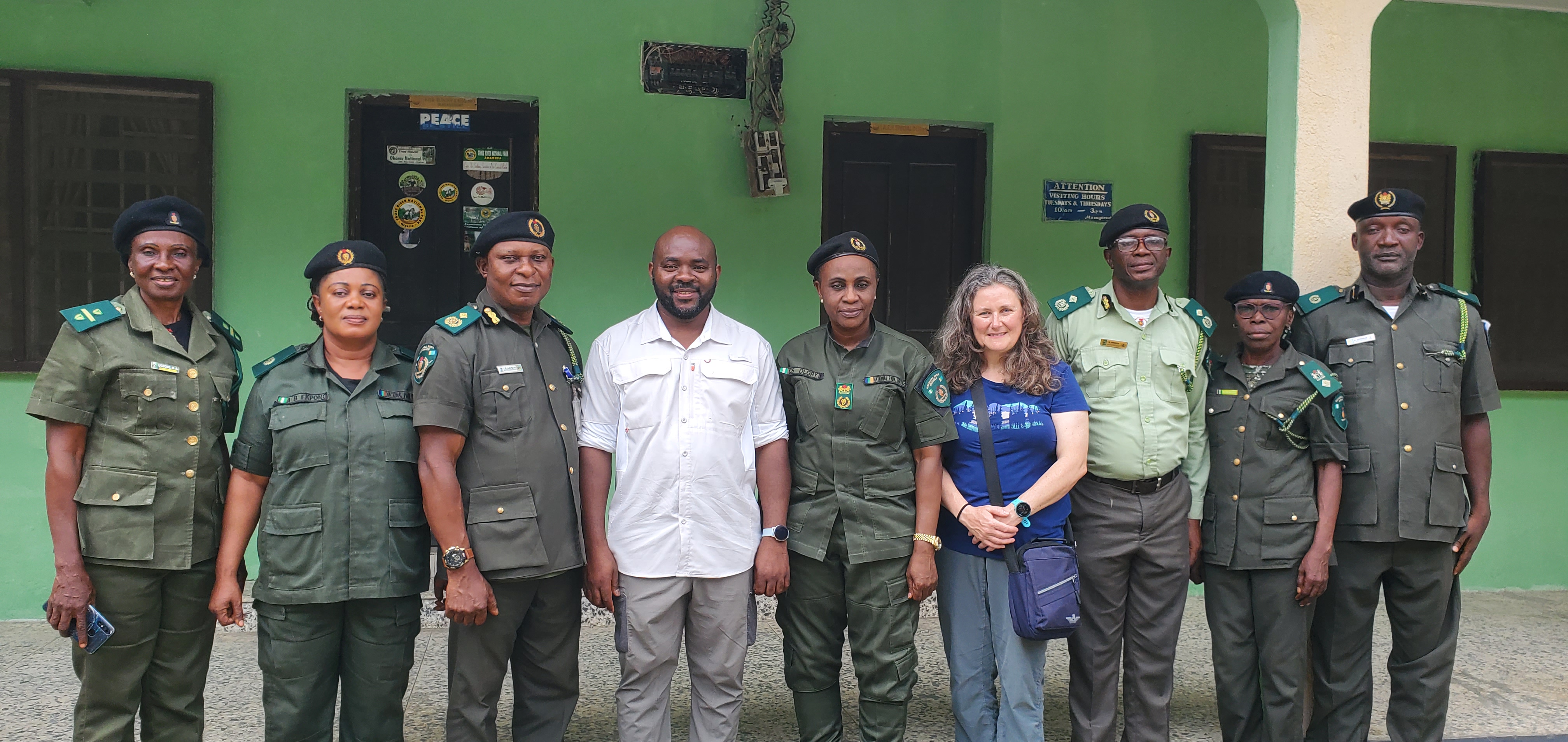
Ben and Tigga took time to visit the Conservator of Park, Cross River State National ParkWhen you have a 9-hour hike on your hands, it’s hard not to stop every now and then for snacks and photos!You need an army of enthusiastic porters all the time
To promote a shared vision of sustainable bat diversity in a changing world, the Global Union of Bat Diversity Networks (GBatNet) organized a meeting in Houston, Texas, from May 21–23, 2024. The event united 79 participants, including 19 vibrant student representatives, among them were Abby, Ashraf, and Touseef from Kingston Lab, showcasing the lab’s leadership in global conservation efforts. Fifteen working groups shared updates on their projects and set actionable goals for the next 1–3 years. Student representatives actively engaged with the working groups, exploring opportunities and contributing their energy and ideas.
Participants of GBatNet 2024 united for a sustainable future in bat diversity
Ashraf was telling a bat story, keeping the audiences hanging on every word
At the 42nd annual Texas Society of Mammalogists meeting in February 2024, Ashraf presented a poster on how bat assemblages are responding to land-use change in Bangladesh. During his two-year adventure in the world of bats, he documented 16 bat species across 5 families and 4 feeding guilds, employing a combination of mist nets and harp traps. His research illustrates that bat species diversity is greater in forests compared to degraded land-use within the protected areas. In addition, Ashraf demonstrated that bat species composition varies across study sites, emphasizing that forested areas are home to specialist bat species, in contrast to degraded sites. Remarkably, Ashraf’s study pioneered the use of the harp trap as a successful method for capturing forest understory bats in Bangladesh, representing a substantial leap forward in the country’s bat research.
Touseef and co-authors conducted a comparative analysis of abstracts presented at the 1st (2011) and 6th (2020) World One Health Congresses (WOHC) to examine the evolution and current state of One Health research, focusing on demographic, disciplinary scope, and geographical representation.
Key findings include:
Disease Surveillance remained the most represented research category at both congresses, indicating a consistent priority within One Health research.
Environmental and Ecological Issues and Sustainable Food Systems were among the least represented categories, despite the growing global emphasis on sustainable development challenges.
A significant increase in Antimicrobial Resistance (AMR) research, from 1% of abstracts in 2011 to 13% in 2020, highlights evolving research priorities.
Authors from Very High Human Development index countries tended to focus on Public Policy, whereas those from Medium and Low Human Development countries prioritized Disease Surveillance, indicating potential regional differences in One Health research priorities.
International collaboration is instrumental in enhancing participation from countries with lower human development indexes, although discrepancies remain in the representation of global regions and the alignment between funding recipients and research subjects.
The plight of large fruit bats on paleotropical islands was flagged over half a century ago. Despite this, species of Pteropus, Acerodon, and related genera of Large Old World Fruit Bats (herein, LOWFB) remain among the most endangered bat groups globally. Naturally, Tigga stepped up collaborating with esteemed bat scientists F.B. Vincent Florens and Christian E. Vincenot to explore this pressing issue. They utilized the IUCN Red List assessments and information from the literature to uncover why these bats are in trouble. No surprise here – habitat loss, hunting, climate change, and persecution (Let’s dub them the BIG FOUR) pose significant threats to the LOWFB. These poor bats are built differently, with biological and ecological attributes that make them even more vulnerable to these threats, accelerating their population decline.
Viewer discretion is advised!😔 Sourced: Social media.
So why should we care? Well, because they’re keystone species! Losing these skypuppies could set off a domino effect throughout native ecosystems. Check out the publication to discover more about the proposed conservation strategies aimed at halting the decline of these critical bats, especially in island habitats.
It is another super fine day when we hear of another success from the lab. Dr. Obitte has gone and defended his PhD today! His hard work on identifying the socio-ecological drivers and consequences of bat hunting in the Afrotropics has paid off! Hats off to Ben! We want to give a big Thank You to his fellow committee members and all the other folks who have been involved, both directly and indirectly, throughout his PhD journey.
Parabiologist Shafiq in action; collecting samples from bats captured in Krau Wildlife Reserve, Malaysia.
Love 🧬#GENETICS, love 🦠 #MICROBES, love 🦇 #BATS? Excited by integrative research? Tigga Kingston and Caleb Phillips at Texas Tech University are hiring an #integrative biology #postdoc to join us on an NSF-supported project that integrates bat genetics, molecular dietary analysis, and microbiome data from forest-dependent bats sampled across a habitat degradation gradient in Malaysia to quantify processes and relationships shaping microbiome communities.
Required Qualifications: Doctoral Degree (or foreign equivalent) that incorporated bioinformatic approaches to answer questions in ecology, evolution, genetics or closely related fields. Examples would include, but not be limited to, genomics, metagenomics, or microbial ecology. The degree should be completed by May 2023. Proven interests in integrative science crossing disciplines and enthusiasm for the integration of omics data and ecology.
Preferred Qualifications: Strong communication skills across disciplines as demonstrated by published or submitted peer-reviewed scientific manuscripts. Keen interest in or experience with high dimensional, integrative data analyses. Applicants should be willing to work as part of a diverse multidisciplinary and multicultural team and be excited about educational outreach and engagement.
Brief Description of Duties & Opportunities: Our goals are to determine how genetics, sociality, and diet influence the assembly of bat microbiomes and how assembly processes are disrupted by habitat degradation. The postdoctoral researcher (PDR) will work closely with Dr Phillips employing informatic approaches to answer these questions. As part of the project, the postdoctoral researcher will have ample opportunity to build on or acquire primary skill sets in metagenomic and genomic analyses, advanced statistics. The PDR will work closely with Dr Kingston on the development and implementation of a broader impact program that brings bat and microbiome diversity to 4th and 5th graders. Specifically, the PDR will:
Analyze and integrate molecular ecological data sets including ddRADseq, diet and environmental insect sampling (COI gene) and microbiome composition (16S).
Build on or acquire primary skill sets in bioinformatics and statistics (e.g., structural equation modeling) and secondary skill sets in fieldwork and integrative analyses.
Prepare manuscripts including writing, editing, and figure preparation. May also assist in grant writing.
Assist with developing and implementing an innovative active-learning experience called “The Malaysian Bat Education Adventure”.
Work in close collaboration with the two PIs and graduate students.
Presenting at Scientific Conferences and Meetings.
The position is funded for one year with the possibility of a second year.
Apply!
Application packages should include CV, contact information for three references, Research Statement, and three examples of the applicant’s published work. Please submit applications to caleb.phillips@ttu.edu with the subject line “Integrative Microbiome Assembly Postdoc”.
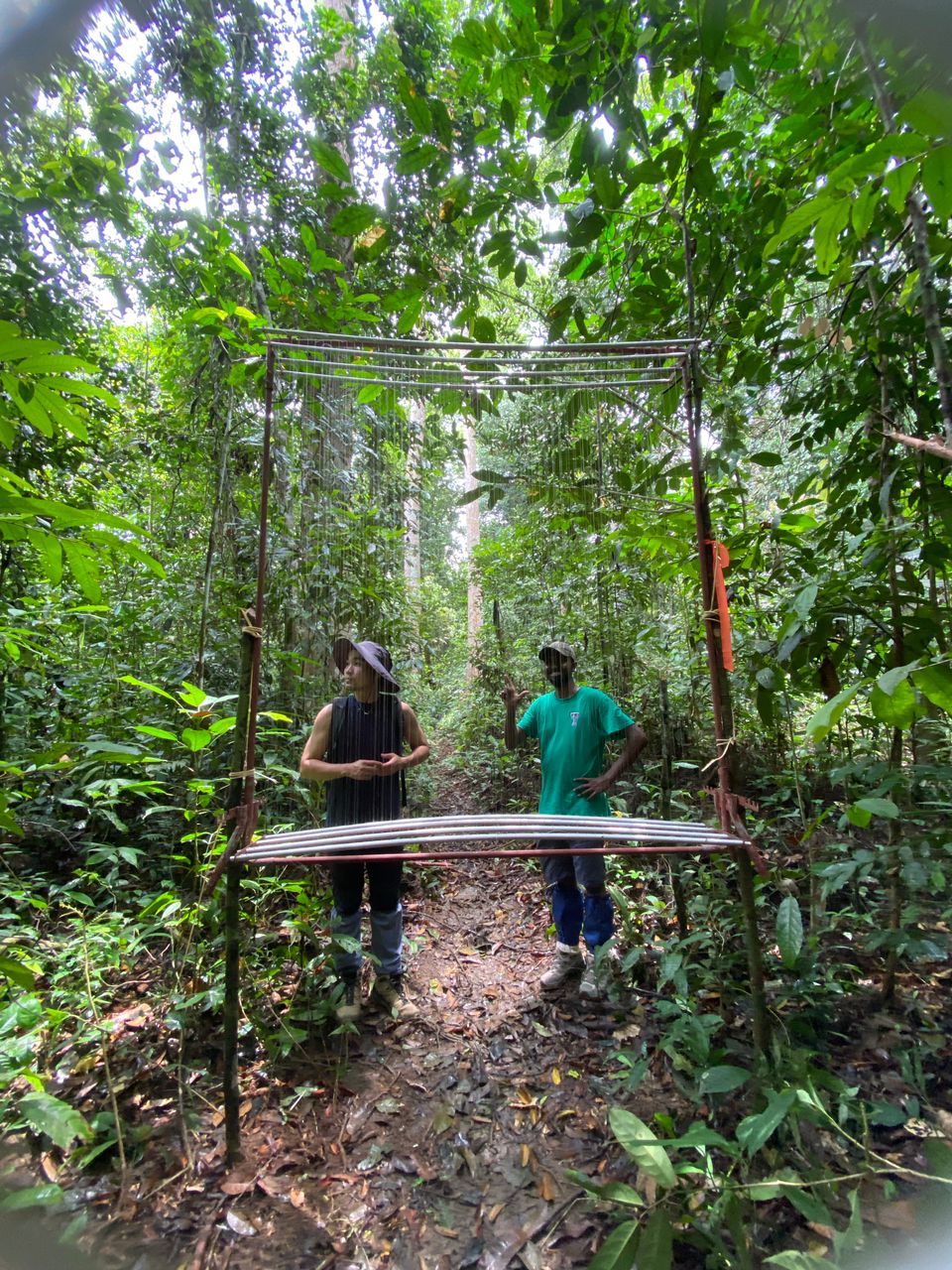
Isham and Ashraf set up harp traps to capture cool forest bats in Malaysia
Another day, another (student scholar) dollar! Congratulations to Isham for the 2023 Bat Conservation International student scholar award! Isham’s award will provide financial support to help his research on disentangling the processes structuring bat communities across a gradient of habitat degradation.

Isham recently attended the Texas Society of Mammalogists Annual Meeting and presented his work: “Forest Fragments Contribute to the Maintenance of Paleotropical Bats Functional Diversity” where he won the Vernon Bailey Award for the best poster presentation in classical mammalogy at the organismal level. His work highlights that there is an increasing dissimilarity between co-existing species in forest fragments relative to those in continuous forests, a pattern that may be linked to niche expansion. Overall, forest fragments may contribute to the maintenance of functional diversity of insectivorous bat communities at the landscape level, although large tracts of forest are important for forest specialists.
The effects of climate change have led to an increase in extreme heat events, causing mass deaths among fruit bats of the genus Pteropus in various parts of the world. The Indian flying fox (Pteropus medius) is facing a shrinking habitat, and its distribution has shifted from southern to central and northern regions in Pakistan to escape rising temperatures and heat events. This DW News documentary covered our research work on “Effect of Extreme Heat on Indian flying foxes in Pakistan“.