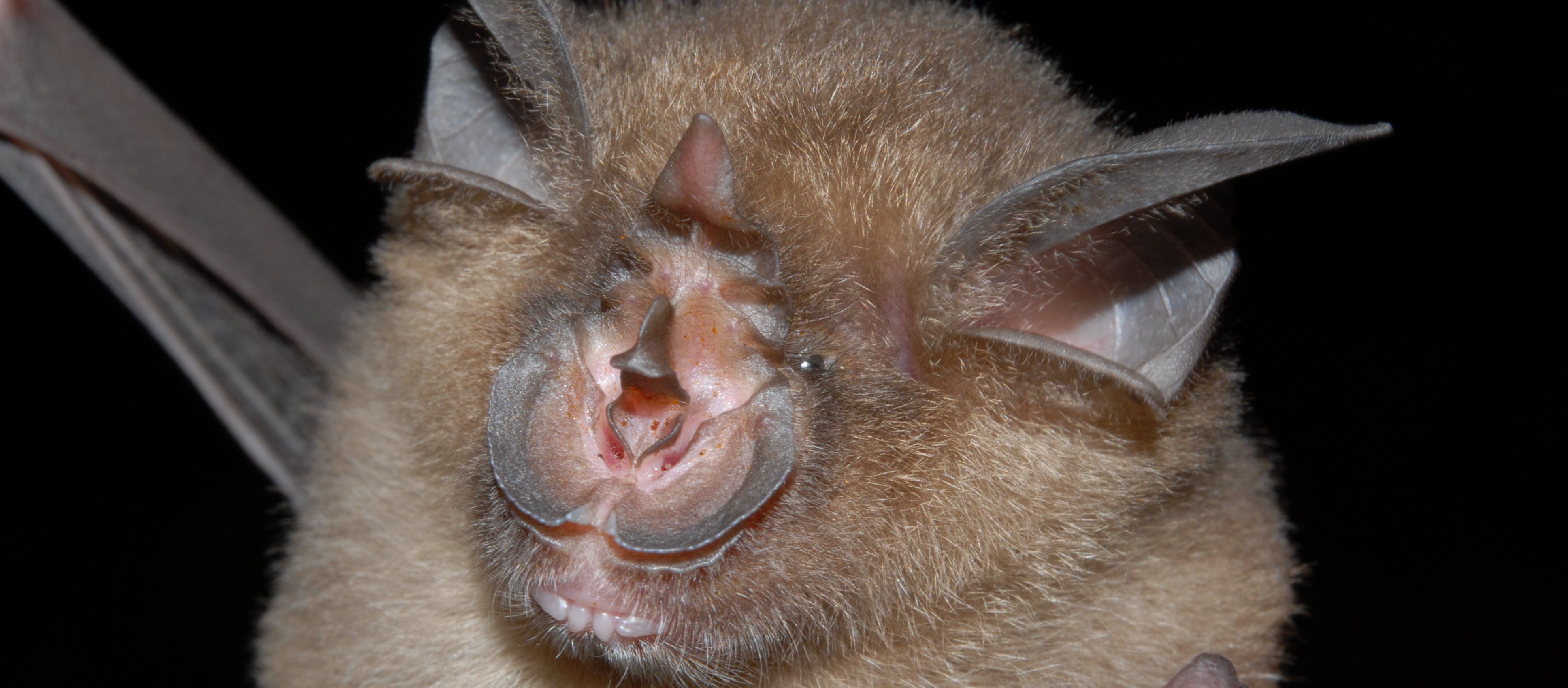
The Kingston lab is excited to share a new publication from Isham. This one took a fair bit of time, patience, and careful thinking to pull together. So we’re glad it’s finally out where it can be shared more widely.
In this study, we take a closer look at what happens to insectivorous bat communities when tropical forests are broken into smaller fragments. What we found is that species aren’t lost at random. Instead, fragmentation tends to filter out certain bats first, and as that happens, the functional trait space starts to shrink. This contraction happens rapidly up to a threshold, after which it levels off at a reduced level. We also found that the pattern of disassembly reflects a combination of deterministic and stochastic processes.

Figure 1. Non-random species loss driven by fragmentation leads to a contraction in functional trait space as species richness drops from 11 to 8, then levels off beyond this threshold.
One of the bigger takeaways is that conserving fragmented landscapes isn’t as straightforward as focusing on the biggest or most species-rich patches of forest. Smaller fragments matter too, and together they help maintain diversity across the broader landscape. This work also shows why it’s useful to look beyond species count alone. By incorporating functional diversity, we can better understand the impacts of fragmentation and make better-informed conservation decisions.

Figure 2. Landscape surrounding the Tengku Hasanal Wildlife Reserve in Krau, Malaysia. The area is a patchwork of land uses, including oil palm, rubber, and durian plantations, as well as urban development.
If you’re interested in learning more, check out the full paper here!
 Kingston Lab